This week I would like to celebrate the amazing
capability of modern photography to help us to see the unseen. My goal
is only to touch on what is possible and to provide links to more
detailed explorations.
From its invention, photography has been a
medium that was prized for its ability to capture what we see in flawless detail, freezing more of "reality" than could ever be
absorbed by our limited visual perceptions. Without special forethought,
my photography has tended toward images that celebrate the beautiful
detail of the natural world. I have tried to use the remarkable powers
of digital photography and editing to place viewers in locations as I have
seen them, working to display the mood as well as the reality of the
remarkable world around us. But photography has always provided a means
to see things beyond our normal perceptual capacity, that are not
accessible to the naked eye (THERE, I got the word "naked" into the
article - TWICE! Watch my hits soar!).
Anyway, In the
beginning photography captured "Reality" in its own way based on its
technical limitations. It has always had the  remarkable ability to
freeze time, not only for moments but for centuries. As initially a
black and white medium, photography washed the color from the world and
forced a new focus on light and pattern that had always been hidden
under a gaudy chromatic layer in our perception. Photography has
expanded and altered our vision in many other ways and, digital
photography, although not required for many of these advances, has made
them more easily accessible and pushed opened the door to these unseen
new worlds. I have discussed many of these techniques in much greater
detail in previous articles, but here is a brief list of some of the
ways that photography can open our eyes to a new worlds. Let the journey
begin.
remarkable ability to
freeze time, not only for moments but for centuries. As initially a
black and white medium, photography washed the color from the world and
forced a new focus on light and pattern that had always been hidden
under a gaudy chromatic layer in our perception. Photography has
expanded and altered our vision in many other ways and, digital
photography, although not required for many of these advances, has made
them more easily accessible and pushed opened the door to these unseen
new worlds. I have discussed many of these techniques in much greater
detail in previous articles, but here is a brief list of some of the
ways that photography can open our eyes to a new worlds. Let the journey
begin.
Infrared
Infrared
photography is perhaps the best example of seeing the  unseen. Infrared
is the portion of the electromagnetic spectrum beyond deep red.
Although these longer wave lengths are beyond the ability of our eyes to
detect, infrared photographs have been captured since the early
1900's. Today a digital camera can be modified to respond to the
infrared making it much easier to capture this invisible world. The
infrared spectrum shows foliage in brilliant
unseen. Infrared
is the portion of the electromagnetic spectrum beyond deep red.
Although these longer wave lengths are beyond the ability of our eyes to
detect, infrared photographs have been captured since the early
1900's. Today a digital camera can be modified to respond to the
infrared making it much easier to capture this invisible world. The
infrared spectrum shows foliage in brilliant  light, making summer scenes
appear like winter landscapes. It cuts through haze and reveals puffy
clouds in stark contrast against inky black skies. With infrared
photography it is often possible to capture powerful images on days when
the light is too flat and dull for strong conventional images. I found
it well worth the expense to modify my old Canon 20D doorstop to become
my IR camera.
light, making summer scenes
appear like winter landscapes. It cuts through haze and reveals puffy
clouds in stark contrast against inky black skies. With infrared
photography it is often possible to capture powerful images on days when
the light is too flat and dull for strong conventional images. I found
it well worth the expense to modify my old Canon 20D doorstop to become
my IR camera.
For More Information:
Infrared, Seeing Photography in a Different Light
HDR
High
dynamic range photography can be used to overcome the
 |
| Improving Dynamic Range |
limitations of
film and digital sensors in recording the full range of light and dark
apparent to our eyes. In this sense it actually improves the ability to
capture what we can already perceive, but HDR and its evil twin, tone
mapping, has the seemingly unbounded artistic capability to mutate
reality,
turning a mirror on the artists mood and fancy rather than the reality of the moment. I love HDR because it provides such an unlimited opportunity for self-expression. I generally use these tools to render images that better reflect the dynamic range that was apparent in the field, but occasionally it is fun to go crazy, jump through the looking glass, and produce something that truly would never be apparent to the eye.
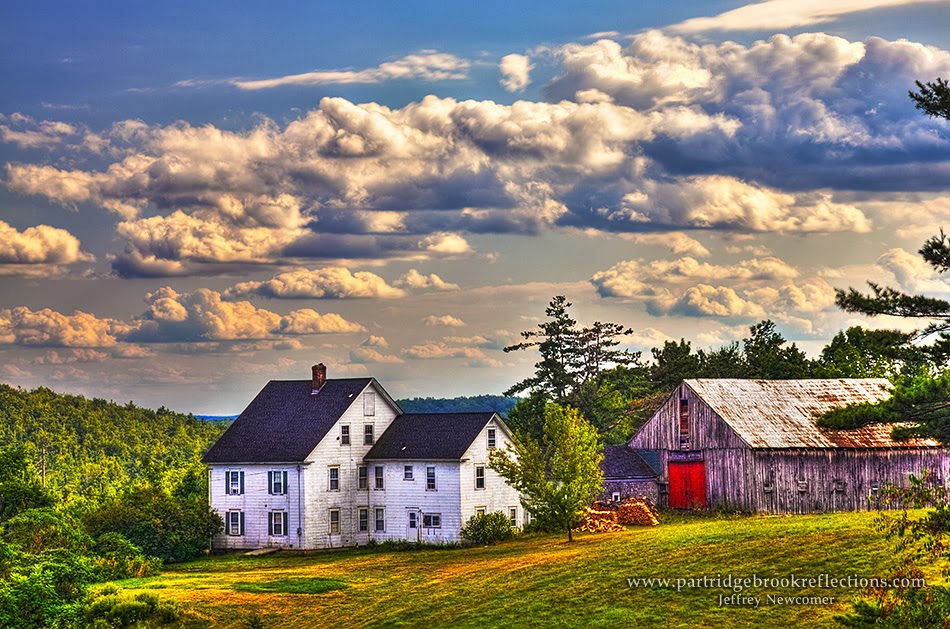 |
| Going Crazy |
For More Information:
HDR: Bon Appetitt
Taming the HDR Beast
Stop Motion:
Stopping
motion requires fast shutter speeds that the high ISO
 capability of new
digital cameras has made more practical. I remember, from the ancient
past, when loading the camera with ASA 400 film was a considered
reckless, trading speed for the assumed damage to image quality. Based
on the lighting, I can now easily dial up the ISO to whatever is
required, to allow a
capability of new
digital cameras has made more practical. I remember, from the ancient
past, when loading the camera with ASA 400 film was a considered
reckless, trading speed for the assumed damage to image quality. Based
on the lighting, I can now easily dial up the ISO to whatever is
required, to allow a  shutter speed fast enough to freeze the action or
capture images in inky darkness.. The combination of the improved low
light sensitivity of new digital sensors and the capability of software
noise reduction algorithms has made it possible to maintain acceptable image quality at ridiculously high ISO levels.
shutter speed fast enough to freeze the action or
capture images in inky darkness.. The combination of the improved low
light sensitivity of new digital sensors and the capability of software
noise reduction algorithms has made it possible to maintain acceptable image quality at ridiculously high ISO levels.
For More Information:
Accidental Bird Photography
Great Blue Heron on Harvey Pond
Long Exposure;
Long
exposures have always been a capability of photography. In
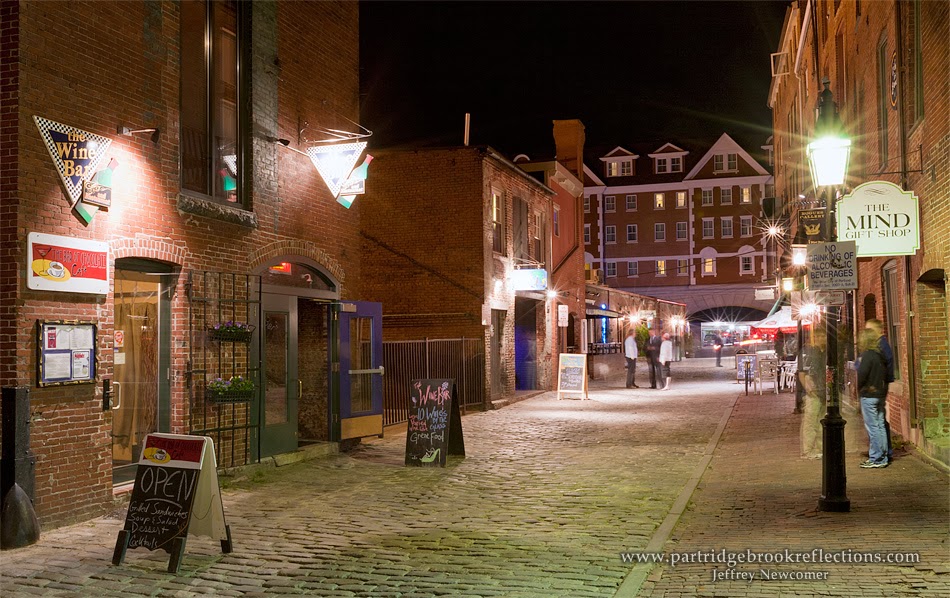 |
| Crowded Portland Street |
fact in the
early days it was a requirement. Daguerreotype portraits required an
exposure of 2 or more seconds. Today long exposures can accomplish a
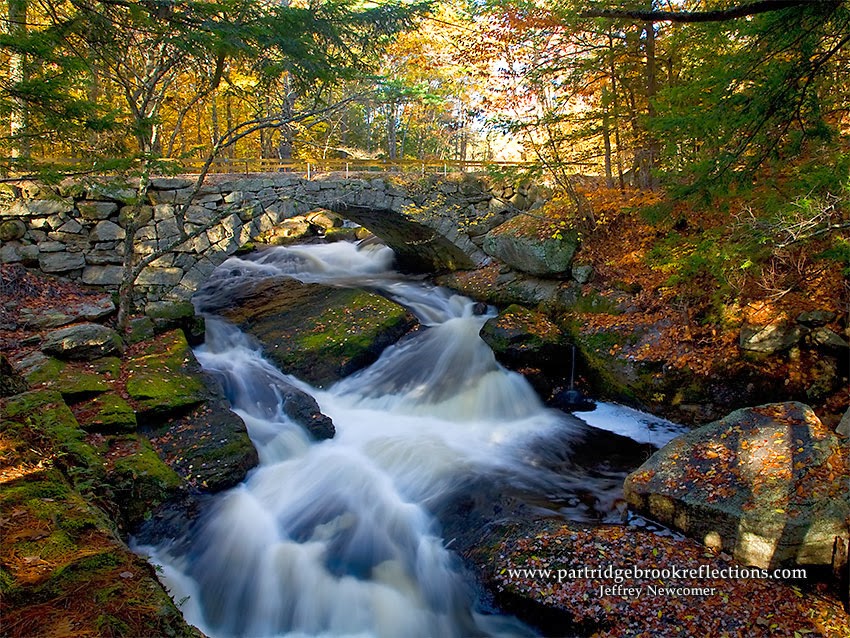
long list of magical effects. An exposure of a even a second  or less
can transform a roaring chaotic stream into a soft dream-like
confection, looking nothing like the original scene, but providing a
sense of frozen movement. Long exposures of a busy street can remove
all the distractions of moving cars and annoying people, magically
focusing on the stationary scene. Star tract images of the night sky
transforms individual stars from points of light into majestic arcs
rotating around the north star. All of these technique are made much
simpler by the ability, in the digital camera, to immediately review the
results and adjust exposures accordingly
For More Information:
or less
can transform a roaring chaotic stream into a soft dream-like
confection, looking nothing like the original scene, but providing a
sense of frozen movement. Long exposures of a busy street can remove
all the distractions of moving cars and annoying people, magically
focusing on the stationary scene. Star tract images of the night sky
transforms individual stars from points of light into majestic arcs
rotating around the north star. All of these technique are made much
simpler by the ability, in the digital camera, to immediately review the
results and adjust exposures accordingly
For More Information:
Photographing the Magic of Velvet Water
Long Exposure Crowd Control
Star Track Photography
Deep Space:
While
we are talking about night sky images, I think one of the  most
impressive ways that digital cameras have altered our sense of nighttime
wonder has come from the ability that long exposures and high ISO have
to extend our vision into deep space. ISOs ranging from 1600 to 6400 and
exposures of 20-30 seconds brings a dense sea of stars into view that
are invisible to our eyes even on the darkest night. Beyond doubt, the
celebrity of this celestial show is our own galaxy, the Milky Way. The
most impressive images usually show the Milky Way's brilliant band in
some appropriately interesting setting, and there are now many programs
and Apps that can tell us precisely when, and where to stand to place a
lighthouse, a tree or a silo in front of the show. I live in the
country and I often get a clear view of the sky, but even here the
digital camera easily converts a subtle smug into a breathtaking view of
our galactic disc.
most
impressive ways that digital cameras have altered our sense of nighttime
wonder has come from the ability that long exposures and high ISO have
to extend our vision into deep space. ISOs ranging from 1600 to 6400 and
exposures of 20-30 seconds brings a dense sea of stars into view that
are invisible to our eyes even on the darkest night. Beyond doubt, the
celebrity of this celestial show is our own galaxy, the Milky Way. The
most impressive images usually show the Milky Way's brilliant band in
some appropriately interesting setting, and there are now many programs
and Apps that can tell us precisely when, and where to stand to place a
lighthouse, a tree or a silo in front of the show. I live in the
country and I often get a clear view of the sky, but even here the
digital camera easily converts a subtle smug into a breathtaking view of
our galactic disc.
For More Information
Night Time Photography, Searching for the Milky Way
Photographing Comet PanSTARRS
Time Lapse
Time
lapse photography compresses time allowing us to see in a few seconds
what occurred over hours. All that is necessary is a sturdy tripod, an
intervalometer to time the exposures and software to assemble the
hundreds of images into a video. For quick and simple time lapse videos
I have used Quick Time, but many other options exist. I'm still a
novice, but I have enjoyed creating videos of the setting sun, billowing
clouds, or stars moving majestically across the sky. I even have one
of Susan and I decorating the Christmas tree.
Monadnock Sunset
Tree Trimming
For More Information
Time Lapse Time
Focus Stacking
It
may seem that the use of focus stacking to achieve a deep depth of
field only replicates what our eyes can capture, but in fact eyes  have
the same focusing limitations as any lens and iris system. The only
reason that we feel we can see everything from near to far in sharp
focus is that our eyes are constantly and subconsciously adjusting focus
as we move our attention around the scene. A photograph with sharp
focus throughout is actually a representation of the world beyond the
capability of our vision, but it does match the dynamic nature of our
perception.
have
the same focusing limitations as any lens and iris system. The only
reason that we feel we can see everything from near to far in sharp
focus is that our eyes are constantly and subconsciously adjusting focus
as we move our attention around the scene. A photograph with sharp
focus throughout is actually a representation of the world beyond the
capability of our vision, but it does match the dynamic nature of our
perception.
For More Information:
Focus I
Focus II
Hand-Held Focus Stacking
Of
course there are more ways that digital photography allows us to see
the unseen. Editing software can alter our vision and a world without a
tangle of wires in front of every beautiful scene is a priceless gift of
Photoshop. It has been thrilling to explore some of the photographic
options available, but It is also humbling to realize all that I need to
learn. But then again the endless opportunities to learn are what make
photography endlessly exciting.
Jeffrey Newcomer
Partridgebrookreflections.com
One of the great things about photography is that there are so many different ways to do it. It is certainly another stick season. The snow is gone, the buds are just greening up, and the anemic winter run-off has left many of my favorite waterfalls uninspiring. What to shoot? One can only lay in bed shooting pictures of your feet for so long. So why not try something new?
I have always concentrated on landscapes, but every so often, and
 |
| Comet PanSTARRS |
especially this time of year, I get bored of trees and rocks and start looking for something else to shoot. This spring I was distracted by chasing the Comet PanSTARR and that got me interested again in star field photography. On several occasions, I even dragged myself out of bed at 3AM, in an attempt to catch the Milky Way. I am not a birder, but I have been watching the nest on the Connecticut River, hoping that the eagle pair will settle in to raise a family. I have probably jinxed my chances by getting a tele-Extender.
The variety of photography is almost endless. If you are in a bit of a “Stick Season Slump”, consider something from my brief list of possibilities. Some of these only require a shift in focus, while others may benefit from special equipment. I always like an excuse to get new gear, but they all provide an opportunity to learn new stuff. What follows are random incomplete reflections about only a few of the many ways to get a fresh perspective on your photography. Fortunately, all the information you need is just a Google search away. Fair warning, I have tried all of these modes of photography, but I must admit that I am expert in none. That's what makes them exciting.
Get Out of Your Comfort Zone 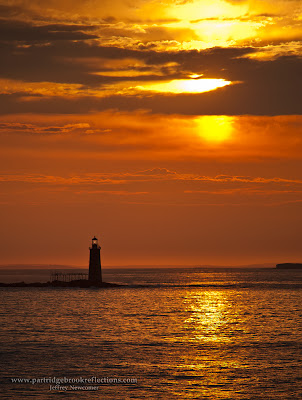
We do tend to get into ruts. I keep my trusty 24-105 lens on my camera far too much. Just pulling something else from my bag, whether it is a wide angle, macro or my fast 50mm portrait lens, can be refreshing. Also try changes in perspective. Crawl on the ground or get up high. Of course a more expensive way to leave your comfort zone is to take a trip, but it doesn’t have to break the bank. I've enjoyed recent travel out West and along the Danube River, but for me, a trip to the Maine Coast is always refreshing.
 |
| Teton Sunset |
Star Photography
I have recently returned to star photography. I have played with star
 |
| Mt Monadnock Trails |
trails and time-lapse video, but recently I have been working on star field shots, especially looking to capture the Milky Way. However it is done, star photography reveals views of the night sky that are impossible to appreciate with the naked eye and stimulates a magnificent sense of perspective on our place in the universe. Key equipment includes a camera with low noise/high ISO capability, a wide angle lens, a solid tripod and, if you plan to do time-lapse, an intervalometer. Oh and don’t forget a reliable alarm clock to rouse you at ungodly hours.
Star Track Photography
Searching for the Milky Way
Time lapse
Time-lapse photography is another technique that reveals what our eye cannot see. The changing patterns of nature or frenetic human activity can be compressed into short intervals that distill the action, making subtle patterns clear. All you need to make time-lapse videos is an
intervalometer to time the shutter releases and software to assemble the
images into a movie. Of course as with almost everything here a sturdy
tripod is a must. One other point. Time-lapse videos take hundred of images.
At the standard 24 frames per second, a 30 second video will require 720
images. Because I get concerned about wearing out the shutter in my primary
camera, I have dedicated my old Canon 5d to time-lapse service.
Trimming the Tree (YouTube:First Try at Time-lapse: Sorry)
Video
The ability to capture high quality video from your digital camera is a great new feature, but I can testify that video requires an entirely different skill set than conventional still photography. Although DSLR cameras can record high definition video they have limitations compared to a dedicated video cameras. Most notably, continuous focus is difficult to control smoothly, but also DSLR are not equipped to record quality sound. Over the last year I have been contributing video to the upcoming Mt Monadnock documentary, but given the limitations of my Canon 5d Mark II my video clips have been primarily set clips for background images (B Roll: As above). You can 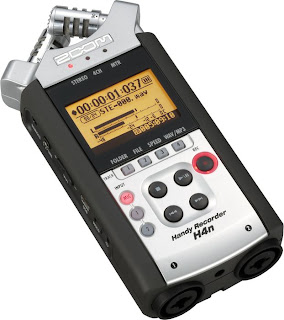 spend a lot of money to supplement the video capabilities of your DSLR. Basic equipment includes a tripod, preferably with a fluid head for smooth panning and a follow focusing attachment. One of the most important elements of good video is good sound. A quality external microphone and recording device are key. I use a Rode microphone attached to a Zoom H4n field recorder. Of course, when you are finished, there are many options for video editing. There is a lot to learn to get decent video, but that's the fun.
Wildlife 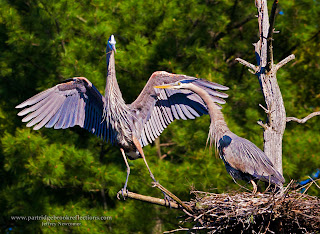
If, like me, you are primarily a landscape photographer, an exploration of wildlife photography can be a great new challenge. I have great respect for the patience and dedication of those who get amazing wildlife shots by siting out in the cold for hours. As for me, I like my wildlife stationary and predictable and close to my car. In the spring, the birds keep close watch on their nests and that is a great time for me. Sadly my favorite Blue Heron nest on Harris Pond in 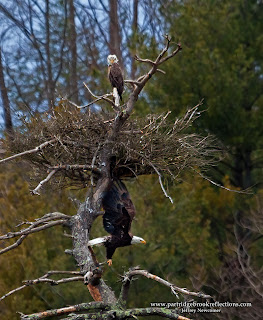 Westmoreland, NH is gone this spring, but I am watching an eagle nest on the Connecticut River. I'm hoping that they will settle in to raise a family. A long lens is the primary requirement of wildlife. I found that my 400mm isn't quite long enough to capture detailed images of the eagles from across the river. I will try to sneak closer once they are settled, but I don't want to disturb them at this critical time. I also got a 2x Tele-Extender, but will need good light to off-set the two stops I loose with the extra reach. Of course wildlife may also be as close as your couch. I hear that a few people on the web like pictures of cats and dogs.
Get in Close 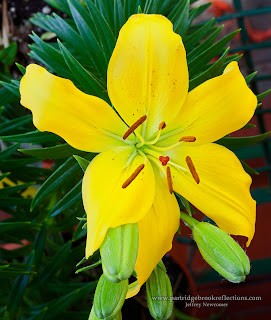
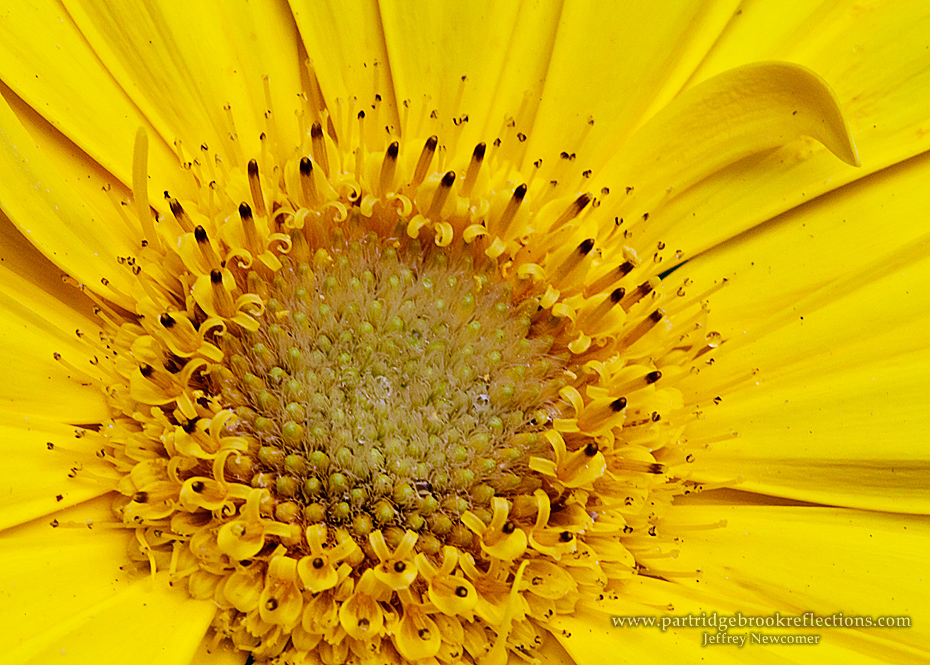
Macro photography opens an entire new world of opportunities both in the natural world and at home. I love studying the detail of flowers and that is often done best in protected environments, such as at a greenhouses or at home. My annual pilgrimage to the beautiful greenhouses at the Walker Farm, In Dummerston, Vermont has become a seasonal tradition. This time of year the early spring flowers are a welcome source of material as well. The greatest challenge of macros 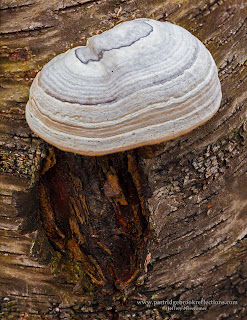 is the management of the often painfully shallow depth of field. Stopping down on the aperture and using a tripod can help, but focus stacking in photoshop or other programs can make a big difference. Equipment for macro photography can range from cheap to prohibitively expensive. Extension tubes can be effective and cost almost nothing, but, I have to admit that since I sacrificed for a wonderfully sharp macro lens I haven't gone back to the tubes.
Infrared
is the management of the often painfully shallow depth of field. Stopping down on the aperture and using a tripod can help, but focus stacking in photoshop or other programs can make a big difference. Equipment for macro photography can range from cheap to prohibitively expensive. Extension tubes can be effective and cost almost nothing, but, I have to admit that since I sacrificed for a wonderfully sharp macro lens I haven't gone back to the tubes.
Infrared
Infrared photography provides a fresh look by recording an otherwise invisible portion of the electromagnetic spectrum. 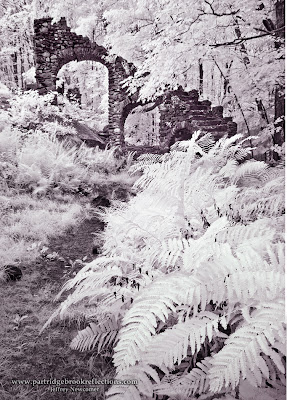 Glowing foliage and inky dark skys can breath new life into dull flat scenery. Shooting in infrared is best with luxuriant foliage, so winter and early spring are not the best seasons. With many digital cameras infrared can be shot with dense, nearly impenetrably dark filters, but images usually need to be framed and focused before the filters are adding and the long exposures make a tripod a necessity. Happily a much more elegant solution is available. Your lonely, old camera can be modified to shoot infrared. I did this with my old Canon 20D and turned a dusty doorstop into a gateway to a whole new way of seeing. I've found that on days when the light is hopeless, I can still get some interesting shots by harvesting among the longer wavelength.
Infrared, Seeing Photography in a Different Light
Glowing foliage and inky dark skys can breath new life into dull flat scenery. Shooting in infrared is best with luxuriant foliage, so winter and early spring are not the best seasons. With many digital cameras infrared can be shot with dense, nearly impenetrably dark filters, but images usually need to be framed and focused before the filters are adding and the long exposures make a tripod a necessity. Happily a much more elegant solution is available. Your lonely, old camera can be modified to shoot infrared. I did this with my old Canon 20D and turned a dusty doorstop into a gateway to a whole new way of seeing. I've found that on days when the light is hopeless, I can still get some interesting shots by harvesting among the longer wavelength.
Infrared, Seeing Photography in a Different Light
My list goes on, but I think this is a good place to stop my ramblings. I will leave other options like street photography and portraiture for you to explore on your own. My intention here is only to get you thinking about fresh approaches for your photography. So the next time you find yourself moaning about having nothing to shoot, apply a quick dope slap and get out to try something new.