About Me

My photo
Spofford, New Hampshire, United States
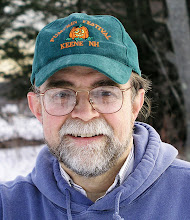
Jeff Newcomer had been a physician practicing in New Hampshire and Vermont for over 30 years. Over that time, as a member of the Conservation Commission in his home of Chesterfield New Hampshire, he has used his photography to promote the protection and appreciation of the town's wild lands. In recent years he has been transitioning his focus from medicine to photography, writing and teaching. Jeff enjoys photographing throughout New England, but has concentrated on the Monadnock Region and southern Vermont and has had a long term artistic relationship with Mount Monadnock. He is a featured artist in a number of local galleries and his work is often seen in regional print, web publications and in business installations throughout the country. For years Jeff has published a calendar celebrating the beauty of The New England country-side in all seasons. All of the proceeds from his New England Reflections Calendar have gone to support the Pulmonary Rehabilitation Program at the Cheshire Medical Center. Jeff has a strong commitment to sharing his excitement about the special beauty of our region and publishes a blog about photography in New England.
Showing posts with label Black and White. Show all posts

Monday, April 6, 2020

Isolation Photography 2 (Outside)


Out on a Hike :Ashuelot River, Keene NH


County Champion Red Oak
Friedsam Town Forest, Chesterfield
I hope everyone is still managing to stay healthy and sane as we practice crucial measures for social distancing and personal protection from the Corvid 19 virus.  On the “keeping sane” front, last week I discussed how we can explore within our homes for interesting photographic subjects.  Possibilities included pets and floral photography as well as macro photography to study the details of everyday things. I also mentioned that I have taken advantage of all my free time to catch up on editing the volumes of untouched images that I have collected from previous travels and from the wonderful progression of our New England seasons.  There is much within our homes to keep our photography interesting and creative, but with proper precautions, there should be no reason to restrict our shooting within our walls.  With simple precautions, we can step outside, take a drive, a hike in the woods or just a stroll around the neighborhood.  


Early spring “stick season” can be drab, but life is returning to the landscape.  With eyes open, you will be surprised by the beauty that is all around.  Here are just a few suggestions of what photographic wonders you may find as you venture out into our early New England spring.


Look for Patterns
Maple Swallowing
During the stick seasons of both November and the early spring, much of my photography is focused on patterns in nature.  Bare branches, twigs, dead leaves, fences, and stonewalls can all be captured in interesting arrangements forming strong compositions.  Once you start looking, the patterns are everywhere.  Most days I walk along the same loop through my Spofford Village neighborhood.  It is all very familiar, but I always seem to find new things to shoot.  The weather or light may be different, or I may find fresh compositions or angles on scenes that I pass every day. Don’t be afraid to experiment.  After all those pixels are free.


Ice Out on the Edge


Try Black and White

In the spring, the subtle shades of color can be striking, but this is also a time when black and white images can be used to highlight the patterns.  When shooting for black and white, I always capture the original images in color, and later convert to B&W.  The underlying color information can be used to lighten or darken corresponding areas of the monochrome image.


I converted a simple picture of a twig on the ground to black and white, and I was able to darken the greens and yellows to highlight the curving form of the pine branch.  These sorts of adjustments are available in Lightroom, Photoshop and most other image editing programs.


New Life
In the early spring there are signs of new life.  A couple of weeks ago shoots of green had pushed through the snow and now the brave Crocuses are reaching up towards the light.  


The buds on the trees are beginning to swell and in just a few weeks they will be exploding into bizarre arrays of early growth.


Crocus Blooms


Lichen
I have always been a fan of the beautiful patterns and colors of New England’s ubiquitousLichens.  Lichen is actually a symbiotic composite organism combining a fugus superstructure in which lives a photosynthetic algae or cyanobacteria.  When you start looking you will see that Lichen covers much of the substance of New England. Stone walls, boulders and even trees are hosts.  Spring, when the forests aren’t choked with leaves, is a great time to view and photograph the underappreciated Lichens.


Animals Emerge
On a much grander scale than the lowly Lichen, spring is a time when animals become more active.  If you are persistent, patient and lucky, you may capture squirrels, chipmunks, deer and many wild birds.  Visiting a nearby farm, you can find sheep, cows and horses all feeding on the new grass.  


On a recent walk, a passerby directed my attention to a juvenile eagle perched high above Spofford Lake.  The bird stayed in the tree long enough for me to run home and return with my long lens. 


I steadied my 800mm Lens (actually 400mm with a 2x extender) on my car roof and, with a rapid shutter speed, I was able to get some steady,  views of this magnificent raptor. 


Past Life
Spring is also decorated by the remains of the previous season’s growth.  Fallen leaves can be seen in various patterns of decay on the ground or floating on ponds and streams.  Recently I found a nice collection of Cat-o’-nine tails bunched in a patch of wetland next to Spofford lake.  Spring is also a great time to get a clear view of the weathering of old trees and stumps.


Beech trees are remarkably persistent members of our New England forests. During winter and spring their bright yellow leaves tenaciously cling to the branches and add color to an otherwise dull landscape.  I always look for ways to include these splashes of color in my compositions.


Beech Forest Spofford NH


The Usual

West River Sunset Brattleboro Vt
The Golden Hours
Of course, in additional to the special spring stuff, there are many of the usual New England attractions to be seen as you venture away from home.  Sunsets and sunrises should be as glorious as during any other time of year. Although I wonder if the reduction in vehicular air pollution might mute the rosy glory of the golden hours. 

It is easy to capture brilliant color in a sunset, but try to make the image about more than just a splash of garish color. Find something interesting in the foreground that tells a story and places the viewer within the scene. 


Moon Rising
"Super" Moon over Monadnock
The fullmoon will be rising on Tuesday evening (4/7)  and will be the biggest this year. Moonrise in Keene will be in the east (92.8 deg) at 6:58 pm, although as we look over the hills, we will see it later.  Try to catch the moon close to the horizon when there is still some light in the sky, the “blue hour”, and find a spot where you can place something interesting in the foreground.


Flowing Water
Partridge Brook Chesterfield NH
Finally, early spring is the best time to explore the many spectacular local waterfalls.  The Run-off and spring rains swells our streams and that is why I schedule my annual Waterfall Weekend Workshop for this time off year.  The weekend is always an exciting adventure.  

This year the workshop is set for May 15th – 17th, but, unless we all travel in separate cars,  it seems unlikely that we will be able gather for the event.  This stupid virus has already squashed two of my classes, but I can always hope.  Meanwhile there is nothing preventing us from photographing waterfalls on our own.  Just stay distant from the crowds.  Remember to bring a tripod and polarizer to cut through the reflections and soften the rushing water.  And try not to slip on the wet leaves into the freezing water - not all of the dangers out there are related to a nasty virus. 

Chesterfield Gorge Bridge


Gnarled Stump Spofford NH


I hope you are doing well, healthy and safe, and that this discussion will get you going on your own exploration beyond the confines of your home and into the growing beauty of our New England spring.  Let me know what interesting subjects you find.

Maybe I will see you out there – just stay safely distant!


Spofford Village NH


Jeff Newcomer, NEPG
www.partridgebrookreflections.com

jeffn49@myfairpoint.net

Sunday, March 2, 2014

Seeing the Unseen


This week I would like to celebrate the amazing capability of modern photography to help us to see the unseen.  My goal is only to touch on what is possible and to provide links to more detailed explorations.

From its invention, photography has been a medium that was prized for its ability to capture what we see in flawless detail, freezing more of "reality" than could ever be absorbed by our limited visual perceptions.  Without special forethought, my photography has tended toward images that celebrate the beautiful detail of the natural world.  I have tried to use the remarkable powers of digital photography and editing to place viewers in locations as I have seen them, working to display the mood as well as the reality of the remarkable world around us.  But photography has always provided a means to see things beyond our normal perceptual capacity, that are not accessible to the naked eye (THERE, I got the word "naked" into the article - TWICE!  Watch my hits soar!). 


Anyway, In the beginning photography captured "Reality" in its own way based on its technical limitations.  It has always had the
remarkable ability to freeze time, not only for moments but for centuries.  As initially a black and white medium, photography washed the color from the world and forced a new focus on light and pattern that had always been hidden under a gaudy chromatic layer in our perception.  Photography has expanded and altered our vision in many other ways and, digital photography, although not required for many of these advances, has made them more easily accessible and pushed opened the door to these unseen new worlds.  I have discussed many of these techniques in much greater detail in previous articles, but here is a brief list of some of the ways that photography can open our eyes to a new worlds.  Let the journey begin.  


Infrared
Infrared photography is perhaps the best example of seeing the
unseen.  Infrared is the portion of the electromagnetic spectrum beyond deep red.  Although these longer wave lengths are beyond the ability of our eyes to detect, infrared photographs have been captured since the early 1900's.  Today a digital camera can be modified to respond to the infrared making it much easier to capture this invisible world.  The infrared spectrum shows foliage in brilliant light, making summer scenes appear like winter landscapes.  It cuts through haze and reveals puffy clouds in stark contrast against inky black skies.  With infrared photography it is often possible to capture powerful images on days when the light is too flat and dull for strong conventional images.  I found it well worth the expense to modify my old Canon 20D doorstop to become my IR camera.
For More Information:
 Infrared, Seeing Photography in a Different Light


HDR

High dynamic range photography can be used to overcome the 
Improving Dynamic Range
limitations of film and digital sensors in recording the full range of light and dark apparent to our eyes.  In this sense it actually improves the ability to capture what we can already perceive, but HDR and its evil twin, tone mapping, has the seemingly unbounded artistic capability to mutate reality, 
turning a mirror on the artists mood and
fancy rather than the reality of the moment.  I love HDR because it provides such an unlimited opportunity for self-expression.  I generally use these tools to render images that better reflect the dynamic range that was apparent in the field, but occasionally it is fun to go crazy, jump through the looking glass,  and produce something that truly would never be apparent to the eye.


Going Crazy

For More Information:
HDR: Bon Appetitt
Taming the HDR Beast


Stop Motion:

Stopping motion requires fast shutter speeds that the high ISO
capability of new digital cameras has made more practical.  I remember, from the ancient past, when loading the camera with  ASA 400 film was a considered reckless, trading speed for the assumed damage to image quality.  Based on the lighting, I can now easily dial up the ISO to whatever is required, to allow a shutter speed fast enough to freeze the action or capture images in inky darkness..  The combination of the improved low light sensitivity of new digital sensors and the capability of software noise reduction algorithms has made it possible to maintain acceptable image quality at ridiculously high ISO levels.
For More Information:

 Accidental Bird Photography
Great Blue Heron on Harvey Pond


Long Exposure;

Long exposures have always been a capability of photography.  In 
Crowded Portland Street
fact in the early days it was a requirement. Daguerreotype portraits required an exposure of 2 or more seconds. Today long exposures can accomplish a long list of magical effects.  An exposure of a even a second or less can transform a roaring chaotic stream into a soft dream-like confection, looking nothing like the original scene, but providing a sense of frozen movement.  Long exposures of a busy street can remove all the distractions of moving cars and annoying people,  magically focusing on the stationary scene.  Star tract images of the night sky transforms individual stars from points of light into majestic arcs rotating around the north star. All of these technique are made much simpler by the ability, in the digital camera, to immediately review the results and adjust exposures accordingly

For More Information:
Photographing the Magic of Velvet Water
Long Exposure Crowd Control
Star Track Photography


Deep Space:

While we are talking about night sky images, I think one of the
most impressive ways that digital cameras have altered our sense of nighttime wonder has come from the ability that long exposures and high ISO have to extend our vision into deep space. ISOs ranging from 1600 to 6400 and exposures of 20-30 seconds brings a dense sea of stars into view that are invisible to our eyes even on the darkest night.  Beyond doubt,  the celebrity of this celestial show is our own galaxy, the Milky Way.  The most impressive images usually show the Milky Way's brilliant band in some appropriately interesting setting, and there are now many programs and Apps that can tell us precisely when, and where to stand to place a lighthouse, a tree or a silo in front of the show.  I live in the country and I often get a clear view of the sky, but even here the digital camera easily converts a subtle smug into a breathtaking view of our galactic disc.
For More Information
Night Time Photography, Searching for the Milky Way
Photographing Comet PanSTARRS


Time Lapse
Time lapse photography compresses time allowing us to see in a few seconds what occurred over hours.  All that is necessary is a sturdy tripod, an intervalometer to time the exposures and software to assemble the hundreds of images into a video.  For quick and simple time lapse videos I have used Quick Time, but many other options exist. I'm still a novice, but I have enjoyed creating videos of the setting sun, billowing clouds,  or stars moving majestically across the sky.  I even have one of Susan and I decorating the Christmas tree. 


Monadnock Sunset


Tree Trimming


For More Information
Time Lapse Time


Focus Stacking
It may seem that the use of focus stacking to achieve a deep depth of field only replicates what our eyes can capture, but in fact eyes
have the same focusing  limitations as any lens and iris system.  The only reason that we feel we can see everything from near to far in sharp focus is that our eyes are constantly and subconsciously adjusting focus as we move our attention around the scene.  A photograph with sharp focus throughout is actually a representation of the world beyond the capability of our vision, but it does match the dynamic nature of our perception.
For More Information:
Focus I
Focus II
Hand-Held Focus Stacking


Of course there are more ways that digital photography allows us to see the unseen. Editing software can alter our vision and a world without a tangle of wires in front of every beautiful scene is a priceless gift of Photoshop. It has been thrilling to explore some of the photographic options available, but It is also humbling to realize all that I need to learn.  But then again the endless opportunities to learn are what make photography endlessly exciting.

Jeffrey Newcomer
Partridgebrookreflections.com

Sunday, December 8, 2013

Branching Out in Your Photography


Love the Limbs
White Ridge
We are now approaching the end of stick season (hopefully). The leaves are all seeping into the soil, and we are all anxiously anticipating the first real snow. Ok, we had a dusting last night. I often talk about November and early December as my time to relax, recharge while focusing my efforts on working through all those spectacular Autumn photos, but I have also insisted that stick season has its own photographic attractions. Today I would like to focus on one, less obvious attraction, the stark beauty of the barren tree branches These are too often thought of only as depressing skeletons looming overhead. This time of year I routinely frame my images to minimize or eliminate the tree branches arrayed against the flat gray sky, but there is often much interest in the simultaneous stark strength and delicate beauty of the scaffold which holds the abundance of our seasonal foliage. I've been scanning through my images for examples of when I have allowed my photography to "branch" off in new directions. Sorry.


Mist and Sky
The fascinating pattern of bare branches are often best appreciated against the soft backgrounds of overcast and mist of approaching winter. They can also contrast nicely with the brilliant colors of an early winter sunset or silhouetted against the sky along a high ridge line. 


Looking Through the Veil
After the leaves have fallen away, new perspectives are revealed. We are able to see further into the forest where ranks of trees can form interesting patterns or the course of streams can be better appreciated. Unsuspected distant vistas may also appear, although always with a screen of branches. I have often struggled to find angles that would eliminate or reduce the obstructions, but more recently, I have come to appreciate how a veil of branches can add pattern and mystery to a scene. An intricate and chaotic curtain of branches in front of more regular shaped subjects, such as churches, houses or barns
Winter Wonderland
can add interest to an otherwise routine scenes. The art comes in finding an effective balance between order and chaos. Of course branches are not always bare and when they are coated with snow, the "winter wonderland" effect becomes fully apparent. I recently wrote an article about using various Photoshop tools to move a branch away from a church steeple. It was an interesting exercise, but in the end, I decided to leave the obstruction in place. It seemed more natural and is still one of my favorite village images - check out the cover of this year's New England Reflections Calendar.


Black and White

Of course, branches are a perfect subject for black and white photography, where contrast and pattern are most important. For black and white conversion, I look for images in which a strong pattern is the driving element. It is amazing how the removal of the distraction of color can totally shift the emphasis of an image. Experimentation is easy In Photoshop. Simply add a B&W adjustment layer and switch back and forth between color and B&W. 


If it Doesn't Move, Decorate It
It is that time of year when our branches become the scaffold for elaborate Christmas light displays. I won't dwell on this here, since I am scheduled to do an article on Christmas light photography for the New England Photography Guild later this month. Stay tuned.


The great thing about photography in New England is that, no matter how crummy the weather or uninspiring the season, there are always interesting subjects to shoot. The trick is to shift focus to what is available and try "branching" out to new perspectives. Once again, sorry. 


Jeffrey Newcomer
Partridgebrookreflections.com

Sunday, August 18, 2013

New England Farm Photography


 Pixels at the Sharon Arts Center "Paintout"

This week you must pardon any spelling or grammatical errors as I am just recovering from the 8th Annual Sharon Arts Center Paintout. Every year the arts center sponsors a week-long event during which artists are invited to practice their art with a specific theme. This year the theme was "Farms". The center identified ten farms in our region who were willing to permit painters to wander
Pasture Shade, Sawyer Farm
their property in search of the perfect scene. The event ran from Monday through Friday with a reception and show for the work on Friday evening. Some years ago I convinced the folks at Sharon Arts that the Paintout should encompass pixels as well as paint and since then I have shown up as the poor relation at the receptions. Painters generally only tolerate photographers, but I have enjoyed the opportunity to discover some new locations, often getting into areas that I would otherwise be unable to explore. 

The paintout week is always exhausting. The challenge is to find time to get out shooting. As usual, I was completely at the mercy of the weather, but in this case, if the light was bad, I generally did not have another chance. This last week I was working on Monday, Wednesday, and Thursday. My only full day available for shooting was Tuesday and on Tuesday it rained in torrents almost the entire day. Rain isn’t always bad but it does limit photographic opportunities. As usual I tried to make the most of the time and light that I could capture. When I could find time, I shot until the last light and beyond and then spent the evenings processing the images. I spent all of Friday printing, matting and framing my favorite images. I can't really complain. I love challenges like this and, as always, it was a great opportunity to discover number of new locations and to make some new contacts. 


Let’s face it; the concept of photographing farms is not exactly new to me, so I decided to apply my own theme to this effort. My plan was to try to apply as many different styles and techniques of photography as I could, given the constraints of time and the subjects available.

Shooting Straight
With so much amazing and varied farm land I didn't have to go crazy with technique to capture classically beautiful images. The pastures, farm buildings, animals and, of course Mount Monadnock
frequently looming in the background all made for great opportunities. All I needed was the light and some gentle massaging in Photoshop to bring out the best in the scenes. The twilight picture of silos with Monadnock in the background, was taken from across the pasture with a long lens to compress the scene. Using masking, I was able to adjust the bright sky to retain detail in the foreground. In a number of images Iused blended tone mapping, a new favorite technique, to add a subtle increase in definition. For me


Blended Tone mapped Layer
these techniques are standard approaches which allow me to present the scenes as I saw it. Nothing special, but my goal for this week was to use different techniques and like the proverbial man with a hammer, everything quickly began looking like nails and I couldn't hold back.


HDR / Tone Mapping
Without a doubt, my favorite farm on the Arts Center list was the 
Sawyer Farm in Jaffrey. The place is a classic with an old farm house and a cluster of three majestic silos all surrounded by acres of beautiful rolling pastures. It also helped that the owners are incredibly friendly. On Monday I got out of work a bit early and headed straight to Sawyer. The light was still bright, so I decided to explore the barns. The inside of the cow barn was dark with brilliant light coming through the windows. A great situation for HDR. I grabbed seven bracketed images and later went to Photomatix. Since my goal was to break away from my usual approaches I decided to go full grunge and ended up with a slightly cartoonish rendition that I


Gentler HDR, Sun/Moon Farm
loved but which was far outside my usual style. As I have said many times, HDR and Tone Mapping are all a matter of taste. It was tasty to try a different cuisine and, after all, the last time I went crazy with HDR I ended up selling the image for the logo of a national brand of doggie treats. Later when I was shooting at the Sun/Moon Farm in Rindge. I came back to earth. I used HDR to produce a more natural appearing image combining the bright pasture with the shadows of the barn interior. 


Black & White

Black and white layers can effectively isolate and highlight an area of color within an image. The barn at the Sun/Moon Farm was
Black & White Layer
filled with bunches off drying garlic. The challenge was to draw the eye to a small grouping of bulbs without loosing the sense of rows of stalks filling the barn. In addition to selective focus, I also blended a black and white layer to de-emphasize the background elements. One of my favorite images from the week was farrier George Iselin's remarkable hands as he shoed one of his Mary's horses. George was remarkably patient as I crawled on the ground to shoot under the horse. I loved the color image, but thought the power of his hands might come through stronger in black and white. With black and white, I was able to enhance the exposure and contrast without concern about the impact on the color rendition. Both approaches have their attractions, but I think I prefer the B&W. 


Farrier's Touch


Macro
Farms are filled with opportunities for macro photography. In particular the flowers at Rosaly's Garden were great subjects. I went to Rosaly's on Tuesday knowing
that the soft overcast light would work well. There was enough light to ignite the colors of a glowing sunflower. I also employed focus stacking to get better depth on a pink flower. The only challenge was keeping the equipment dry in the steady rain.


Four Image Focus Stack


 In the Barn Yard


Curious Nose

The soft light was also a good time to shoot barnyard animals. Thepigs at Mayfair Farm in Harrisville were especially entertaining. The massive adults were busy growling at each other, but the young piglets were quite friendly and curious about the camera. The nearly universal rule in portrait photography is to focus on the eyes, but in this situation, it was the nose that was the obvious focus of attention. 


Night Light

Although my daylight photography was severely limited, the nights were totally mine. As I considered my options, the two questions were, where is the milky way and what can I put in front of it. The answers were easy. I used the SkySafari program to discover that the Milky Way would be prominent in the southern sky late in the night and the only appropriate foreground I could imagine was the majestic silos at Sawyer Farm. After warning the Sawyers that I would be camped out in their pasture late into  the night, I happily killed some time with ice cream at Kimball Farm. I settled into the Sawyer's back
Standing Stones
pasture at about 10 PM for more than two hours shooting the deep sky as it moved behind the silos. The process was complicated by the presence of the bright first quarter moon that didn't set until midnight, but it did add some illumination to the foreground.  The time fled by as I kept looking for different angles and perspectives.  When you have made the committment to be out there you don't want to miss a single shot.  It wasn't until about 2AM that I finally got home and to bed. Despite the fact that I had to get up for work at six, it was definitely worth the yawning to bag the prize I was hoping for.


During the paintout the sad moment always comes when you realize that you have to stop shooting and try to get some of the pictures processed, matted and framed for the Friday evening show. There is never enough time to shoot and process everything, but I found some great spots and I will most definitely be returning to these farms in the future 

The "wet" show was in the Common House at the lovely Nubanusit Farm and Neighborhood in Peterborough. Yup, just in case there was any confusion about the status of photography, they called it a "wet" show. As usual, I was the only photographer, but it is always fascinating to see how this talented group of artists interpreted the rich settings that were offered. I really don't understand why more photographers don't take advantage of these great shooting opportunities. 


On the way home from the show, it suddenly occurred to me; DAMN, I totally forgot about infrared! I did straight color images, B&W, HDR, blended tone mapping, Macro, focus stacking, star fields and pink noses, but I forgot that the luxurious green foliage of this time of year is perfect for infrared. I hope I didn't break any rules, but on Sunday I cruised by George and Mary Iselin's farm in Marlborough and grabbed some IR to complete the set. 


By Friday night I felt like this guy from Mayfair Farm, but I'll recover and will be excited to hear about next year's theme. To see more images from this year's Paintout, check out my website collection.


Nap Time, I know how he feels.
 

Jeffrey Newcomer
Partridgebrookreflections.com