About Me

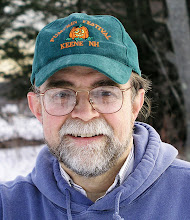
My photo
Spofford, New Hampshire, United States
Jeff Newcomer had been a physician practicing in New Hampshire and Vermont for over 30 years. Over that time, as a member of the Conservation Commission in his home of Chesterfield New Hampshire, he has used his photography to promote the protection and appreciation of the town's wild lands. In recent years he has been transitioning his focus from medicine to photography, writing and teaching. Jeff enjoys photographing throughout New England, but has concentrated on the Monadnock Region and southern Vermont and has had a long term artistic relationship with Mount Monadnock. He is a featured artist in a number of local galleries and his work is often seen in regional print, web publications and in business installations throughout the country. For years Jeff has published a calendar celebrating the beauty of The New England country-side in all seasons. All of the proceeds from his New England Reflections Calendar have gone to support the Pulmonary Rehabilitation Program at the Cheshire Medical Center. Jeff has a strong commitment to sharing his excitement about the special beauty of our region and publishes a blog about photography in New England.
Showing posts with label Rainbows. Show all posts

Sunday, July 24, 2016

Chasing Rainbows


With Thanks to Sir Isaac Newton

Summer is the season of rainbows.  They are a magical, improbable manifestations of nature, which often seem to appear without warning and disappear just as quickly.  It is no wonder that they have long been associated with mystical properties, including the fabled pot of gold at their base.  Last week I was reminded that, although they are beautiful, rainbows are actually just a simple manifestation of the prismatic effect of light bouncing through rain drops and that, given the right conditions,  their occurrence can often be predicted.


Raindrop Physics

About four years ago, I published a blog article about rainbow photography, and last week I was once again able to put to work what I learned from my own research.  I was at home when a strong summer downpour passed through my village of Spofford New Hampshire.  I was just getting ready to settle into our gazebo to for some writing, but instead I

Double Rainbow - Opposite Color Spectrum

decided to do a little rainbow chasing.  I knew that rainbows often form as lines of showers pass by.  The storm must also be followed by unobstructed sun shining through to catch the rain drops at a low enough angle to be reflected back and refracted, separating the light into its full visual spectrum.  The secret is to place the sun at your back and look into the rain clouds as they move away. 


Full Unobstructed Rainbows are Easier to Find on the Coast
Rye Beach, New Hampshire


First Find a Rainbow
On this day, I was a little late in recognizing the conditions. I had no rainbow in Spofford, but I had a reasonable idea where one might form.  I grabbed my camera bag, jumped into the car and headed west toward Keene in hopes of catching up to the receding edge of the storm.  I first reached  my rainbow on the outskirts of the city. 


Find a Foreground

Nice Color but Distractions along Route 12

The two key steps which lead to great rainbow images are first, find a rainbow.  The second is to find something interesting to put in front of the garishly colored arch.  I have seen innumerable pictures of dramatic rainbows spoiled by weak and distracting foregrounds.  Telephone poles, wires, housing projects, windshields and highway overpasses,  all may provide a sense of place, but they tend transform the magic into just an uninspiring smear of color across an ugly distracting foreground.  Once you find your rainbow your next thought should always be “where can I go to put something of interest in front of it, that is also close enough to get to before the rainbow fades”.


First Rainbow

As I moved into Keene, my choices for foregrounds  were limited.  I needed to get away from all the layers of development.  I careened  down a industrial park service road and drove beyond the buildings to be able to shoot down the dead end circle and into the trees of the an old Ash swamp.  Not a great foreground, but I got a reasonably good arching rainbow.  After capturing  the “fact” of the rainbow,  the next step was to try to get a more complete and balanced image. 


Chasing the Storm's Edge
Cemetery Gazebo
I headed out chasing the color, always angling west, to keep myself on the critical back edge of the storm with the unobstructed sun to my back.  Given the location of the rainbow and its direction of motion, I didn’t think I would get much from Keene and so I headed southwest on route 12.  A couple of times the colors seemed to be fading, but then I caught up with the storm. I had in mind a spot in Troy that I though would give me a long view, and some nice unobstructed perspectives.   My target was a cemetery just outside of the village, that sits on a knoll with a clear view to Mt Monadnock.  On this day the storm was obscuring the mountain, but  the color was still there, shining brightly against the receding dark clouds. 


Rain Drops

I first grabbed a couple of multi-image panoramas, to capture the full arc of the colors.   My first attempt was marred by multiple rain drops which caused smudges on my lens.  The problem with multi-image panoramas is that any dust or smudges repeat across each of the frames which are merged into the final image.  I cleaned the lens, but my second attempt, although clean, was not as dramatic. 


Content Aware Fill
Post Fill


 I ended up spending too much time in Photoshop using combinations of Content Aware Fill and the Healing Brush to remove all the drops, but the pain fades, and I am happy with the results.  The cemetery also has a nice Gazebo up on the hill.  I had used it in the past for a foreground and once again I was able to combine it with a vivid portion of the rainbow to construct an effective image.


Worth the Tedium


As the sun dipped into the clouds on the horizon, I was finally forced to give up the chase.  I was still able to catch some of the warm light on the Black Eyed Susan decorated cemetery wall and, later, the clear sky opened for a nice view of the craters of the moon.


Given that I left home with only the potential for a rainbow, I was happy with my results.  It just goes to prove that, with a little physics, we don’t have to depend on pure luck to capture one of nature’s most colorful shows.


Jeff Newcomer, NEPG
partridgebrookreflections.com
603-363-8338


Tuesday, July 24, 2012

Rainbow Photography


Finding the Pot of Gold


Rainbows have always been a popular subject for photography. They are among the most dramatic and colorful of the natural phenomena. It is little wonder that rainbows have always been a subject of superstition and mythology, and our scientific understanding of their origins and behavior has only minimally diminished our sense of wonder at their surprising beauty. Part of the mythology about rainbows describes a Leprechaun's elusive pot of gold that can be found at the end of these colorful celestial arcs. Of course a rainbow is not a physical structure and it's end can never be defined, but I would suggest that, in a photographic image, a rainbow can have a visual pot of gold and that treasure has to do with the strength and interest of the foreground.

Not Just a "Pretty Thing"
Photographs of rainbows always show a lovely spectrum of colors, but the best images are more than just a "picture of a rainbow".  It is the surrounding compositional elements which provide a sense of place and context, that makes a rainbow image compelling and not just a snapshot of a colorful "pretty thing". This is actually one of my central compositional rules. A great landscape photograph is seldom just a picture of a" pretty thing". Whether it is a spectacular mountain, a quiet lake or a colorful autumn tree, images are made especially memorable by how you arrange the elements around the "pretty thing" to provide contrast, context, balance and to draw your eye. This particularly true of rainbows.

Foreground Hunting

Chesterfield New Hampshire Town Hall
When I see a rainbow forming my first thought is "Where can I go
to place something interesting in front of the color".  An immediate corollary of that thought is, "How far can I go before the rainbow disappears and from what angle is the light coming".  I was working in my studio one afternoon when I noticed a beautiful rainbow forming in the eastern sky. I grabbed my camera and leaped into my car.  I knew that time was fleeting, so I headed up to Chesterfield Town Center and arrived just in time to have about 2-3 minutes of the bright colors, against the dark sky, before the sun sank into the clouds. The colors were beautiful, but It was the old stone town hall, bathed in the sunset glow that made this picture special. 


The Physics, I Promise, NO Equations
Sometimes catching a rainbow in a great location is a matter of

Light Through a Raindrop (Wikipedia)
luck, but a basic understanding of the physics of rainbow formation can help you improve your chances. Rainbows are formed by the summation of light refracted and reflected through millions of rain drops. The light is refracted (bent) as it enters the drop. Light of different waves lengths or color are bent by different amounts during refraction, the red light is bent less than the blue, creating the rainbow effect. The light is then reflected off the back of the drop and refracted once again as it passes out of the drop and on to your eye. In the atmosphere, the reflected light comes out of the drop at an angle of about 42 degrees down from the angle of the sun's rays. The light can actually bounce around in the raindrop twice creating a secondary rainbow which is less intense and  is seen above the original.  Interestingly secondary rainbows show the colors in reverse order. Tertiary rainbows are also possible, but are quite rarely seen.


Double Rainbow


My goal here is not a physics lesson, but the physics does provide some helpful photographic lessons.

  1. First rainbows are always most intense when shot with your back to the sun. A simple way to think of this is to try to place your shadow on a line between the sun and your foreground subject.
  2. The colors become more intense as the sun drops toward the horizon and, because of the angle of refection, rainbows don't generally appear until the sun drops to below 42 degrees in the sky. Before that time, unless you are at altitude, the rainbow is actually below the horizon. In southern New Hampshire, during July, this means that we would not expect to see rainbows until after 4:30 in the evening.
  3. Of course you can't have a rainbow without the combination of raindrops and sunlight. Most often this comes from a clearing storm, but fog or sea mist may also create a rainbow. The best bet is to wait until the first light after an evening storm has past by and look away from the sun. With luck, the rainbow will be shining against the receding dark clouds.
  4. Finally, since rainbows are often fleeting and pop up unexpectedly, you might want to keep your own list of prime observing sites close to home. Look for interesting foregrounds that can be viewed against the eastern sky with the sun at your back.  Technology can help improve your odds of finding a great show.  Using my IPad I can now follow the progress of storms on radar and then find the best locations using the Photographers Ephemeris to discover the direction of the sun at any time.

So keep your eyes on the sky after a storm, feel the warmth of the sun on your back, watch the foreground and you may just find your own pot of gold.