About Me

My photo
Spofford, New Hampshire, United States
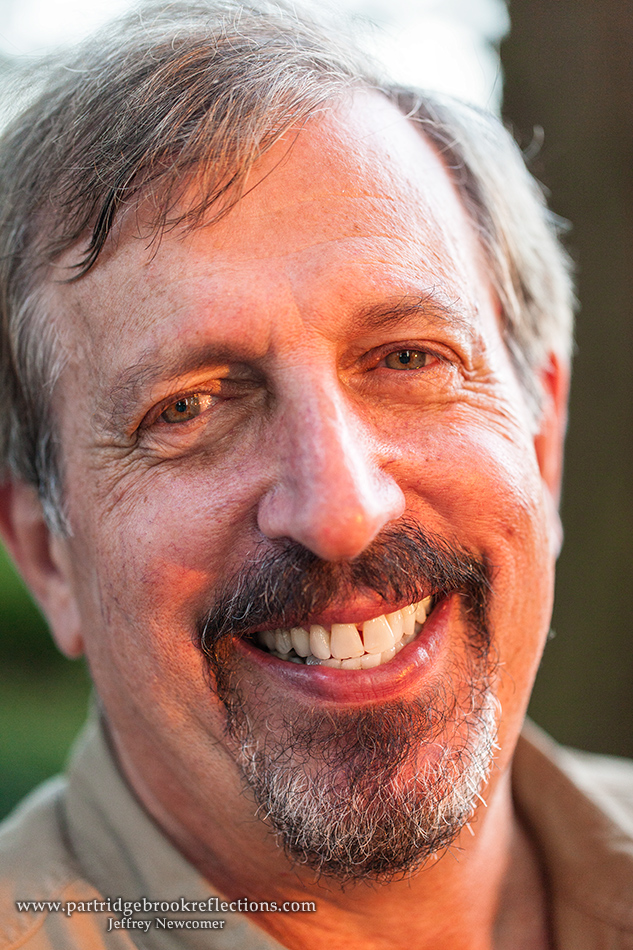
Jeff Newcomer had been a physician practicing in New Hampshire and Vermont for over 30 years. Over that time, as a member of the Conservation Commission in his home of Chesterfield New Hampshire, he has used his photography to promote the protection and appreciation of the town's wild lands. In recent years he has been transitioning his focus from medicine to photography, writing and teaching. Jeff enjoys photographing throughout New England, but has concentrated on the Monadnock Region and southern Vermont and has had a long term artistic relationship with Mount Monadnock. He is a featured artist in a number of local galleries and his work is often seen in regional print, web publications and in business installations throughout the country. For years Jeff has published a calendar celebrating the beauty of The New England country-side in all seasons. All of the proceeds from his New England Reflections Calendar have gone to support the Pulmonary Rehabilitation Program at the Cheshire Medical Center. Jeff has a strong commitment to sharing his excitement about the special beauty of our region and publishes a blog about photography in New England.

Sunday, August 11, 2013

Dealing with the Dapple

Digital Solutions to the Challenge of Exposure
in Patchy Bright Light


Dappled forest Sunlight, Gridley River, Wales Preserve, Sharon, New Hampshire


One of the biggest photographic challenges is managing exposure in spotty or dappled light. If you require proof, just take a hike in our beautiful New England forests on a bright sunny summer day. I did that just last week.

Bagel Mill Show
Early this week I set up a show at the Bagel Mill in Peterborough, New Hampshire. It is a great place to display my photographs and a great place for a quick snack or a long lingering cup of coffee. Check out the show. The Cafe is tucked away on a side street off of route 202 just west of the intersection with 101.


As I was finishing the set-up, Jim, the Cafe owner, told me about a lovely little forest preserve in nearby Sharon. He gave me detailed directions to the Wales Preserve, but I knew I was in trouble when his map went over to second sheet of paper. Needless to say I got lost, but I was lost along a beautiful stretch of upland pastures which commanded spectacular views of Mount Monadnock. It was a new area for me and I didn’t mind the confusion one bit.


Wales Preserve
With the help of my New Hampshire Gazetteer and GPS I finally found the Wales Preserve. The compact 49 acre forest is managed by the Nature Conservancy and encompasses a lovely section of
Gridley River. The “river” is actually more of a brook in this section and is also charmingly know as “McCoy's Sabbath Day Trout Creek”. The easy trail parallels the brook as it gentle descends through series of lovely cascades and pools. The day was sunny and refreshingly cool with the dappled sunlight playing magically across the rushing water and the forest path. New England forest are dream-like on sunny days, but the restless kaleidoscopic patterns of brilliant light and deep shadows are a nightmare for photographers trying to capture the full dynamic range of the experience. I think there may be no more challenging conditions in which to manage photographic exposure than in dappled light. My hike got me thinking about the various ways that this problem might be attacked. My next thought was “Blog”. I apologize for the length of this article, but it was interesting to think through the various approaches that are available to the digital photographer.


In my film days I had largely abandoned attempts to capture forest trails in bright sunlight. I found myself always trying to decide between exposing for the highlights, leaving everything else in impenetrable shadow or opening up to catch the mid and dark tones while completely blowing out the highlights. I often was left with a muddy compromise with nothing well exposed. The usual solutions to high contrast, such as variable neutral density filters, couldn’t work with restless patches of brightness wandering randomly throughout the scene. Then along came digital.

Digital to the Rescue
Digital photography and processing has provided a number of new techniques for dealing with patchy high contrast situations. None are perfect in all situations, but they provide options where none previously existed.

The Artistic Option

First, it should be said that it is not always necessary to squash the full dynamic range into your image. It is still a valid artistic choice to focus on the highlights or shadows and let the opposite end of the dynamic range go. The result will not be the most accurate representation of the scene, but can be an interesting and dramatic choice. Who said images have to be close to the natural experience?

I Did!
OK, enough of that artsy stuff; let’s talk about capturing the scene.

First, Shoot Raw! :
It is difficult to believe that there are still folks out there who will dispute the value of shooting RAW, but when attempting to tame high contrast and especially dappled lighting it is a necessary prerequisite. The expanded dynamic range of RAW images is essential to most of the techniques I will discuss. Many of which involve capturing multiple bracketed images, but you should start by shooting RAW! 


Multi- Image Solutions

HDR Software

Photomatix HDR
Multi-image high dynamic range photography using software
solutions such as Photomatix or the capabilities built into recent versions of Photoshop are obvious approaches to this problem, but I have found that the algorithms used by these programs have trouble with the constantly moving forest foliage. HDR software works best with static scenes and the dapples of brightness in the sunlit forest are never in the same spot from image to image. Anti-ghosting options can be of some help, but this is a real challenge for the software. Masters of HDR can get some very interesting results but I seldom find that HDR software yields the best natural appearing images in these challenging conditions.


Manual Blending of Bracketed Image(s) 


Patches of blown-out hihiglights
I found many interesting cascades along the Gridley River, often with a lovely emerald tint from the illuminated canopy. In my Emerald Cascade image much of the water was in shadow, but a few brilliant reflections distracted from the soft flow

Detail in Highlight
and color. I bracketed my images and had to go quite dark to begin to see a trace of detail in the dappled patches. I eventually used two images, one exposed for the general, scene and the other to capture detail in the few areas of highlight. I aligned the two images and then masked the dark layer, painting in just a touch of detail over the highlighted patches. Because the dappling moves slightly between images, I had to do a little blending and cloning to get a natural appearance of the transitions between light and dark.


Emerald Cascade


Two Image Manually Blended


I was pleased with the final result. My goal was to keep the flashes of light from distracting from the soft appearance of the cascade. The challenge with this technique is to soften the blown out highlights without losing the magic of the dappling. Manual blending works nicely when only a few areas of distracting highlight require muting, but this approach becomes much more time consuming and tedious when applied to an picture with many bright patches, such as my earlier trail image. I gave it a try, but in such situations the magic of Photoshop and Lightroom can be a lifesaver. 


Single Images
Although using multiple images can lead to a better result in some situations, an appropriately exposed single image can also be edited

Dark, but Highlights Preserved
to control scattered bright highlights, and processing a single image is easier since it avoids the need align multiple layers and adjust for movement of the dapples. This is where the wider dynamic range of RAW files is particularly important. Returning to my trail image, I start again with the multiple images, but in post I look for the brightest image that still retains detail in the highlights. This invariably means that I start with a dark image with
 increased noise in the shadows, but I study the histogram and select the one shifted the furthest to the right without completely blowing out the highlights. As I have discussed in a previous blog, because of the increased data in the highlights, shooting to the right is always best even when you can’t go as far to the right as you would like. As the histogram moves to the right, the dark zones get pulled into areas greater bit density and noise is reduced. Trust me or go read my "Exposing to the Right" article . Anyway, in case of dapple light, the images will still be dark and noise will still be an issue, but improved noise reduction functions can do a lot to minimize the damage.


Single Image Editing , Lightroom 5
Photoshop and Lightroom provide a number of ways to process the single images to bring out its full dynamic range. In past versions of Photoshop, I would double process the image in Camera Raw, once for the highlights and a second time for the shadows and then manually blend the two images . With one image, the blending process is much easier since the image content is identical. Newer versions of these programs now


Modified Single Image
have much more sophisticated controls of shadow and highlights and today I almost never find the need to double process. Within Camera RAW or Lightroom, the controls allow independent adjustments in shadow and highlights along with the ability to set levels of blacks and whites. Once within Photoshop the Shadow/Highlight control allows for further adjustments. It is often a combination of techniques which work best to pull out the amazing amount of dynamic range which lies in the deep well of the RAW files. 


The bottom line is that the digital photographer now has a wide range of options to control challenging high dynamic range situations. Whether you use HDR, image blending or the remarkable controls in Lightroom and Photoshop, the result is that the sunny forest is no longer a forbidding place for photographers. 


Forest Glade, Arlington, Vermont

Saturday, August 3, 2013

Rye Beach Weekend Photography

 
Trying Again for an "Eddington Moment"


Every summer our friends Tom and Paula rent a cottage for a month on the New Hampshire seacoast at Rye Beach. The beach is
lined with beautiful and extravagant houses, but Tom and Paula's place stands out as a rustic throwback to earlier times when beach houses was supposed to be simple and time at the shore was more like camping without an elegant modern structure blocking the experience of the sea. During their stay on the beach, Tom and Paula entertain many of their friends and every year we join the group for "Chesterfield Weekend". It is a great chance to be on the coast, to sit and watch the waves, eat and drink and of course talk. We do love to talk.

For me it is a treasured annual opportunity to photograph the New Hampshire seacoast. We are only there for a couple of days and my photography is strictly controlled by the weather, but for a poor landlocked guy, it is always an exciting opportunity. Even when the weather is terrible I can scout out interesting locations for another time. Besides, bad weather is often the best time to shoot. Except when I’m looking to capture a sunrise.


Whaleback Sunrise

Last year I had carefully planned to catch the sun rising behind
Last Year's Disappointment
Whaleback Lighthouse at the entrance to Portsmouth Harbor. I used The Photographer's Ephemeris to find the perfect location on Frost Point in Odiorne State Park. I got up at four am and hiked through the predawn dark to reach the beach, but the clouds remain stubbornly impenetrable and I had to be satisfied with moody shots of the restless gray ocean. I was happy with the images, and philosophical about the vagaries of nature, but that was not what I came for and certainly not why I dragged my old body out of bed at four AM. You can read about my adventure and my failure to experience an "Eddington Moment" in my blog article from last summer.


Persistence


Notice the Alien at the Helm

This year I decided to give it another try. Again the weather seemed marginal, but I was there and it seemed worth another shot. Since we always visit around the same date, the optimal location on Frost Point had not changed. Four AM came just as early as last year, but the sky looked clearer. When I got to the beach there was overcast on the horizon, but just as I was ready for another disappointment, the sky lit up. The golden clouds were a perfect back drop to the lighthouse and the passing boats. This is what I came for and it was worth the two early mornings. As the sun rose above the clouds, and became excessively bright, I began concentrating on the warm light which bathed the rocks and sea grass along the shore. It was a great morning to be by the ocean, peaceful and quiet, and with surprisingly few mosquitoes. While I was wandering the beach, I set up my field recorder on a rock near the water to record the relaxing sounds of the waves and sea birds. 


You can also listen to the ocean music on YouTube or as the background for my Atlantic Coast slide show (If you have Flash). 


I lingered for awhile, but I had to get back to nap before I joined the crew at the Golden Egg for a perfect breakfast. I enthused about the spectacular sunrise; attempting to make my lazy friends feel sorry that they didn’t join me on the beach. I failed, but, for me, it was still a perfect example of the power of persistence. Eddington would have been proud.


 Gifts from the Sea
I bagged my sunrise, but I always try to get the most from my trips to the coast. Although the full moon had passed I scouted around for good moonrise locations. I found that the view from Fort Stark in Portsmouth Harbor would work well. Sadly clouds were an issue on both nights, but soft overcast light worked well for other subjects, such as one of my favorite run down tidal shacks in Rye.


Atlantic Arch
The Best Laid Plans
Not all photographic opportunities come based on careful planning. Sometimes you have to be ready when luck plays its part. While beginning to prepare for dinner in the cottage on Friday night, My friend Bob suddenly began screaming for me to come quickly and to bring my camera. A rain shower was passing out to sea and the setting sun had just broken through the clouds, the perfect situation for a rainbow. And there it was, a spectacular full double rainbow floating on the ocean. I leaped back into the house to grab my 16-35 mm wide angle lens and started shooting. My choice of foregrounds was limited, but I was able to incorporate the small deck. Even with the wide angle, I couldn’t catch the full double, so, before the color melted away, I quickly grab a 5 image panorama which happily included Paula and Lynne watching in stunned amazement from the beach.  As much as I have learned about how rainbows form, I can rarely anticipate when one will appear. The conditions usually come together in an instant and are gone just as quickly. The best I can do is try to be ready when the miracle happens. This time it worked. This photography stuff is Great!


Before I headed home Sunday afternoon, I wandered the rocks along Rye Beach at low tide. The light was still flat, but I was able to catch some modest surf and tidal pools. I managed to keep my camera dry, but very little else. After drying off I reluctantly headed for home. 


Chesterfield Weekend at Rye Beach is always a great chance to visit with friends away from the distractions of home, and happily, there is always time to get out to capture the magic of the ocean. I was sad to leave, but excited to get home to dump my image into the computer and begin exploring my seacoast treasures. If nothing else, it was a refreshing break from the cows and trees.


Jeffrey Newcomer
Partridgebrookreflections.com

Friday, July 26, 2013

The Wedding Bonus for Photographers


I DON'T DO THIS

Don’t Shoot the Wedding, Shoot AT the Wedding

I always have problems getting family and friends to pose for nice candid portraits.
The Salute
My son has responded to my attempts to photograph him with his raised middle finger so many times that a few Christmas' ago he gave me a coupon book with; "10 photos without the finger".  Most often my subjects don't go to such extremes, but resort to the usual excuses; “I'm busy”, “Not in these cloths” and the standard, “Oh, I look horrible”.  Frustrating.  Now imagine a situation in which everyone is dressed beautifully, with make-up fully installed.  Place all these people on a happy occasion, in a lovely location, and enfold them all in an atmosphere in which everyone expects to be photographed. Ok, now you have a wedding, and there is no better opportunity to capture beautiful candid portraits.

"Do You Do Weddings"
Over the years I have been asked the dreaded question numerous times, “Do you do weddings”.  Each time I dutifully explain that I am primarily a landscape photographer and that brides are definitely NOT the same as trees.  I then discuss how wedding photography is a very specialized art form and that it would be insane to risk the most important remembrance of their special day on an amateur.  Usually By this point I have convinced the couple to seek professional help and I am off the hook.  If I am attending the wedding I will typically add that I will be bringing my camera and that they will be welcome to use any of my pictures they like.  And that’s my opening.

Matt & Crystal, Quietly Panicking
Emergencies

On a couple of occasions I have been approached at a wedding by a distraught bride panicked by the fact that the official photographer had been suddenly taken sick or had suffered a car break-down.  In those situations I have expanded my portfolio to help capture the event.  I agree to this only on the condition of low expectations and that no money will change hands.  For Matt and Crystal’s wedding I actually photographed decorations, and a few set group poses.  I had fun but these experiences have only served to reinforce my commitment to never take a formal wedding job.


The Wedding Advantage
No Finger
My preferred goal at weddings is to go after the intimate candid shots that are teed up for me in this magic environment.  I drift about with my 85mm fast portrait lens and often find that my usually reticent family and friends are suddenly open and, dare I say, even happy to be photographed.  All of their standard excuses seem to melt away.  I take pictures of happy groups, but my favorite shots are the simple close-up head shots.  I have always been fascinated by faces and the less distraction the better.  The key is to approach subjects with a relaxed happy attitude and they will most often respond in kind.  Again there is no easier and more natural time to move in than at a wedding.


Rules.
A wedding is a great opportunity, but I found that a few simple rules can improve the experience.

First and most importantly,  stay out of the wedding photographer’s way and don’t steal his/her set shots.  Photographers work hard to get everything right and they don’t need a bunch of leeches trying to feed off all that effort.  Often the key moment lasts only a second and,  if uncle Herb jumps in front to block the magic, the resulting homicide will be fully justifiable.

Keep things unobtrusive and fun.  Know when to back off.  A few people may not want to photographed.  Unlike the wedding photographer you don’t have to get every shot, just grab the ones you like and are welcome.

Watch your background.  Weddings can get pretty hectic making for excessively busy and distracting backgrounds.  Shooting wide open to restrict the depth of field can help, but sometimes a step or two to one side or the other can yield a much simpler background.

Game Over
Get your shots early, before the alcohol takes its toll.  There is often a fine line between relaxed and bizarre.

 And finally , don't forget to have a good time.  As you record all the joy and excitement pause, put the camera down in a safe place, and get crazy on the dance floor.


Jeffrey Newcomer


Saturday, July 20, 2013

Good-byes


 It is a constant struggle to find good places to show my photography to the community and the world, and sadly this month I am loosing two of the best.


Pocket Full of Rye 
 
Selling photography in a retail establishment is a difficult challenge. I continue to prize my representation in quality juried galleries such as Vermont Artisan Design and Sharon Arts Center, 
but commercial success is all dependent on how the work is displayed. Photography is not seen at its best when flipped past in a bin or with an occasional framed piece amongst a jumble of other work. Retail sales also involves a substantial investment in inventory. One additional problem for me has been finding a good venue in Keene New Hampshire, where my work is best known. After years of displaying my pictures in restaurants, banks, churches and public buildings, and almost a decade of publishing my New England Reflections Calendar, most locals would be hard pressed to avoid exposure to my images, but I have always wanted a Keene venue to prominently display my work. Then along came Ann Heffernon and Pocket Full of Rye.


When Ann Heffernon offered to sell my work in her lovely gift shop on Main Street in Keene, I was thrilled about the location but also worried that my photography might seem out of place in Ann's world of jewelry, cards and gift items. Ann had no such concerns. She embraced my work, showing it prominently and continuously in her windows and within the store. More importantly she was an enthusiastic advocate, often directing customers to my photographs, and encouraging me to try creating different pieces, such as mini panoramas and note cards. The results have been great for both of us, but, more importantly, it has also been a joy to become friends with Ann.

It was a shock and a disappointment when Ann told me that she
would be closing her shop. Retail is hard and she is off to do other exciting things. I am sure that her cheerful, honest and enthusiastic attitude will continue to server her well in her new endeavors, but for me she will be greatly missed. I'll start again to look for my perfect venue in Keene, but I know the opportunities that Ann provided at Pocket Full of Rye can never be fully replaced. It is completely typical of Ann's kindness that, even while she has been busy liquidating her store, she has also taken time to look for new opportunities to show my work in the community. That's just Ann. Pocket Full of Rye will be open for a few more days. Drop by to wish Ann well and take advantage of some great deals.


New Hampshire ToDo Magazine

 
Sadly, I must also say goodbye to New Hampshire ToDo Magazine, 
which will be ceasing publication with the July 2013 issue. For 11 years NH To Do has been an important source of information about the attractions and activities in the Granite State. Over the last couple of years the magazine's senior editor, Cam Mirisola, has been kind to my photography, using my images to decorate various articles and announcements, as well as four covers. Cam was even foolish enough to ask me to do an article about historic preservation in Harrisville, New Hampshire.


 I always get a bit anxious when I send my pictures off for magazine publication, not knowing how they might be manipulated and how they will appear in a different color space, but I was never disappointed with my images in New Hampshire ToDo. The magazine was produced with consistent high quality. On my first cover, the designer flipped my image of the horse drawn sap gathering to accommodate the text, but It looked fine and I learned a lesson about the types of images that work best for covers. I have never met Cam, but it has been a pleasure to work with her. Of course, as with all magazine editors, Cam’s deadline were always “yesterday” and I was amazed that, even when I uploaded a image at 1 AM she always seemed to be there to comment. Cam needs a rest and I wish her well in her future endeavors. 


My best gallery and my best magazine both gone in a month. It will not be easy to replace these excellent venues for showing my work, but I’ll keep looking. You never know when the next opportunity will surface. I’m excited about an image which will be published in an upcoming issue of the nationally distributed Backpacker Magazine and there will always be the phone book covers. You can check out some of my work in August at the Bagel Mill in Peterborough, New Hampshire.


Jeffrey Newcomer
Partridgebrookreflections.com

Saturday, July 13, 2013

Natures Accompaniment for Your Images


------------------------------------------------------------------------------- 
But First An Apology
Let me start by apologizing for missing last weeks blog.  I was absolutely flattened by a miserable virus and, although my "Sounds" article was essentially done, for most of the week, I couldn't get my head off the pillow.  Over the last Two and one-half years I haven't missed a week and on some weeks I did two articles, so I figure I deserve some slack.  Some of you may have been happy for the break, but, I am beginning to feel human, so it's back to work!
-------------------------------------------------------------------------------


Natural Sound 

One of the most endangered things on our earth is not an obscure beetle or delicate bird, but quietude.

Quietude does not mean the total lack of sound but rather places where natural sounds can be heard without the intrusion of man-made, technological noise. We have become so accustom to our own din that we hardly notice it, until we start listening for quiet.


Do the experiment yourself.  Think of a nearby place that you recall to have been peaceful and quiet.  Now go there and listen carefully for a few minutes.  Give it several minutes. If you don't hear the intrusion of man in the background, bless yourself and tell no one but me.

Recently I have been trying to record natural sounds to include as background for some of my web site slide shows. I had initially tried music, but I found that nature provides a more appropriate


Walpole Ridge, Then Late Mowing
background for my landscape images. I went out searching for pure sound and quickly discovered that even in our comparatively undeveloped corner of New England human noise is almost impossible to avoid. Automobile engines, chain saws, trains, even barking dogs all contribute to the unnatural symphony and it is amazing how far these sounds travel. Route 91 sits on the west side of my town of Chesterfield, New Hampshire and can be heard as a low rumble throughout the town, even 10 or more miles away. Frequently I will find what would appear to be the perfectly isolated spot, but as I settle in to capture pristine nature, I will start noticing the persistent background rumble. Our ears tend to filter out subtle noise, but when we really focus on the sound it becomes obvious and the recorder doesn't miss a note.

I have just started on my search for quietude. As I drive the back roads I can often be seen pulled over just listening. It can be a frustrating quest, but I have already learned a few tricks along the way.


 Go Low

Deep in the Valley

Noise is muted by the hills. On my searches I tend to look for valleys or gorges within the forest. The problem is that people also tend to congregate in the valleys. I seek out low lying back roads where the houses are few are far apart and the dogs don't bark at passersby. Isolated forest trail offer even great chances to escape the rumble.


The Quiet Times
Noise is less when people are snug in their beds and snoring is the only issue. I try to get out early in the morning and late at night. Happily this is also the time when nature tends to be its most vocal.


Evening on Madame Sherri Pond


Listen on YouTube

Signal to Noise.
It seems obvious that noise will be less apparent when the target
sounds are louder and more continuous. Directional microphones can help isolate the sound, but even the most enthusiastic bird has to take a breath now and then that is when highway rumble becomes painfully evident. Continuous sounds such as babbling brooks, surf, or rain can cover a multitude of sins and I have mixed brook sounds with more delicate tracks to cover the technological rumble. Check out the track on my website’s front page (note this Flash and won't player on your Apple devices).  What can be more relaxing than the sound of birds twittering next to a lovely babbling brook? I have to pee already!


Spring Pasture with a Small Brook
No Flash? Listen on YouTube 


Patience and Editing.
It is an unwritten rule that as soon as I turn on the recorder a car drives by or a plane flies over. Even the quietest location is not quiet all the time. The important thing is to be patient and continue recording. One of the most common sources of human contamination of natural sounds comes from the person recording the sound. Foot steps, sneezes or even a nose scratch can be picked up surprisingly easily. I usually set up my recorder and then retreat at least several yards away.  Despite my best efforts transient noise always seem to intrude, but the nice thing about natural sounds is that interruptions are generally easy to edit out without obvious discontinuities. 


Simple Tools
What you will need: a Recorder, Editing Software and Patience.

Field Recorder
As with photography, it is easy to spend a lot of money recording


Zoom H4n with "dead cat"
natural sounds, but you can get started quite economically. There are many field recorders on the market. A few years ago I found the Zoom H4n field recorder on sale. The H4n is an excellent, compact stereo recorder with two, built in, condenser mics and 4 channel capability. I was thinking of using it for interviews, but it is also a very a very capable field recorder. It comes with a foam cover to reduce wind noise, but I also made my own "dead cat" cover from a piece of artificial fur. The dead cat does a nice job muting the pounding from the wind and I just love telling people that I have a dead cat on my recorder. I can also connect my Rode video mic for more directional recording. The Zoom H4n is a great recorder. It is available for around $270, which is a bargain 


IPhone Recording, No dead cat, yet


It is commonly stated that your best camera is the one you have with you and that is also true of sound recorders. I have found that my iPhone does an acceptable job in many situations, especially when I am only planning to use the sounds on the web. I see an “i”Dead Cat in my future.


iPhone Recording of Chesterfield Gorge


 Sound Editor
Sound needs to be edited and I could have spent several hundred dollars for a program that I probably wouldn’t understand. I ended up with Audacity, a very capable and FREE editor that does everything I need. I can adjust levels, edit out distractions and mix tracks. The program has a set of filters which among other thing allows a degree of muting of background noise.


Storm Over Harrisville

I am just starting with field recording and perhaps, when I really know what I’m doing, I will post another article, but I’m having such a good time capturing the sounds of nature that I couldn’t resist sharing my early experiences. Now get out there and listen and let me know if you find the quietude.


Thunderstorm over Spofford, NH (edited to 7minutes)
 
 For those without Flash, Listen on YouTube

Addendum
Here is a 30 minute trip to the New Hampshire seacoast at dawn from my recent weekend at Rye Beach. I captured this audio while shooting the sunrise behind Whaleback Lighthouse in Portsmouth Harbor. If you can't do Flash, you can go to my YouTube site:


Jeff Newcomer
partridgebrookreflections.com