About Me

My photo
Spofford, New Hampshire, United States
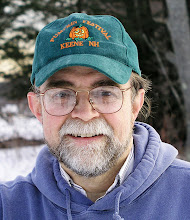
Jeff Newcomer had been a physician practicing in New Hampshire and Vermont for over 30 years. Over that time, as a member of the Conservation Commission in his home of Chesterfield New Hampshire, he has used his photography to promote the protection and appreciation of the town's wild lands. In recent years he has been transitioning his focus from medicine to photography, writing and teaching. Jeff enjoys photographing throughout New England, but has concentrated on the Monadnock Region and southern Vermont and has had a long term artistic relationship with Mount Monadnock. He is a featured artist in a number of local galleries and his work is often seen in regional print, web publications and in business installations throughout the country. For years Jeff has published a calendar celebrating the beauty of The New England country-side in all seasons. All of the proceeds from his New England Reflections Calendar have gone to support the Pulmonary Rehabilitation Program at the Cheshire Medical Center. Jeff has a strong commitment to sharing his excitement about the special beauty of our region and publishes a blog about photography in New England.
Showing posts with label mist. Show all posts

Tuesday, January 18, 2022

Through the Mist


Fresh Snow on Otter Brook, Keene NH

  Despite the strangeness of the weather, we had a reasonably colorful autumn.  By December, our typical November “Stick Season” should have been long past.  We were blessed with an inch or so of snow in late December, but that quickly vanished.  It is now mid-January, and we are just getting our next modest snowfall. The result has been an exceptionally long opportunity to explore the patterns and muted colors of New England’s photographically challenging, post-autumn, in-between season.


A couple of weeks ago, I was reminded of one of the climatic conditions that can salvage subtlety and interest from the starkness of the stick season.  I awoke to a lovely layer of fog that hung on the landscape and persisted for much of the day.  It is remarkable how a bit of mist in the air can lift a photographer from his pre-winter funk.  I shot out of the house and headed down the road.


I didn’t need to go far, since fog can dramatically alter even the most familiar or mundane scenes.  It can add mystery and depth while transforming bright colors to soft pastels. Seen through fog, distant features can take on a pleasant, uniformly soft, appearance.  Lovely, but I find these images rather flat.  They miss an important feature of foggy weather, the enhanced sense of depth.


Forest Depth

Placing something close to the camera, unaffected by the softening mist, can provide effective contrast to the shrouded distant subjects.  The effect is an expanded sense of depth.  Whenever I begin shooting in the fog, my first question is, “Where can I find something distinct in the foreground”.  Often the soft background serves to simplify the scene, allowing the foreground to stand out, removed from the busy distraction of the more distant elements.


Screened Hay Rake

Partridge Brook Debris


On this day, I found plenty of interesting foregrounds, from an old, weed engulfed, hay rake to a collection of storm-tossed brook debris.   I especially like it when leading lines draw the eye through the scene to the distant background.

Granite Leading Line


  It was a lovely afternoon with the mist creating interest in almost every direction.  I was only forced to stop by the fading light.


Mt Monadnock Blanket

Misty Wall, Roads End Farm
Chesterfield, NH 2000


Now we have some snow on the ground and the hope for more traditional winter photography, 


but remember fog can also work its magic on snowy scenes.


Our new puppy Benjamin Pierce (Benji) is enjoying his first snow.  He is named after the man who built our house back in the 1830s.  Our previous dogs, Nellie and Sophie were named after Benjamin's daughter and mother.


Jeff Newcomer, NEPG
www.partridgebrookreflections.com


Friday, August 14, 2015

Working with the Light (Part 2)


It's Not Nice to try to Fool Mother Nature.

One of the key skills contributing to successful landscape photography is the ability to work with the prevailing light and not to try to force your images against what nature provides. Last week I shared a few thoughts on the subjects and techniques which work well with the beautiful Golden Hours and also on how to salvage quality images from the challenging bright midday sun. This week I cover approaches to some of my favorite "lights", overcast, fog and weather extremes. As always the key is to recognize the conditions and work within the opportunities and limitations that they provide.

--------------------------------------------------------------
Overcast Light

 
Enveloping Light

The rest of the non-photographer world thinks that overcast days place a dull blanket over the natural beauty of the landscape, but I love to shoot when the sky is gray. In many ways this light has opposite effects from those on brilliant sunny days. Overcast light is soft and diffuse with the sky serving as one giant soft box. The light wraps around subjects working especially well for portraits and macros and the rich color of flowers and foliage can shine through without the reflections caused by harsh directional light.


Sleep In!
Soft Forest Green

Overcast robs us of the opportunity to shoot the golden hours, but on the plus side, we don't have to wait for sunrise or sunset, since the advantages of overcast light extend throughout the day.  You can sleep late, have a nice breakfast and then wander out to leisurely seize the day.


Overcast is Great for Waterfalls


Hide the Sky?
Oppressive Sky
One major disadvantage of overcast is that the skys are often flat and uninteresting.  The simplest solution is to avoid shooting the sky and focus on the colors and detail of the landscape.  


Focus on the Foreground


Show little if any of the flat gray overhead.  But the sky doesn't always need to be completely avoided. Proper exposure of the dark landscape can result in overexposing the sky and "blowing out" any detail, but current digital editing tools and high dynamic range techniques can salvage interesting detail in the clouds. When I'm able to bring out the drama and ominousness of the clouds I feel I no longer need to crop them out of the image. 


Dramatic Sky Revealed


------------------------------------------------------------------------------------
Fog and Mist


First an entirely worthless answer to a question you didn't ask. What is the difference between fog and mist? Actually they are both essentially clouds which have come down to earth, but the difference has to do with how far you can see through the cloud. Fog is thicker, limiting visibility to one km or less, while you can see through mist for 1-2 km. Who decided this? Obviously NOT an American. How far is a km anyway?


Fog and mist are both bounteous gifts for photographers. Nothing gets me out of the house as fast as when I see the fog settle in. To the benefits of soft overcast light, they add a sense of depth and drama,  and turn bright colors to subtle pastels


Clear Foreground Depth

Clear Foreground

Misty Blanket


The key to the impact of fog and mist is to find situations with depth that can be effectively portrayed and the essential key to that portrayal is to have something interesting in the foreground that can appear relatively clear and sharp compared to the distant fog enshrouded background. Images with flat fog uniformly clouding the entire image may provide a touch of mystery but they suppress rather than enhance the feeling of depth.


Misty Depth


For maximum effect the sharp foreground elements are best placed off to one side. The rule of thirds still applies, but in rare situations, such as my image of the distant  house floating above a beach in Nova Scotia, the relationship between clear foreground and soft background can be effectively reversed.


Floating, Nova Scotia


See the Light

Seeing the Light

Fog and mist don't always occur under densely overcast skys and when the sun shines through, it makes the light dramatically palpable. To catch the brightest rays of light it is usually best to angle your view toward, but not directly into the light. The rays of light may only last for a few minutes as the fog lifts, but during that time you can find some magical images. It is well worth the wait.

---------------------------------------------------------------------------------
Extremes of Weather
Photographers love bad weather. Whether it is howling blizzards, pelting rain or towering thunder clouds, bad weather provides many of the most dramatic and dynamic opportunities for photography. 


Lightning Light


Much like the effects of fog, rain and snow provide the opportunity to demonstrate a feeling of depth and the importance of clear and interesting foreground elements is similar. The difference comes from the fact that fog and mist create a soft welcoming feel while extreme precipitation should make the viewer shout, "I'm glad I'm not there!" Unfortunately, you ARE there and so special attention to the protection of your equipment is required. 


Soft Snow


Shutter Speed 
Shutter speed can have a strong effect on the mood of images of precipitation.  With snow, a slow shutter reveals streaks that emphasize the storm's ferocity while a quick exposure catches the individual flakes as soft points of light, suggesting a more peaceful scene.


Snow Streaks


Gentle Rain, Cape Porpoise, Maine


Finding the Weather
It doesn't take a meteorologist to recognize when a storm is overhead or that thunder storms tend to move from west to east, and  to help the planning, there is an endless supply of weather apps for our iPhones or Androids. The challenge is to figure out when and where to get out into the maelstrom. 


Storm Over Monadnock

Often the best light occurs just before or after the storm strikes. Some years ago I ran out from work just after a thunderstorm past and chased it to the top of a hill east of Keene New Hampshire. I was rewarded by one of my favorite views of a storm breaking over the top of Mount Monadnock.


After The Storm


On another early morning I was able to catch the clouds breaking up in the dawn light after a heavy snow storm had just passed.


Perhaps the most impressive "after weather" events are the rainbows that appear when the sun breaks through low in the evening sky and bounces off the interiors of the fleeting raindrops. The point is that poking around the edges of weather can be even more rewarding than being immersed in the storm.


Town Hall Rainbow, Chesterfield, New Hampshire


Protect the Equipment


So protect your equipment and chase after that wonderful miserable weather that nature generously provides.


 ---------------------------------------------------------------------------------

Celestial Light

Dublin Lake
 
Of course I have left out one important type of light, the lack of it. Night photography has expanded with the rapidly improving capabilities of digital photography and it is a topic deserving of its own discussion. In fact I have written a number of articles as I have learned about exploring the depths of our milky way and the drama of or own satellite.


Overcast, fog, bright overhead sunlight, extremes of weather and the night sky all offer their own attractions. It is the glory of shooting in New England that we can often experience many or all of them in the same day. In New England there is never a bad time to go out shooting as long as you accept the challenge of embracing what nature provides.


Jeffrey Newcomer
partridgebrookreflections.com
603-363-8338

Monday, December 2, 2013

Editing Your Photos With the "Blow-Up" Scan


West River Valley. Dummerston, Vermont

Looking for the Bodies
Thanksgiving Gathering
Since  Susan and I are just getting back from a week visiting our daughter in Washington, DC,  this week's blog will be mercifully short.  We gathered at Abigail's house for Thanksgiving with Abby, her boyfriend Grayson, and a number of Abby's  friends and their families. Even our son Jeremy came down from New York City.  It was our typical intimate holiday feast for 15, with lots of
fascinating new friends, a
Space Shuttle Discovery
great  feast and a lovely visit.  Washington has a limitless supply of interesting things to see, and just about everything is free.  On this trip we went to the Air and Space Museum in Chantilly, Virginia and the amazing National Gallery of Art.  The Gallery's collection is remarkable and It was a reminder of how much we can learn from the masters about photographic composition and the use of light . 
National Museum of Art

 We got home late Saturday night, leaving little time to put together an article.  I thought this would be a good time to mention a simple editing step that I use on all of my pictures.  My "Blow-Up scan" harkens back to a classic '60s movie that should be on every photographer's must see list.


The Film

Michelangelo Antonioni's classic 1966 film, "Blow-Up" tells the story of a fashion photographer in mid-60s London.  The film studies the glamorous world of high fashion photography, but for me the key moment comes when the photographer, played by David Hemmings, escapes the glitz to do some voyeuristic street photography.  In the park he catches a couple in an intimate

embrace.  He is seen and the woman (Vanessa Redgrave) does everything she can to get the film, including offering money and "companionship", but without
The Body
success.  Later, in the darkroom, yes a real darkroom, the photographer finds evidence of a murder.  While scanning the detail of the image he discovers the grainy image of a man in the trees apparently holding a gun and later the suggestion of a body lying in the grass.  The movie devolves into reflections on the nature of reality, but it was what the photographer found while scanning the image detail that made a lasting impression.


Where are the Bodies?


The Trash


The "Blow-Up" Scan


Part of my editing routine is to zoom in to 100% and then systematically scan every inch of the image.  I start at the top and move slowly across the image, row by row,  to the bottom. In the sky, I'm looking for dust specs, erasing them with my healing brush.  If the sky is bright, I will darken it with a levels layer, to make the blemishes more apparent.  The new version of Lightroom has a Spot Detection Tool which has a similar effect.   As I get down into the rest of the image, I look
Spots Highlighted with Levels Adjustment
for trash or other distractions.   I clone out the random candy wrappers and cigarette packs, but I also look for distracting elements, such as bright patches, that might draw attention from the main subject(s) of the image.  Of course, while I'm performing this systematic clean-up, I never forget Blow-Up.  Perhaps it is a bit macabre, but I always watch for the occasional dead body.  Creepy?  Yes,  but it keeps me remembering to carefully scan my images, and that's what is most Important.  

White Distractions, or Perhaps a Bleached Femur?

Check out "Blow-Up".  It is a classic, of particular interest to photographers and, although you will probably never discover a body,  scan your images carefully, You never know what you'll find.

Jeffrey Newcomer
Partridgebrookreflections.com