About Me

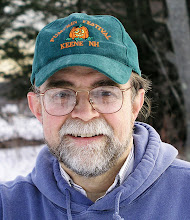
My photo
Spofford, New Hampshire, United States
Jeff Newcomer had been a physician practicing in New Hampshire and Vermont for over 30 years. Over that time, as a member of the Conservation Commission in his home of Chesterfield New Hampshire, he has used his photography to promote the protection and appreciation of the town's wild lands. In recent years he has been transitioning his focus from medicine to photography, writing and teaching. Jeff enjoys photographing throughout New England, but has concentrated on the Monadnock Region and southern Vermont and has had a long term artistic relationship with Mount Monadnock. He is a featured artist in a number of local galleries and his work is often seen in regional print, web publications and in business installations throughout the country. For years Jeff has published a calendar celebrating the beauty of The New England country-side in all seasons. All of the proceeds from his New England Reflections Calendar have gone to support the Pulmonary Rehabilitation Program at the Cheshire Medical Center. Jeff has a strong commitment to sharing his excitement about the special beauty of our region and publishes a blog about photography in New England.
Showing posts with label Alaska. Show all posts

Sunday, September 17, 2017

My Clunky Travel Telephoto


I’m getting ready for a trip to Italy coming up in a few days.  We are celebrating Susan’s birthday in grand style.  The itinerary includes a week in a Tuscan hilltop villa with all the family, and then a packed schedule including visits to Rome, Florence, Bologna, Venice and Lake Como.  We’re very excited, but as always, I have started obsessing about what gear I should lug along on the trip.  

Basics

Canon 24-105

The basics must include my Canon 5D Mark IV  and my back-up 5D Mark II body.  For my small “carry around” camera, I’m conflicted about whether to take my Canon G11 or the remarkably versatile, Canon SX50HS.  The HS has a ridiculously wide focal length range, 24-1200, but its tiny sensor can’t match the image quality of the G11.  I’m not sure that I will need the long focal length,  as I shoot in the narrow streets and confined churches of Italy, so I am leaning toward the G11.  If I could only get Susan to touch “her” 50HS, I could have both.


Keel Billed Toucan, Tortugero Costa Rica

Of course, I must include lots of memory cards, batteries and chargers.  For back-up I will bring a portable hard drive and therefore I must bring along a laptop.  Memory cards, hard drive and laptop will satisfy the rule that an Image doesn’t exist until it is in three places.  Then there are the filters, lens cloths, cable release, and my light tripod. I will walk with my Arca Swiss enabled monopod/walking stick, both to steady my camera and to gain sympathy as the TSA scans my artificial hip.  

 I will decide on a couple of camera bags, but which bags will depend on the my toughest decision, which lenses to bring. 


Cresky Krumlov, Czech Republic


The Lens Dilemma

Bare Throated Tiger Heron


Obviously I will be bringing my work-horse 24-105 lens. For all those cramped churches, my 15-35 wide angle must be included.  I can’t justify bringing my beloved 100mm macro nor my 85mm portrait lens.  The big question is, “to telephoto or not telephoto”.


Alaskan Breach, 400mm

I have faced this question before.  On trips to the Alaska, the Galápagos Islands and the rain forests of Costa Rica there was no question that, to get closer to the wildlife, I needed all the reach possible, but Italy may to be a different matter.  My Canon 100-400 f4 is an amazing lens, but it is a beast, weighing in at 3 pounds.  Back in 2011, I was struggling with the same issue as I prepared for trip through Central Europe which included wonderful Prague and then a cruise down the Danube to Budapest.  I didn’t want to lug the 100-400 and eventually pulled out my old Quantarary 70-300mm.  This is the lens that, years ago, I dropped into a brook below a waterfall in the Madame Sherri Forest.  It wasn’t worth paying to dry out this inexpensive off-brand lens, but After a few years I found that the elements had dried without any apparent corrosion or mildew.  It seemed to work fine including the auto-focus.  The front lens still has very slight water spotting, but it doesn’t seem to affect the image quality.  The lens lacks image stabilization and it doesn’t have the sharpness or rigid build of my beloved L Lens, but it is dwarfed by my 100-400, and is 1/3 the weight.  Ok, I’ve talked myself into it, the 70-300 is a go.

Schonbrunn Palcace Vienna Austria, Quantarary 70-300mm


How to Carry it All – On a Plane.
Messenger Bag
Air travel is getting increasingly dicey for photographers with prohibitions on the use of electronic devices and special restriction that might apply to photographic equipment.  I start by wanting to avoid being forced to check any of my gear.  I have a nice, medium sized, camera pack which should work well and I plan to bring my sturdy Peak Design Messenger bag as my “personal, under-seat item. 

That’s the plan, but who knows how the regulations may change within the next few days.  Wish me luck.

As we wander around Italy, I’m not sure whether I will have access to the web.   I’ll try to keep checking in, but I apologize in advance for any missed posts. 
   
Jeffrey Newcomer

Sunday, March 6, 2016

Let Lightroom Pick the Lenses for Your Next Trip


Jetty Sunset, Menemsha, Martha's Vineyard


Female Anhinga Costa Rica


Before I headed out on our recent trip to Costa Rica, I was faced with the inevitable question, what photography gear to bring, and more specifically, what lenses to carry along. Over the years I have tended to simplify and lighten my kit, but it’s always difficult to decide what to bring and, more painfully, what to reluctantly leave behind. Fortunately, Lightroom provides some much needed guidance.


Lightroom Course
Mormon Barn, Tetons Wyoming
I've been struggling to get ready for my Introduction to Lightroom Course which starts in one week (March 10th). It looks like I will have a fun group. I have been using Lightroom as an essential part of my routine work-flow and, I have become comfortable with the features of the program that are most important for my process, but as usual, preparing to teach a class has introduced me to a mass of new tools and tricks. The challenge will be to cover much of this without confusing the hell out of my poor victims.


Parliament Flame, Budapest, Hungary

Given my time restrictions, I suspect that my next few blogs will be short and, like last week, consumed with the wondrous features of Lightroom. Last week I discussed the program’s Panorama Tool, and this week it is about using the program’s metadata features to help decide what lenses to bring on a shoot or more challenging on a trip from home.

Away From Home

 
Sea Lion Yawn, Galapagos Islands
My goal on longer trips, especially those requiring being jammed into an airplane, is to limit the amount of equipment. Specifically, what lenses will I most likely use. On early trips I solved the problem by packing everything. On our trip to the Galapagos Islands in 2009, I carried my; 24-105mm, 100-400mm, and 16-35mm. Thank goodness I didn’t yet own my 100mm Macro. Still with an extra body, a tripod, a pocket camera and all the necessary accessories my kit was massive and barely made it on the flights. 


Bartolome Peak Galapagos Islands


At Anchor, Galapagos Islands
Over the years I have become aware of the fact that there is some gear that I seldom use and could easily, although painfully,  leave behind. This is where Lightroom proves very educational. Lightroom provides easy access to the pile of information with is held within each image file.  It is all in the Metadata,  including the identity of the lens used for the pictures. Here’s how to get at it.


Lens Metadata

 
Galapagos Lenses
From the Grid view in the Library Module, the Library Filter Bar can be opened by pressing “\”.  Under “Metadata” there are a number of columns of searchable information, usually including “Lens”. If this isn’t visible, it can be selected by left clicking on any of the existing column headers, or a new column can be added by clicking on the small box on the right of any header. Just don’t replace the “Camera” column since you may need that later to narrow your search to just one camera. The lens column shows the number of images taken with each lens within the selected directory. For a quick idea of which lenses you use most often you can start by selecting “All Photographs” in the Catalog, but I was interested in my lens statistics from some of my favorite trips.

For this exercise I selected the directories for the Galapagos, Rockies, Danube, Alaska and Costa Rica. I also looked at one trip to Martha’s Vineyard that was by car and therefore didn’t have the restrictions imposed by plane flight. I didn’t carry all my lenses on every trip, but the results were still interesting.

The Numbers Don't Lie 

The Results


Alaska Lenses
 
The results, summarized on a Spread Sheet, were not surprising. They showed that, by far, my most used lenses were my 24-105mm and the 100-400mm. Together I depended on this wide range of coverage 98% of the time. Importantly I used my wide angle or macro lens for only about 2-3% of the shots. Of course I didn’t have these lenses on every trip, but taking the trips individually the 24-105 / 100-400 combination was used between 95-100% of the time. 


Grizzly Fishing, Pavlov Island, Alaska


Breach, Alaska


My minimal use of the other lenses could be attributed to my inherent laziness, but more likely it has to do with the broad range covered by my two favorites pieces of glass. I also try to limit sensor contamination by switching lenses only when it is absolutely necessary.


Going Light in Costa Rica

Costa Rican Lenses


I was not surprised by the results of this exercise, but it did make me feel more comfortable about my decision to pack only my 24-105, the 100-400 and my 2x tele-extender on our trip to Costa Rica. I never felt short changed on capabilities and I was pleased that I could carry my gear in my light and capable Rotation  Panorama 180 pack. 


East Chop Light Martha's Vineyard


Martha's Vineyard Lenses
Don’t get me wrong. I’m not listing my Macro and 16-35mm lenses on eBay. These are marvelous tools and I enjoy using them in many situations, but it is good to know that, when necessary, I can go light.

You can learn a lot about your photography from data available in Lightroom’ s metadata screens. In addition to your lens preference you can select from a long list of information including, ISO, Aperture, Shutter Speed, Location, and Keywords.   So get out there and go to school on Lightroom.

Jeffrey Newcomer
partridgebrookreflections.com

Sunday, February 15, 2015

Seward & The Kenai Fjords


Part 3 of Our Alaskan Travels
Since returning from our trip to Alaska late last summer, I have been working in spells on the over 5,000 images that I brought back from that amazing adventure. Given all the distractions of our
Fleeting Bear
glorious New England autumn and the depths of this winter's bounty, it has been a slow process. I needed a kick in the butt and Susan provided it by signing me up to give a presentation about the trip to the local Rotary Club next week and I have been scurrying to get a collection of the images into a PowerPoint presentation. The biggest challenge has been to select pictures that will fit into the mere 30 minutes that I have been allotted for the talk. I could easily go on for an hour or two. I don't think I have ever presented a talk that was less than 60 minutes! My plan is to try to focus on the remarkable wildlife from the trip, letting much of the spectacular landscape and the travelogue stuff stay in the can for future, and longer talks.

A Short Digression on the Number of Images

5,000 sounds like a lot of pictures, but in truth the great mass of my images comes from my habit of capturing different angles and

Horned Puffins
multiple exposures from every scene. When capturing a scene which possesses interesting depth, I will typically grab at least 3 images, one each focused on the foreground, background and on the middle zone and that number is often multiplied by experimentation with different f stops. When photographing hand-held, I like to shoot in burst mode, finding that the second or third shot, after a jitter inducing shutter poke, will be sharper. By the time I finish selecting the best angles and the sharpest exposures, and have blended focus-stacked images, I will be happy if I end up with a couple hundred keepers. Such a waste of valuable pixels? Thank goodness for digital photography.


Back to Alaska

Since I have been spending the last few days wandering through the Alaska images, I thought that this would be a good time to put together the third installment of my Alaska Blogs. The first two covered the immense Denali National Park and our jet boat trip up the wild Susitna River to the rapids of Devils Gorge. This week I will share the next chapter of our adventure traveling south to Seward on the Kenai Peninsula and the Kenai Fjords. It will mostly be an album of my favorite images. The pictures are what tell the story.

To Seward

After our trip on the Susitna River we headed south from Talkeetna back through Anchorage on a lovely late afternoon and evening drive to Seward. Along the way we stopped just long enough in Wasilla to confirm that, in fact, you CAN'T see Russia from Sarah's home town. On the way south, we were rewarded with occasional glimpses of the sun , but by the time we arrived in Seward we were back in the overcast and rain.
Seward Harbor

Exit Glacier

Exit Glacier
Seward is located south of Anchorage on the Kenai Peninsula. It is named after William H. Seward, who negotiated the purchase of Alaska while Secretary of State under Andrew Johnson. On our first day we toured the nearby Exit a Glacier and were able to hike down to the Glacier's toe. The Exit Glacier is the most accessible of the nearly 40 Glaciers coming off the massive Harding Ice Field and, like most Glaciers, It has receded many miles in the last decades.


The Kenai Fjords


Restless Coast, Kenai Fjords

Bear Glacier


Kenai Fjords Cruise

On our second day on the Kenai Peninsula we took a day-long cruise around the Kenai Fjords. The views of the pristine rugged coast were spectacular and for this one day we actually enjoyed beautiful sunny weather. We cruised from Resurrection Bay

along the coast and up the Northwestern
Fjord to its terminus at Northwestern Glacier.  This tidewater Glacier is named after Northwestern University which had sent an early party
Glacial Cocktail Ice
to explore the region.  The deeply sculpted fjords dramatically revealed the awesome effect of the ice flows as, over centurys, they carved the landscape.  All that persistent strength was still hard to comprehend as we examined some of the ancient, but crystal clear, glacial ice floating in the bay.


Northwestern Glacier


Northwestern Fjord


Lone Sentinel, Stellar Sea Lions
As impressive as were the rocky shores and massive glaciers, the best part of the cruise was the varied wildlife. We saw Sea Lions basking on the rocks and Horned Puffins nesting on the shear cliffs. Grizzlies were prowling the steep banks of the fjords although we never got close enough to adequately capture their fleeting appearances.
Horned Puffin, Kenai Fjords


On the way back we were able to get close to a number of Humpback Whales including a mother and her calf playfully cruising the shore and periodically entertaining us with flamboyant breaching.


Sea Otter

All-in-all it was an amazing day with bright sunlight, flat seas and wonderful wildlife. On our return to Seward, we threw our gear

Denali From Anchorage,  It Counts !
into the car and headed back up the Seward Highway to Anchorage. On the way we caught a spectacular rainbow over the Turnagain Arm. In Anchorage we enjoyed dinner with an old friend from Keene New Hampshire and, from the 20th floor of the hotel, we had our trip's only distant view of Denali (Mt McKinley). The Mountain was over 200 miles away in the fading light and shot tangentially through the glass with Susan's camera, but, hey, I got my shot of the Denali - It counts!
Turnagain Arm


Dinner with Laura & Friends, Anchorage


The next morning we flew off to Juno to start our cruise among Alaska's southeastern islands aboard the National Geographic Sea Bird, but that will be the subject of the next one or two blogs.


Alaskan Blogs (More to Come)


Jeffrey Newcomer
Partridgebrookreflections.com