About Me

My photo
Spofford, New Hampshire, United States
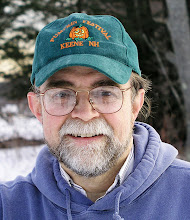
Jeff Newcomer had been a physician practicing in New Hampshire and Vermont for over 30 years. Over that time, as a member of the Conservation Commission in his home of Chesterfield New Hampshire, he has used his photography to promote the protection and appreciation of the town's wild lands. In recent years he has been transitioning his focus from medicine to photography, writing and teaching. Jeff enjoys photographing throughout New England, but has concentrated on the Monadnock Region and southern Vermont and has had a long term artistic relationship with Mount Monadnock. He is a featured artist in a number of local galleries and his work is often seen in regional print, web publications and in business installations throughout the country. For years Jeff has published a calendar celebrating the beauty of The New England country-side in all seasons. All of the proceeds from his New England Reflections Calendar have gone to support the Pulmonary Rehabilitation Program at the Cheshire Medical Center. Jeff has a strong commitment to sharing his excitement about the special beauty of our region and publishes a blog about photography in New England.

Saturday, October 29, 2011

First Snow


Yesterday we had our first snow of the season here in southwestern New Hampshire.  No matter the date, first snows always seem to be a surprise, but when "measurable precipitation" occurs in October it is not only surprising , but also a visual treat.  Typically our first coating occurs sometime after the leaves have fallen in November,  when we are all desperate to cover the drabness of "stick season" with a pristine frosting of white.  When winter storms strike early they can blast the remaining fall foliage from the trees, but given the right conditions, they  can also spread a beautiful white frosting on the colorful leaves.  The stark contrast between vibrant reds and golds and the clean white of freshly fallen snow is fantastic, but short lived.

Roads End Farm, Chesterfield New Hampshire


Friday morning offered such a special opportunity.  We live in the hills between Keene New Hampshire and Brattleboro Vermont and had just enough snow to coat the trees without totally obscuring the foliage.  I was excited to get out to shoot, but was frustratingly tied to home waiting for the furnace guy to show up for our pre-winter cleaning.  As it turned out I was able to get some of my best shots around the house.  When I was finally able to leave I was happy to find that the snow was sticking longer than usual.  The time after a storm when the snow is still clinging to the trees is a winter "golden hour".  David Middleton, a great photographer and teacher from Vermont, calls these his "winter wonderland" shots.   It is the time when snow is the most magical, and it is often quite fleeting.  As the morning temperature raises above freezing it seems that the snow comes off the branches all at once with one disappointing plop, but yesterday things held together into the early afternoon.  


For much of today the "winter wonderland" was only a memory, actually a memory and about 200 images.  But this evening the snow has return with a vengeance.  By morning we may have over one foot.  I have to suspect that all this October winter must be in response to all the whining I have done about the terrible color this autumn.  Whatever the reason, in New England,  we all know that the only abnormal weather is normal weather and that's why it is such a great place for photography.  

Now let's see if I can get this posted before the power goes out!

Monday, October 24, 2011

The Pumpkin Festival Lives

Keene New Hampshire's 21st Annual Pumpkin Festival

Main Street Clock
Keene New Hampshire's Annual Pumpkin Festival was last weekend and as usual I avoided the mobs and came early. There are considerably fewer pumpkins at 7:30 AM but at that hour you can actually see the mass of gourds without the gaggle of gawkers. The packed crowds of people who show up later in the day tell a different story, but I've taken those pictures before. I'm usually gone by the time the festival officially begins around 10 AM. I have photographed at least ten of the past Pumpkin Festivals and it has become an increasing challenge to try to find something new and fresh to record from the event. I keep coming back because I love the atmosphere and because, against all odds, I generally do find something new every year. I guess this speaks to the value of returning to favorite locations. Conditions are never quite the same and with experience you can get the most from the light. Familiarity also breeds a willingness to experiment with different angles and techniques.  
Infrared Pumpkins

This year, by intention and by tragic accident I had the opportunity approach the fesitval from two different directions.  I continue to enjoy shooting with my IR converted 20D and It was especially interesting to apply infrared to scenes that I have photographed so many times before and which, in the past have always depended on brilliant color for their impact. Sadly, since I "bricked" my 5D earlier this week by dropping it into a stream, all my "straight" images came from my Canon G11. I usually use the G11 when I want a small unobtrusive "carry-around" camera that still allows full control and RAW format. It was trickier to get accurate focus compared to my DSLR, but it was interesting to use the camera in a more controlled landscape approach.  It was also nice to be reminded that with a smaller sensor you get a broader depth of field.  Overall I was pleased with how the images came through.


Church at the Head of the Square

This year's festival was, by design, a scaled down event. The goal was to bring it back to a celebration of our special community and away from artificial attempts to break records for pumpkins or people. Hopefully it will continue in this direction.

Tuesday, October 18, 2011

Bag of Leaves

Gazebo, Walpole, NH

For the last couple of days the fall colors have shown some modest signs of life although still quite inconsistent. I have no idea what the recent rain will do, but at least it will refresh streams and waterfalls for the next few days. With this year’s patchy show it reminds me of one other cheat that I use in autumn that can enrich images even in good color years, but which may be especially important with our current struggles.


I am sure some readers will be appalled, but when I see beautiful, brightly colored leaves on the ground my first thought is how best to capture the scene, but then my second thought is “where is my plastic bag”.  It is the nature of leaves to blow around on blustery autumn days and it is also their natural tendency to end up piling into low spots where they do little to enhance my carefully composed image. In these situations I have no reluctance about scooping up the recalcitrant foliage and redistributing it where it is supposed to be.  Sprinkling even just a few leaves on contrasting rocks, along stream banks or next to waterfalls provides a splash of color that can significantly brighten an image and communicate much more effectively what our autumn is all about. So what can be done when there are no conveniently located piles to harvest? This is where the innocent appearing plastic bag in my trunk comes in. When I see nice leaves on the ground I often collect them to use later when nature is not so bountiful. It is important to bag only dry leaves.  I don't want a moldy compost heap smoldering in the back of my vehicle.  I know I am revealing a shameful dark secret, but I’m among friends here and I know that no one reads this far into my blogs anyway.


Local Leaves

Personally I have recovered from the moral dilemma so my only concern is how to spread the leaves in a natural way. It is important to generate an appearance of randomness. Not all the leaves should be perfectly aligned or with only the colorful sides up. There should be scattered imperfect clumps of leaves. If I am spreading color on the important foreground regions, it is also important to send a few out to the more distant areas. To my eye one of the most obvious give-aways is when the leaves are only close by, looking like someone may had lazily dumped them only where they would have the best effect. My only challenge this year has been to actually find some colorful leaves to collect.


Noone Falls, Peterborough, NH


Stonewall Farm, Chesterfield, NH
I feel much better now. Confession is good for the soul, especially when the sinner plans to transgress again. When finished shooting I will often recollect the leaves to use again. Why should some other photographer steal the benefit of all my hard work? On other occasions I will just walk away. So the next time you find a beautiful fall scene complimented by a lovely carpet of colorful leaves, pause for a moment before you are warmed by a sense of purity. It is always possible that I had just been by spreading autumn’s bounty.

Monday, October 10, 2011

Where is the Color?


Where is the Color,  Putney Vermont
All during our recent trip to central Europe  my only recurring fear was that I might miss part of the spectacular fall foliage season. As a New England photographer, the couple of weeks of autumn’s riotous punctuation to summer is the one annual opportunity that simply can’t be missed. I had no notion that I would return to discover that autumn this year is either absent or hopefully just unusually delayed. In our region of southern New Hampshire and Vermont peak color is invariably around the Columbus Day holiday, but this year most trees are just beginning to change and the color is generally drab. Leaves seem to be turning brown and falling to the ground. My opinion is that any leaf which does not have the courtesy of transforming into a brilliant red or gold has no right to fall from its branch. It should hang there in shame and NOT force me to rake it into oblivion! Of course there are various retrospective theories on the cause of this year’s disappointing color. Gobal warming is often mentioned. I have been impressed with our early springs in the last few years, so it might be expected that our fall could be delayed as well. The difference this year, however, is so dramatic that factors beyond global climate change seem likely to be at play. The extremely damp late summer, including the disastrous impact of Hurricane Irene, would seem an obvious candidate. We have seen black fungus on many leaves which is undoubtedly caused by the moisture. I am confident that my right wing friends will insist that this, like every other natural disaster, is caused by President Obama.  The political theories probably have as much validity as any other, but in the final analysis the reasons for this disaster are not really important. The crucial question should be how do with deal with it. After being out a few times in the last week I can offer just a few suggestions.

First we can always wait in hopes that the coming cold snap will trigger a late blast of color. I have experienced delayed seasons before, but never this late. In the meantime what can be done to get the most out of what we have.

Fresh Today, Dummerston Vermont

 
1) Shoot the Few Colorful Trees
Black Brook, Brattleboro, Vt
If you photograph a broad hillside the results will be uniformly dull and disappointing, but there are isolated patches of brilliant foliage. Zoom in on these and no one will know that you are surrounded by drech. Actually, even in good years, I prefer to focus on one or a few spectacular trees. Even at peak color I generally find broad landscapes colorful and crushingly boring.


2) Look for Color in the Right Places
Stickney Falls, Dummerston Vermont
When looking for color the rule is always to; go north, go up or go wet. Obviously color tends to be earlier the further north you travel or when you go to elevation, but color also tends to cluster around wet areas. Marshes, streams and lakes are all good places to look. Stickney Falls in Dummerston Vermont displayed some nice color this weekend with the added advantage of the waterfall.


3) Don’t Photograph Trees
Golden Pumpkins, Golden Light, Westminster VT
In my picture of the pumpkins at Holton Farm in Westminster Vermont, there is not a tree in site, but the autumn gold still shines through. Autumn is prime time for local harvest festivals with lots of great opportunities for colorful shots. Don’t forget the Keene Pumpkin Festival coming up on October 22nd.


4) Spray the Dull Trees with Golden Light
Channel Light, Spofford New Hampshire
Even this year, morning and evening light is still warm and magical. The golden hours can enliven even drab foliage.


5) Transilluminate
Maple Pasture, Dummerston Vermont
It is always great to shoot the light coming through autumn foliage. This is especially helpful when forced to shoot in midday when the light is otherwise stark and flat, but it can also brighten this year’s marginally colorful foliage.


6) Cheat
Golden Bend, Guilford Vt (Last Year)


Finally, as a last desperate resort, you can sit at home and pull images from previous years and claim them as new. I of course would never resort to such shady measures.


Sadly this was today.  The same date as last year.
Makes you want to cry


So cross your fingers for a late bloom of color, but in the meantime look for special opportunities. We all love a challenge. From my office window I can see a fully blood red maple a few blocks away. Sadly it is in front of a gas station, but it does give me hope.


Sunday, October 2, 2011

Prague to Budapest II


Hungarian Parliament, Budapest

Salzburg Castle
I apologize for the lateness of this post. We have been back from our Danube River trip since late last Tuesday. I came back with great memories, over 2600 images and a rageingly bad flu/bronchitis. The worst time to develop a respiratory infection is while slogging through ten hours of plane flights to get home. I'm only grateful that I wasn't hit until the trip was over. I will skip the drippy details, and only say that after several days of sleep, antibiotics and groaning, I now feel strong enough to lift my fingers to the keyboard and share a few more images from our fantastic trip. The Groaning, however, continues.


Cesky Krumlov, Czech Republic
The river cruise portion of the trip was lovely although the weather was a bit spotty. I wish we had traveled the river more frequently during daylight, but it was very convenient to have our hotel follow along with us. the itinerary tended to focus on larger cities, Linz, Salzburg,

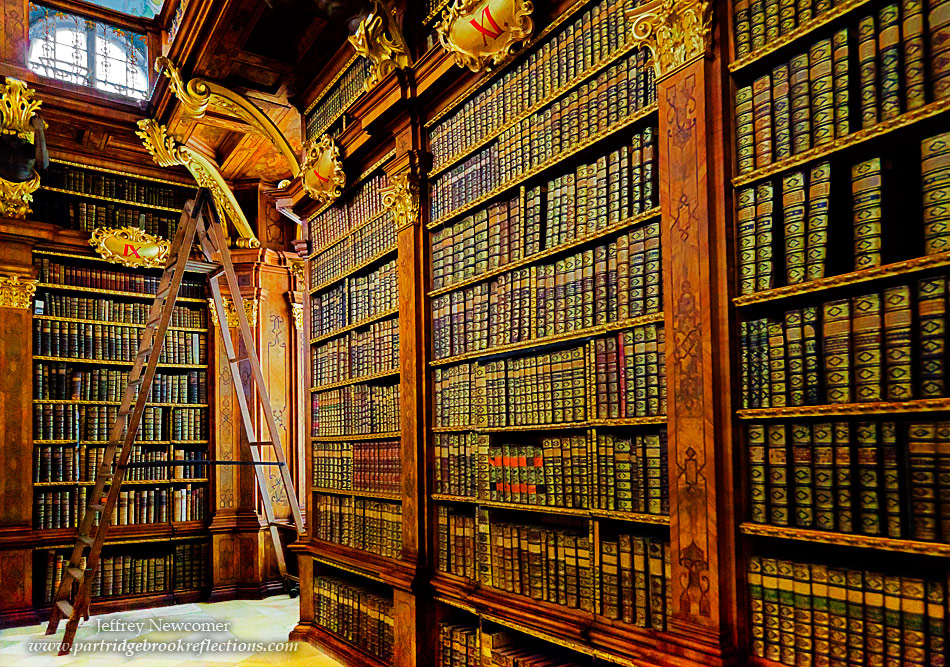
Melk Abby Library
Vienna, Bratislava and Budapest,
but I particularly enjoyed our stops at smaller towns that were more effective at preserving the old world feel. Sadly even the small villages were contaminated with tourist traps, but by simply looking up a bit or finding winding back streets I was able to feel transported to medieval times. The cities had their own charm. It was interesting to see how enthusiastically former communist block countries have embraced capitalism. 

Vienna Opera House Entrance
For proof, you need only notice that the Communism Museum in Prague is located on the second floor above a MacDonalds Restaurant. Our favorite cities were Prague and Budapest. Both have carefully preserved their old world architecture . By Contrast, Vienna's monumental structures were more diffusely scattered though-out this modern city. 
We did enjoy a tour 
Imperial Crown of Charlemagne
of the Vienna Opera House and the fabulously opulent Habsburg Treasury.  It was amazing to see the actual crown worn by Charlemagne over 1000 years ago. Sue and I broke away from the group to spend a relaxed afternoon exploring Schonbrunn Palace, the Habsburg's little 435 acre, 1400 room summer retreat. It was tempting to dwell on thoughts of the starving peasants who lived outside the walls of this glittering monument to criminal opulence, but it was hard not to be captured by the breath-taking beauty of the buildings and gardens which are 
Schonbrunn Palace Gardens
now freely open to all. Budapest was a fitting ending for the trip and I'm glad we broke away for a couple days of independent exploration. The city is especially beautiful at night, on the last evening of the cruise we traveled the river under the several bridges that connect the two halves of the city. With the Palace and Cathedral on the Buda side and the brilliantly illuminated Parliament on the Pest side, the city reflected in the Danube was Magical.

Imperial Palace at Dawn, Budapest Hungary


Charlemagne (ISO 6400)
A trip like this would necessarily lead to a few valuable photographic lessons . First I was freshly impressed with the low light capability of my Canon 5D Mark II. I had recently been using higher ISO more regularly, but in the inky darkness of many of the museums and cathedrals I was only able to capture images at the camera's maximum 6400 ISO. Flash was rarely permitted. I was surprised to discover how the noise reduction application in Camera 
Ornately Baroque Melk Cathedral
(Three hand helded images)
Raw produced very serviceable images. The only challenge was to remember to turn down the ISO when I went back out into the sun. The tip-off was when I found myself shooting at f19 and 1/5000th! I knew from the work of Trey Radcliff and others that cathedrals would offer a wonderful opportunity for HDR images. While touring with a group it was impractical to set up a shot with a tripod, but I was amazed to discover how well Photoshop CS5 managed three handheld bracketed images. It helped to have the shutter set on burst to capture all images with a single click and here again high ISO was a necessity. Finally, I found that my stripped-down kit seemed to work well. My new bag provided to be easy to carry and accessible.  I suspect I will be using it more often at home.

St Barbara's Cathedral and Jesuit Monastery
Kutna Hora, Czech Republic

Schonbrunn Palace from Fountain, Vienna Austria
Overall it was a great trip, but it is nice to be home getting ready for the foliage season. I am terribly behind on orders and other projects. Not to mention that the 2012 Calendar should be available for me to distribute in about one week. It will likely be some time before I can start seriously working on the European pictures. I will continue to send some to Flickr, but the more complete set will be building on my web site in the "Out-a-Town" section. This brief discussion can't begin to cover the number of wonderful experiences on this trip. For that you will simply need to come over and watch the entire show. You bring the wine.

For more images check out my "Out-a-Town" page or
My Danube Flickr Set

My first European Posting is Here


Tuesday, September 20, 2011

Prague to Budapest

Prague Castle

Over the years Susan and I have generally travelled on our own, shunning large groups. We have valued the ability to plan our own schedule, avoiding large groups. We are currently on a 17 day trip to central Europe and this time we are with an organized tour. We were attracted by the chance to spend 8 days cruising down the Danube between Linz Austria and Budapest Hungary, with an extended stay in the remarkably beautiful city of Prague before embarking. Group travel has some clear advantages, including the ease of negotiating the local language and culture with knowledgeable guides. The scheduled side trips allow efficient use of time, and perhaps most importantly, group trips provide the opportunity to meet and travel with some fascinating people from throughout the US and beyond.


Our Lady Before Tyn Church

Group travel does impose substantial challenges to photography. First the fixed schedules make it difficult to find the best light in any location. Typically tours are scheduled for the middle of the day with stark light, which always seems to be shining into your eyes. Tours tend to move rather quickly making it difficult to spend the time needed to find and capture the best angles and lighting. Too often I have found myself looking up from my camera wondering in which direction my group has disappeared. I always try to find views without gaggles of tourists blocking the scenery. Unfortunately with group tours, we bring our own gaggle whereever we go


Vltava River Sunset
Prague, Czech Republic


St Vitus Cathedral
Prague

Charles Bridge
 The most important rule I have found to help me deal with these frustrations is to accept the fact that this is not primarily a photography trip. I try to get the best images that are possible, but sanity requires the realization that I can't always control every factor affecting my pictures. When with a group it is often helpful to either stay in front of the gaggle or lag behind. Patience is also key while waiting for that split second when people finally wander away from my perfect composition. I try to anticipate shooting conditions so that I don't spend valuable time switching filters or lens as the group speeds away.It is better not to find yourself in the dark cathedral with your polarizer still stuck to your lens. Poor light is hardest to manage. Sometimes I just have to except that I am not going to capture that golden light or the dramatic misty image and will have to settle for the best bright "postcard shot" I can construct. Since we were in Prague for five days, I considered our group tours as scouting expeditions with plans to come back on free time to look for the best conditions. In particular the evening light is wonderful as it winds it way through the narrow streets of the old city.

All my complaining aside, Prague is a spectacularly photogenic place. The classic buildings which dominate the older sections are marvelously well preserved. This is due in large part to the fact that Prague survived the second world war without extensive damage. Highlights include Prague Castle, including the massive Saint Vitus Cathedral, which looms over the old city. The old city square features a medieval clock tower and the fairy-tale Our lady Before Tyn Church. There are great vistas all along the Vltava River. The classic architecture is everywhere.


Silver Tomb
St Vitus cathedral
The schedule on this trip is non-stop. It is all I can do to find time to download and back-up my images. So by the time I have finished this blog we have already started our cruise down the Danube. Salzburg was cold, foggy and rainy, but at least the inside of the Cathedral was dry. Coming up on the itinerary is Vienna, and Budapest. I will be working on these pictures for ages after I get home, and of course we will be returning to New Hampshire just in time for leaf season.


Enough. I have some eating and drinking to do. At this point I will shut up and let the picture speak.

Saturday, September 10, 2011

Packing for the Danube


This weekend Sue and I are heading off to Prague, Czech Republic to begin a 17 day trip featuring a boat trip down the Danube ending in Budapest. We will be visiting Linz, Vienna and Salzburg among with other middle European locations.  We are excited to explore a new region, but Nelly is getting a bit nervous about all the luggage.  As we approach the trip I am immersed in my usual camera gear anxiety. What cameras and lens should I take? How much do I really want to lug around? How much weight can I get on the plane. How will I handle image back-up. How will I keep my gear secure? I typically start by listing the "must brings" and then agonize over all the optionals, knowing always that the one thing I leave behind will be the one thing that I will desperately wish I had. It is always my strong inclination to bring EVERYTHING.

 
----------------------------------------------------
MUST BRINGS:

Canon 5D MII with my workhorse 24-105 f4 l lens

A ton of CF cards (I bought two new 32 gig cards for the trip)

Canon G11 (nice small, full featured, carry around camera as a backup and to use in situation in which I don’t want to display my big DSLR). I have decided not to bring my old 5D as a backup DSLR.

Laptop

Small 500 GB external drive ( have the Western Digital passport). My back-up strategy is to keep copies of images on the laptop and the HD as well as on the cards.

Various small, but necessary accessories : cable release, polarizing filters, lens cloths, batteries and chargers, power adapter, mini bunges (always), lens brush, plastic bag rain cover, and my Giotto air blower. Despite all my efforts, I will undoubtedly forget at least one critically indispensable cable and will spend half a day becoming familiar with the camera stores of Prague.

---------------------------------------------------
OPTIONALS:

Lens are always an issue. My Canon 16-35 f2.8 seemed a no-brainer. I expect to be photographing inside lots of churches and castles, not to mention capturing grand overlooks. A wide angle lens is essential. My major questions was about bringing my beast, the Canon 100-400 f4." I would love to have it , but it weighs 3 lbs. and, since Susan refuses to be a Sherpa, I can't see myself lugging this monster all over the continent. This is supposed to be a vacation after all. But then I remembered my old Quantaray 70-300.  This is the lens that I dropped into a brook a couple of years ago. It never stopped
 working, but had a bit of haze on some of the internal elements. Just enough to justify getting the Canon 100-400. When I pulled the lens out, I discovered that the haze had largely disappeared. This lens can't be compared to Canon L glass, but it is MUCH smaller and lighter (1 lb.). I will miss the image stabilization, but It is better than nothing, and the sharpness is not bad. It will be nice to have more reach without a lot more lug. So, three lens.

I toyed with not bringing my tripod. I don't expect to carry it around for most of our walking tours, and, although my carbon fiber Gitzo is not terribly heavy, by the time I add the Kirk ball head, it does add some significant weight and bulk. Then I thought about the wonderful low light opportunities, the lights at night and the chance to try HDR on the classic old world architecture. I'm bringing the tripod.

I still haven't decided about bringing a Speedlite and I may decide only when we do our final weight assessment. A compromise might be to take my lighter 430EX instead of the 580EX II. I doubt I will need the extra power and I will not be triggering any slaves.


Well of course, with all this stuff, I had to get a new bag. Photographers can never have too many bags, but seriously all mine seem either too small to carry what I would need on tours or are too bulky. I don't want to be knocking over precious shrines throughout Europe. I finally found a nice compromise National Geographic shoulder bag which I hope will work well.
  It has reasonable padding, a comfortable strap and is compressible for packing. I can fit my 5D and two lens in quite easly with room other necessaries and with reasonably easy access.  I must confess that carrying a "National Geographic" bag seems a bit cheezy to me, but the thing has a nice feel and does what I need it to do.  I may look for a patch to cover-up the logo.

That's about it. We haven't done the final weighing, so things may change. We are excited about the trip and I will try to post when I can along the way.