About Me

My photo
Spofford, New Hampshire, United States
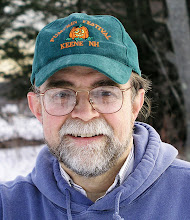
Jeff Newcomer had been a physician practicing in New Hampshire and Vermont for over 30 years. Over that time, as a member of the Conservation Commission in his home of Chesterfield New Hampshire, he has used his photography to promote the protection and appreciation of the town's wild lands. In recent years he has been transitioning his focus from medicine to photography, writing and teaching. Jeff enjoys photographing throughout New England, but has concentrated on the Monadnock Region and southern Vermont and has had a long term artistic relationship with Mount Monadnock. He is a featured artist in a number of local galleries and his work is often seen in regional print, web publications and in business installations throughout the country. For years Jeff has published a calendar celebrating the beauty of The New England country-side in all seasons. All of the proceeds from his New England Reflections Calendar have gone to support the Pulmonary Rehabilitation Program at the Cheshire Medical Center. Jeff has a strong commitment to sharing his excitement about the special beauty of our region and publishes a blog about photography in New England.
Showing posts with label sugar shack. Show all posts

Thursday, October 2, 2014

Southern and Central Vermont Color Preview


Autumn Ranks, Reading, Vermont

Alaska Will have to Wait
Mill Brook Shack
Pomfret, Vt

This week I had every intention to add another article about our fantastic tour in Alaska. The next episode was to be about our time in Seward and our SUNNY cruise along the Kenai Fjords. That's right we actually had gloriously sunny weather for our day-long exploration, and the rocky shoreline, the glaciers and the remarkable wildlife could not have been more dramatic. I've got some wonderful photographs to share, but that blog will have to wait. I'm back in New England, and if there is one hard and fast rule of New England photography, it is that autumn color rules. My Alaska images will still be there to brighten the November gloom, but for now I must talk about the color.


I've been out for a couple of serious shoots in the last few days, each heading north to gauge the progression of the color. First, over
Coming Color
Jenne Farm, Reading Vt
last weekend, I cruised around the Newfane and Townsend areas of Vermont and then, on Monday, further North from Springfield, up Route 106 past Woodstock into Pomfret and Hartland.  Autumn color in New England is always spotty depending more on the altitude, orientation to the sun, and the dampness of the soil than to a specific date on the calendar. My general impression is that, as of Monday the color was fairly thin in Southern Vermont, but as I traveled North of Woodstock things improved significantly. Leaving Woodstock I climbed the justly famous Cloudland Dr and saw more consistent color as I gained altitude. My thoroughly fallible opinion is that things will be at, or approaching, peak in this area by this coming weekend, which is why I'm publishing early this week.


What follows are some of my images from the last few days. Obviously, I chose to shoot scenes with nicer color and this may give a false impression of the overall hillside drama, but it may be a reasonable reflection of how the color will have bloomed by this coming weekend.

Newfane and Townsend

Smith Brook, Newfane, Vt
Sunday was a bizarrely warm and sunny day for late September. I only had a few hours and limited my explorations to nearby towns
in Vermont. I cruised up Route 30 to Newfane where I was saddened to discover that the nice folks at the Newfane Country Store are permanently closing shop. I hate to see them go, but I appreciate how difficult and exhausting it is to run a country store in a small New England village. I wish them luck, but I was happy to have found a new venue in town for my New England Reflections Calendars. Check them out at the Newfane Market . Color here was scant, but I found some nice patches up nearby Cemetery Road. Heading north toward Townsend I got distracted exploring a road along the West River. The color was generally better along the damp banks and it was pleasant to explore an unfamiliar road in the warm September weather.


Sunny West River, Townsend, Vt


Route 106 to Woodstock and Beyond

Harvest Bales, Reading, Vt
Route 106 is one of my favorite paths through Central Vermont. On
Monday, I got out early and, as usual, I shot up US Route 91picking up the road in Springfield, Vermont. The Route north includes lovely green valleys nestled in the mountains and at this time of year the bales of drying hay provide interesting patterns. The weather was mostly overcast but I generally prefer softer light for fall colors. Even with a polarizer, the reflections from bright light dulls the rich colors.  This day was all about the color, but I had to stop when I spied a Zebra pacing in a pen above the road. It's Vermont, so why not a Zebra! Of course, traveling up 106, I had to
Jenne Farm, Reading, Vt
check out the famous Jenne Farm. Being a bit early in the season and on a Monday there was, remarkably, only one other photographer roaming the familiar hill. Unfortunately, every year the shrubs grow a bit higher in front of the red farm house, but I prefer the view from down the hill where the meandering fence provides a nice line to the buildings and the house is less obscured. I predict richer color and bus loads of photographers for this coming weekend. Be sure to buy some maple syrup, or slip a buck or two into the donation box on the hill.  The sugar shack at nearby the Spring Brook Farm was unimpressive, but the birch groves are always interesting and I came across some adorably friendly calves grazing on an upper pasture.


Spring Brook Farm, Reading, Vt


Who says Black & White
Doesn't Work in Autumn?
Reading, Vt


Through Birches, Reading, Vt


Cloudland Road

Cloudland Beckons, Pomfret, Vt


"Perfect" Barn
Sleepy Hollow Farm, Pomfret, Vt
My Ride into Woodstock included a stop at the South Woodstock General Store. This is a classic New England store with a
wonderful collection of traditional necessities, including my two favorites, good coffee and a clean bathroom. Happily now the store is also stocked with a supply of my calendars, so stop by. Woodstock is a lovely town, but way too touristy for me, even on a Monday. As I often do, I shot through the village and north up Cloudland Road. This road is justly famous for its collection of lovely farms and highland pastures. Of course the road is most known for Sleep Hollow, a carefully coifed "farm" which although arranged perfectly for photographers, bares no obvious
Pasture Flame, Pomfret, Vt
resemblance to an actual New England farm. Sleepy Hollow was once owned by Aerosmith's guitarist Joe Perry, and I do feel sorry for the current owners. Imagine having hordes of strangers with long telephoto lens photographing your house on a daily basis. Feeling sympathy, I respectfully took my 30 or 40 pictures and then moved on. Happily Cloudland is home to a number far more authentic farming establishments and by the time the road joins Pomfret Road your can count on being thoroughly saturated with rural New England color.


Climbers
Cloudland Road, Pomfret, Vt


Enveloped, Pomfret, Vt


I worked my way a bit further north then across to Hartford Vermont and eventually back home on Route 91. The fall color was definitely filling in as I traveled north above Woodstock and, again, I think it will be lovely by this coming weekend. Back home I am seeing the reds and golds build almost hourly. It is a great time to live in New England and Alaska will just have to wait.


Jeffrey Newcomer
Partridgebrookreflections.com

Sunday, January 6, 2013

Photographic Preservation of New England's Visual Heritage


Market Basket's Memorial to the Bardwell Farm
Some years ago, I was picking up my tractor (sounds more manly than "lawn tractor") , at a shop on route 12 in Swanzey New Hampshire, and noticed a classic run down red barn across the street. The barn was massive with lots of interesting and seemingly superfluous additions, sprouting off in all directions , like an unruly shrub. The place was long deserted and seemed ready to collapse at any moment. The perfect photographic opportunity. Of course the light wasn't great and besides, I only had my old camera phone. I vowed to return on a better day with a better camera. I would love to show you images of this historic icon of our New England agrarian tradition, but, before I could get back to the site, the barn was sacrificed to modern commercialism and replaced by a sprawling and sterile Market Basket grocery store. You can find pictures of barn, by other photographer, scattered on the Internet, but I still have a sense of irrevocable loss. It all serves as strong reminder of the role photographers have in preserving the fleeting visual heritage of our unique corner of the world.


Whether we realize it at the time, our photographs are a treasure chest of traditional New England scenes that are slipping away, day by day. We have all seen the "Then and Now" features in newspapers and magazine using old photographs to show how things have changed. It is important to realize that our photographs today may soon become the "Then" images used to compare to some sadly diminished "Now" of the future.

Before we get hopelessly depressed by our dull, traditionless,

Harrisville, NH
future, it is important to remember that there is much we can do to protect our irreplaceable heritage. A great example is the work of the Harrisville Historic District. The residents of Harrisville, New Hampshire have done a remarkable job preserving their classic New England mill town. As photographers, our support of historical preservation protects the very fiber of what makes New England such a great place to live and to practice our art.


In the short time that I have been engaged more seriously in New England photography, I have seen many examples of the loss of our visual heritage. The causes are varied and often not as a result of the wrecking ball. Precious vistas have been lost due to natural decay, surrounding development, or overgrowth of natural and introduced vegetation. Often the intrusions seem small, but enough to disrupt a delicately balanced scene. We have all seen this, but it is important to remember that the photographer has a special opportunity and responsibility to capture these scenes before they slip away forever.

Then and Now


Decay
For years I had intended to capture a classic sugar shack along side
Route 9 in Stoddard, New Hampshire. It never seemed to be the right time until one misty autumn morning in 2006, when I found myself stopped for road construction right in front of the shack. The Gods were obviously speaking to me and I had just enough time to leap from the car and grab a 4 image panorama. I love the shot, but since that time, the shack has fallen to neglect and now seems poised to crumble to the ground. Buildings in decay can be interesting subjects, but it is the sense of loss that is fundamental to their power.


Development
My parents lived in a condominium over-looking Paugus Bay on Lake Winnipesaukee. On the hill above their place was a lovely isolated pasture which featured a stately lone Sugar Maple standing
Encroaching Development, Laconia, NH
defiantly in the middle of the field. The tree and surrounding woods was a hidden treasure of peace and photographic opportunities, but a few years ago development invaded the pasture. The beautiful clean forest backgrounds were bulldozed and my noble Maple was made to stand against rows of monotonous gray buildings and a sprawling parking lot. I could still find a few angles on my tree, especially when morning fog obscured the development, but the sense of quiet solitude was lost. 


Ridge line development is a growing issue in New England. It is
Storms First Light
understandable that people want to build their houses on the slopes, where they can command broad views of the surrounding country, but these structures scar the beautiful forested hillsides. Stonewall Farm is nestled among low hills in Keene, New Hampshire. A few years ago I caught the first light after a storm, breaking above the mist on these hills. Now the same 
location is a warren of lovely but incongruous homes, lawns and steep driveways. It is a difficult 


Lost Ridge
problem not only esthetically, but also because these developments
create erosion issues.
Happily, towns are beginning to recognize this problem and are creating "steep slope" ordinances to limit development in the most fragile areas.


Overgrowth
The Jenne Farm in Reading, Vermont is a world famous example of

Jenne Farm 2005
the classic New England farmstead. It is justly recognized as one of the most photographed farms in the country. On a perfect autumn morning it is a challenge to find an open piece of ground to set your tripod. It is amazing that the owners of this working farm deal with the crowds of
photographers with such patience and good humor. I have been visiting the farm for only a few years but have noticed the growth of bushes and small trees which are progressively obscuring the best
Growing Cover, September 2012
angles on the farm house and out building. The plantings are perfectly understandable as an attempt by the beleaguered residence to protect a little privacy, but for photographers it is a lesson in the constantly evolving nature of our landscape and in the importance of capturing it when we can.


Another example of the natural encroachment on our scenic
Weathersfield Birches
treasures is the "Weathersfield Birches". I had read about this lovely collection of birches in this central Vermont town, but by the time I found the grove it had become engulfed and smothered with young sapling. The good news was that during my search for this famous collection, I came across another grove of unobstructed birches nearby. 


My New Birches


Little Things
It isn't always dramatic changes that can diminish a classic
composition. When I first captured one of my favorite red barns in Keene, New Hampshire, I was able to incorporate a classic pasture fence into the foreground. Today the fence is gone and the open gate leaves a hole in the composition. The owners of the property are friends and do a marvelous job maintaining their magnificent farm, but I will have to talk to them about that gate. I will be glad to provide the railing. 


Lost Rail


Enough depressing detail. The goal of this article is not to whine about lost opportunities, really. Rather, I wanted to drawn attention to the special role photographers play in preserving the visual history of our unique region. New England's great attraction is that development has been slower to sweep away our beautiful rural heritage than in most other parts of the country, but the forces are out there and we must continue to work to protect what we can. Sadly protection is not always possible and we as photographer's have the great responsibility and honor to, at least, preserve a visual record of our rural treasures. Shoot as if it matters, because it does.