About Me

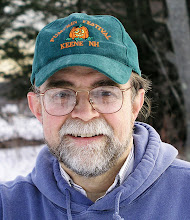
My photo
Spofford, New Hampshire, United States
Jeff Newcomer had been a physician practicing in New Hampshire and Vermont for over 30 years. Over that time, as a member of the Conservation Commission in his home of Chesterfield New Hampshire, he has used his photography to promote the protection and appreciation of the town's wild lands. In recent years he has been transitioning his focus from medicine to photography, writing and teaching. Jeff enjoys photographing throughout New England, but has concentrated on the Monadnock Region and southern Vermont and has had a long term artistic relationship with Mount Monadnock. He is a featured artist in a number of local galleries and his work is often seen in regional print, web publications and in business installations throughout the country. For years Jeff has published a calendar celebrating the beauty of The New England country-side in all seasons. All of the proceeds from his New England Reflections Calendar have gone to support the Pulmonary Rehabilitation Program at the Cheshire Medical Center. Jeff has a strong commitment to sharing his excitement about the special beauty of our region and publishes a blog about photography in New England.
Showing posts with label gloves. Show all posts

Sunday, December 27, 2015

Gearing up for Winter Photography


It is over 60 degrees outside, on Christmas Eve. SO what better way to deal with this totally incongruous weather than by talking about preparation for shooting in the the cold and snow that will inevitably come any day now, please! 


Not Much Like December
Winter Gear
 

So, with great optimism, here goes a brief list of winter photography necessities.  Now that the wrapping paper has been cleared away, I can lay it all out on the dinning room table,  My first blog post back in 2007 was about winter photography in New England, but hopefully, after eight years of shivering experience, I can add a little more to the discussion. 


Self Protection
 I can start with the obvious. It is very hard to devote the time and care required to photograph the beautiful snow if you are miserably cold, and your hands and feet are numb. I am a strong believer in over dressing for the cold. It is much easier to shed a layer or open a jacket if the temperature rises, but it is much harder to find warmth when you are in the elements. I usually go out with at least 3-4 layers of clothing including a warm jacket, sweat shirt, and my favorite, a fleece shirt. For leg warmth I have a lovely pair of fleece lined jeans. A warm hat with ample ear coverage is critical along with a scarf or neck warmer to arrange around my face and neck. 


Gloves

 
Aquatech Gloves
Gloves are an especially important topic given the need for both
warmth and flexibility. As I have "matured" my hands have become more sensitive to the cold and I have assembled an array of glove choices to match varying level of cold. I discussed my glove collection last year, ranging from thin glove liners to my super, "military grade", half-fingered mittens. The key is to find a way to stay warm while still being able to manipulate the camera controls. And of course hand warmer packs can work wonders in the coldest conditions.
Heat 3 Smart Goves
Overshoe Boots


Boots
Warm, waterproof boots are also a necessity and I always carry an extra pair of socks in my car emergency kit. For deeper snow I have my knee length Overshoe Boots and pair of snow shoes.


Camera Protection 

 Keeping my power dependent digital cameras running in the deep cold is a major challenge. The primary issue is battery power. Camera batteries loose power quickly in the extreme cold. The first thing is to carry at least one fully charged back-up battery, keeping it warm in a pocket close to your body. When a battery dies in the cold it can often be revived after some time in a warm pocket. It can also help to keep the camera warm in a bag enclosed with a pocket warmer. 

Although, in the winter, we seldom have to protect the camera from the rain, frozen precipitation can be a problem and when the snow is coming down I protect the camera with a towel draped over the body. A lens cloth is also helpful to clear condensation from the lens. 


Condensation
 
When moving from the cold to the warm moist indoor air, condensation can quickly form on the surface of the camera and lens. More damaging, the moisture can penetrate the interior mechanisms and electronics. As impatient as I may be to see my new winter images I always allow the camera to warm in a closed plastic bag and since the condensation appears quickly, I try to remember to bag the camera before I go inside. The problem can also strike the lens in your camera bag, so it is a good idea to seal the bag in its own plastic container.


Tripods 
 Check your tripod manual and you will discover that tripods are generally not approved for the extreme cold. I've never had a problem with either my Manfroto or Gitzo sticks, but I still lubricate the poles with a granite lubricant which should stand up to the low temperatures. Just be careful how you move the tripod when the leg are deep in crusted snow. It is possible to snap off a leg when it is encased in ice.


Transportation 
 In the winter my car is my life raft offering refuge from the snow and numbing cold, but since I am usually bouncing in and out of the vehicle I try to avoid the temptation to keep the temperature cranked way up. I want to limit the difference in temperatures to which my gear is exposed. The car can be comfortable and sheltered from the wind, but it needn't be a sauna. 


Washington Sunrise
 

Since I take my car to some rather remote locations it should go without saying that it needs to be prepared for the elements. I check the antifreeze, make sure there is adequate tread on the tires and I try to keep at least a half tank of gas on-board at all times. Other emergency gear includes a shovel, sand and a emergency blanket. Obviously the cell phone needs to have a good charge, and I carry back-up battery, but it's important not to depend on being able to call for help, since the signal can be poor in many of my favorite spots. 


More Reading


Jeffrey Newcomer
Partridgebrookreflections.com

Sunday, February 1, 2015

Heat 3 Smart Glove, Optimal Cold Weather Photography Glove ??


Mt Washington Summit, 20 Below

Tax Time Calls
Susan is going to kill me if I don't get my tax stuff organized. In an attempt to isolate and bring my photography business into order, this year I finally got it together to form "Partridge Brook
Reflections, LLC". It make sense to keep my photography
Nellie's Spot
income, expenses and liability separate from the family finances, but it adds a number of additional layers especially when tax time looms. So, within the limits of Nellie's sacred corner, I have all the invoices and receipts spread out on the couch. My usual approach is to find a couple of movies that I have been meaning to watch, and settle in to the task of separating income and expenses. It usually requires several hours, not to mention the several days that it takes to actually assume my position on that damn couch. Nell has been watching me, and won't claim her spot until she is sure that I have settled in.

All this means that I will have little time to do one of my rambling, overlong blogs. This week I'm actually going to try to do a mercifully short article. Although, as I say this, I realize that I have already gone too long.


The Heat 3
A couple of weeks ago I ended my article about winter gloves by discussing an interesting half finger mitten that, in its advertising, looked quit interesting. I was looking for input from anyone who had experience with the gloves, but I didn't expect a lot of feedback. Of course, I knew that I was already hooked. I bit the $200 ! bullet and ordered the gloves from outdoorphotogear.com.  I promised to provide my early impressions and here they are.


Franconia Blizzard

Features

 The gloves were as advertised, quite substantial and comfortable with good insulation and, so far they have met my expectations. The Heat 3 Gloves are similar to other half-finger mittens with the ends flipping back to expose the fingers. Unlike many similar gloves, the flaps have nicely protected zippers to enclose
the warmth. The zippers work well, but take a bit of practice to learn how to move them easily. The flaps are effectively kept out of the way with magnetic buttons on the back. When exposed, the fingers remain protected by attached glove liners which are thin
Glove Liners

and flexible enough to allow easy manipulation of the camera controls and have special material on the index fingers and thumbs to allow reasonable, although occasionally awkward, control of touch screens. As I mentioned previously, my freakishly short digits made it a bit more difficult to get the proper leverage to the ends, but it was nice that that I didn't have to take my gloves off every time I wanted to answer my iPhone.


Finger Straps
Finger Straps
Although it may seem a rather minor feature, for me, the most brilliant piece of engineering are the straps between the internal fingers, which make it much easier to remove the gloves without turning the liners inside out. The straps don't interfere with the fingers as I work the camera controls and they solve a problem that has driven me nuts for as long as I have been using glove liners.


Turning on the Heat

Hand Warmer Packet
For additional warmth the gloves have small, zipper enclosed pockets on the back of the flaps, designed to fit hand warming packets. Given the glove's design and insulation, this may be a bit of thermal overkill, except for the coldest weather, but I can imagine that this may be welcomed during those long hours shooting the night sky in winter. The glove's manufacture sells glove warmer packets, but the standard glove warmers, which are widely available, fit easily into the pouch.


Caveats

So far, I have been quite happy with the Heat 3 gloves, but I do

Lens Cloth
have a couple of minor criticisms. First the gloves are necessarily bulky and can make it awkward to find things in deep my pockets. This is somewhat ameliorated by the ability to place small items such as keys or a lens cloth in the pocket on the back of the gloves. I found the separate thumb flaps to be a bit awkward especially when I try to get the thumbs back inside. Once again much of this problem comes back to my stubby fingers, but most often I found it easier to keep the thumbs inside as I controlled the camera. The built-in glove liners
are a key feature, but I can't see any way for these to be washed separately from the leather gloves and I'm concerned that over time they could get a bit funky. Finally, the gloves come in a variety of colors including brown, gray and green, but in this country I was only able to find them sold in black. To reduce the chance that they would become lost in my glove drawer among all my other black gloves, I was hoping to get a more distinctive color.


Franconia Notch


Availability
The Heat 3 Smart Glove is available from a number of on-line vendors including Amazon and Outdoor Photo.Com, but sadly I wasn't able to find them in any brick and mortar stores. The gloves are sized through a measurement of palm diameter and I think that worked for me, but it would be nice to find a place where the gloves could be tried on.


My Early Impression
Although I have only used the Heat 3 Gloves for a couple of weeks, my overall early impression has been favorable. They seem to

Special Forces
combine many features to provide warmth and functionality for photographers, as well as for the Austrian Special Forces, for whom they were developed. Simpler, lighter and cheaper gloves will still work well for most conditions, but when the cold is severe and the exposure is long, the Heat 3 is a great solution. The final question is whether they are worth the $200 price tag, and this is a highly personal decision. The combination of a standard half-finger mitten with separate glove liners is a reasonable alternative for most conditions, but given my tendency toward cold hands, I think the Heat 3 is well worth the price. My only problem is figuring out how to avoid loosing them as they drop into the black hole of my glove drawer. 

Now, back to the couch, and all that damn paper - move over Nellie.


Icy Pasture

More on Winter Photography


Jeffrey Newcomer
Partridgebrookreflections.com

Saturday, January 17, 2015

Winter Gloves, Getting a Grip on the Cold


Orchard to Wantastiquet

When I woke this morning to a temperature of -10, two things occurred to me. First I had to prepare myself for the science deniers to once again insist that the arctic cold proves that global warming is a liberal hoax, and second,  I realized that there was no better time to talk about winter clothing for photographers. I've discussed dressing for winter photography in the past, but this time I want to focus on gloves and specifically the array of gloves that I use to match the range of cold weather conditions that we enjoy in New England. This discussion was also triggered by my reading about a new pair of gloves that may be the ultimate in winter warmth, but more about that later.

Over recent years I have found that, along with all the other age
related crumbling, the circulation to my hands has worsen.  As a result my cold tolerance has significantly decreased, making proper gloves essential. The challenge has always been to find gloves that provide sufficient warmth while still being flexible enough to allow control of all those tiny buttons and dials on the camera. I have found that, given the broad range of temperatures in our New England climate, no single pair of gloves works best in all conditions. There are lots of options out there, so all I can do is outline my personal approach.

My Shameful Deformity

Before I begin I have to admit something embarrassing that has always complicated my ability to get the most from gloves. I have the hands of a Neanderthal.  With grotesquely meaty palms and stubby little pig fingers, I could never excel on the piano, but the more important result is that gloves that fit my palms have fingers about an inch too long. I am constantly pulling the gloves down on my fingers to get them to the end. Ok, most of my blogs include at least one spasm of pathetic whining, and I'm happy to get this one out of the way early. Now, moving on.


The Glove Hierarchy


It Is All About the Temperature
My glove choices evolve in response to the temperature and wind.


Hot:

No gloves necessary, just a towel to wipe the sweat off my prehistoric palms.


Thin Silk Glove

Cool
As the weather cools to the point that merely sticking my hands in my pockets is no longer sufficient, I first reach for a very thin cotton or silk glove. These work mostly to cut the wind and allow easy manipulation of the camera controls.


Cold


I'm always looking for new gloves and just before our trip to Alaska this autumn, I came across an interesting pair from AquaTech, which has become my general purpose solution. The AquaTech Sensory Gloves are light weight but quite warm. They have silicone nubs on the palms to improve grip and most uniquely the thumb and index fingers can protrude through curtained openings to allow easy camera adjustments as well as manipulation of hand-held devices. When not needed the fingers can be withdrawn into the glove, protected from the elements by an layer of flexible foam and the internal flap. The AquaTechs have become by general purpose glove for most conditions, but I would note one minor negative. Although they are called "AQUA" Tech, they are not water-proof. Moisture can get in through the thumb and finger holes, but for general winter use they work quite well.
West Hill Evening


Colder

For frigid weather, especially when I expect to be out for longer periods of time, I switch to my trusty half finger mittens. These are mittens that flip away to reveal exposed fingers whenever camera manipulation is required. I have probably owned 10 or more varieties of this basic design. I always seem to loose one of each pair, so I have come to realize that a necessary basic feature is a clip to keep the gloves connected when I drop them into the sucking black hole of my glove drawer. Mittens are always warmer than fingered gloves and it is remarkable how quickly my digits warm up when I flip them back into the mitten flaps. It is helpful to have some mechanism to hold the flaps out of the way when they are open. Rather than fumbling with snaps, I prefer magnets or Velcro to keep the flaps secure.


Coldest

Inner Glove
There are a number of measures to help with the coldest days, those times when you really should be snuggled up next to a nice warm fire and when your camera will freeze up in a few minutes anyway. When I have to be out I will often add my light gloves for added finger protection when my mitten flaps are open. This second layer makes a big difference and still allows manipulation of the camera controls. Additionally, a hand warmer can be placed inside the glove, but these packets can make for a tight fit.


That covers my hierarchy of winter hand protection. This works for most of our New England weather, but I will finish with a request for advice. I recently saw advertisements for a glove system that seemed to be the ultimate in hand warmth and flexibility. It should be the ultimate, it costs $200!


Heat 3, The $200 ! Solution?

The Heat 3 Smart Glove starts as a well insulated half finger mitten, but the internal finger glove is built in, and with material on the finger tips compatible

Heat 3
with touch screen control. The glove has a long wrist cover and a straps to keep the gloves controlled when removed. I especially like the straps on the internal glove fingers which should make it easier to remove without turning the fingers inside out, a constant problem for me. Finally, for added warmth, the gloves have pouches design to fit hand warmers, but the pouches could also be a convenient place to stow a lens cloth or keys. These gloves were developed for the German and Austrian Special Forces, but, in addition to their value in shooting a assault weapon, they seem to be perfect for winter photography. This is about as positive as I can get without having actually tried the things. The reviews have all been quite glowing and, unless I get an urgent notice from someone out there about a fatal flaw, I'm ordering these guys. I'll let you know how they work out.
Monadnock, Cold & Distant

It was below zero when I started working on this article and it was below zero again when I finished, but with the the options available bitter cold is no excuse for hiding at home, with both you and your camera cowering in the corner.  It reminds me of the mantra for our rainy Alaskan trip this fall and, with only slight modification, it remains true; "There is no such thing as too cold, just inappropriate dress.

Jeffrey Newcomer
Partridgebrookreflections.com