About Me

My photo
Spofford, New Hampshire, United States
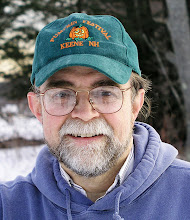
Jeff Newcomer had been a physician practicing in New Hampshire and Vermont for over 30 years. Over that time, as a member of the Conservation Commission in his home of Chesterfield New Hampshire, he has used his photography to promote the protection and appreciation of the town's wild lands. In recent years he has been transitioning his focus from medicine to photography, writing and teaching. Jeff enjoys photographing throughout New England, but has concentrated on the Monadnock Region and southern Vermont and has had a long term artistic relationship with Mount Monadnock. He is a featured artist in a number of local galleries and his work is often seen in regional print, web publications and in business installations throughout the country. For years Jeff has published a calendar celebrating the beauty of The New England country-side in all seasons. All of the proceeds from his New England Reflections Calendar have gone to support the Pulmonary Rehabilitation Program at the Cheshire Medical Center. Jeff has a strong commitment to sharing his excitement about the special beauty of our region and publishes a blog about photography in New England.
Showing posts with label falls. Show all posts

Monday, May 1, 2017

Essential for Waterfall Photography


Garwin Falls Veil

I’m getting things together for my Spring Waterfall Workshop, coming up this weekend.  I have been scouting many of my favorite regional waterfalls, and although I know that some of the more ephemeral falls can dry up quickly, so far, the flows are looking good.  Still I am praying for a little more rain this week. 

The workshop begins Friday night with a meet and great at the house We will plan our rough itinerary for Saturday and I will have a chance to review some of the essential elements of waterfall photography.  So here is a review  are a few essentials for capturing falling water.


1 ) Being There

It should be obvious, but the first step is to get out to the falls when there is a vigorous flow of water.  The spring run-off can be a reliable source, but later, the results are usually best following a significant rain storm.


Polarizer & Graduated ND Filter
Arethusa Falls, Livermore NH

As always, the right conditions are critical. Overcast or rainy weather is often best. Bright sunlight produces brilliant reflections and hot spots that can make exposure impossible without heavy application of HDR techniques. Soft diffuse light allows all of the detail in the rocks and water to shine through and the lower illumination makes it much easier to use long exposures that create the soft look that is so popular. In brilliant sunshine, even your smallest aperture and slowest ISO will not be enough to adequately slow the shutter speed. A fully applied polarizing filter can take away a couple of stops, but when more light reduction is needed a neutral density filter may be needed to extend the shutter duration to render that magical, cotton candy, effect.


2) Getting Steady

It seems silly to have to say this, but waterfall photography requires a sturdy tripod. My only advice about tripods is spend the money to get a good one. If you buy a cheap tripod, you will be replacing it every few years and all you will ever have is a CHEAP tripod. An expensive tripod will be the only one you will ever need. It will save money in the long run and you will always have a GREAT tripod.


3) Filters

The one essential photographic filter is the polarizer, and this is

especially true for waterfall photography. The polarizer performs the magic of blunting the reflection on rocks and water allowing the native colors to shine through, but the maximum effect is not always the best. Some reflection may be helpful to add definition to the flowing water. Experimentation is the best way to

Non-Polarized

find the right amount, but at times the optimal polarization for the rocks may be too much for the water. Here is where the fun of stacked images and masking can come in, but, seriously, you can drive yourself crazy with this stuff. Most of the time a comfortable compromise is available. Finally, as I mentioned above, the polarizer blocks one or two stops of light making it easier to capture the  long exposure required to "velvetize" (my word, feel free to steal it) the water.


Polarized


4) Shutter Speed


I am often ask about the correct shutter speed for waterfall photography, and I have struggled to find a simple rule that can be generally applied.

Forty Foot Falls Cascade

  A few years ago, I tried to apply some scientific rigor to the problem.  I spent a couple of hours at one of my favorite local collection of falls and cascades, Forty Foot Falls, along Merriman Brook in Surry New Hampshire. These falls, include drops of varying heights and can be easily approached from different distances. I took multiple images from various locations with shutter speeds in increments from 1/30th  to 4 seconds. The weather was perfect, a dark overcast shortly following a significant rain storm. After careful analysis, the results of this non- randomized, single blinded study were conclusive and a failure.  

Forty Foot Falls Test


The best shutter for any waterfall is dependent on too many factors to surrender to a simple formula.  The most important confounding factor, of course, is individual taste.  We all have our own preferences for the degree of "velvetization".  My overall goal for waterfalls is a shutter speed which is long enough to provide the velvety look without being so long as to render the water without any texture and interest.  On average I find this to range between 0.25 and 1 second, but the best result is dependent on a number of factors, including the speed of the water, the depth, interruptions to flow and the distance from the falls. I love the soft look, but a fast shutter can work to freeze the random calamity of a boiling cascade


The Speed of the flow depends on the height and steepness of the falls and the degree to which the water falls unobstructed.  Faster flows are best captured with faster shutter speeds to preserve a sense of texture. 

Deep falls obscure the underlining rocks and depend on the water detail for visual interest, making faster shutter speeds necessary.


Obstructions such as rocks and ledges slow the flow, diverting and fanning the water into streams that can be captured at longer shutters before detail is lost. 


Pond Brook Falls in Time


Moss Glen Falls


All of these effects are blunted by greater distance from the subject.  My more distant image from Moss Glen Falls in Granville, Vermont was taken with full polarization and a 10 second exposure, but from this distant the interest came from the streaming and fanning of the water and was not weaken by the loss of surface texture.


5 ) Exposure

It can be challenging to achieve good exposure for both the bright

Gentle HDR : Catsbane Brook

falling water and the surrounding dark rocks.  Multi-image HDR techniques can work well, but capturing the full dynamic range in a single image is more difficult.  The best compromise is one that results in an image that allows the salvaging of both the highlights and shadows.  In this  situation, “exposing to the right” (ETTR) can be critical.  Increasing the exposure as far as possible, without blowing out the highlights, will allow for better detail in the shadows as the image is processed.  It is important to avoid blowing out the highlights.  Even a small area of pure white, without detail, can shine out awkwardly and no amount of processing can retrieve detail where none exists


To allow for long shutter speeds, the f stops are typically quite high.  I usually try to avoid the diffraction caused by extremely small apertures, but waterfall photography often forces me to accept f stops in the 18-22 range.  


6) Safety (This should really be number one)


Steep banks below
the Ashuelot Arch Bridge
Special attention to safety is seldom more critical than when standing precariously on slippery rocks, inches from a precipitous drop to raging water, or while sliding down a steep bank to reach a roaring brook.  The basic rules are the same.


First: Most of the best shots are seen from difficult to reach locations, where your life may be in danger.  More importantly, your equipment will be at risk of loss or damage.  Start by assuming the worst WILL happen.


Second: A few simple precautions, faithfully followed, can substantially reduce the risk of disaster. The key is to slow down and focus on your gear and your feet. Generally, the beautiful stuff will still be there once everything is secure.


Slow Down

Scary spot over Lower Purgatory Falls


Think before you move and never assume that your foot will hold on the leaves and wet rocks.  Have a back-up, a tree, a hiking pole or just your other foot.  When adjusting your equipment try to keep at least two points of control, two hands, a hand and a neck strap or hands and the tripod.  


Never fully trust the tripod.  Whenever my camera and tripod are over water, I always keep my neck strap on.  At times it can be awkward, all it takes is a gust of wind or a slipping leg for your camera to end up in the brook.  A few years ago, I was shooting by a stream in Harrisville.  I turned away for a second to grab something from my bag and my tripod toppled over dunking my camera in the icy water. It was a costly way to learn an important lesson.


Painful experience has also taught me to keep the holder under my filter as I unscrew.  The filter always seems to come off as you re-grip.


Changing lenses can be especially scary.  When I am in a vulnerable position, I try to avoid switching, but, if absolutely necessary, I stop, put everything down and try not to juggle more than one thing at a time. I secure one lens before taking another out, and position myself to screen everything from the mist.


Waterfall photography provides many exciting opportunities and challenges.  Hopefully these suggestions will help encourage you to get out there and enjoy one of this season’s greatest attractions.


Jeff Newcomer
partridgebrookreflections.com

603-363-8338

Sunday, November 8, 2015

Autumn Album , September


Last Light, Ashuelot River Falls


November is here and although there is still some rusty gold color in the Oaks and Beeches, I'm settling into my usual late fall torpor. Through October I have been splashing selective examples of this year's color, but as always I have a pile of images to work through before I become distracted by the first snows. A quick review of my September and October archives shows that I have collected nearly 5000 images. Even at my usual ratio of 3-5 images per scene that leaves a lot of editing to do. 


 Matured Pasture


Many of the foliage images that I have published so far were those attached to specific blog articles and my traditional autumn postings have been reduced by two productive trips to the southern New England coast in the middle of the peak color. I'll eventually get back to the surf and lighthouses, but it is time that I got down to the serious and time consuming business of editing my "pile of leaves". There is a lot of work to be done, but, as a start, I will focus this week's blog on a collection of some of my favorite autumn images, beginning with the earliest signs of the season from September.


September's Promise  


As usual middle to late September provided signs of the coming autumn color. The images usually all about transitions with patches of color seen in range of light from brilliant sunshine a cool mists. September is also a time of living change with the arrival of the years produce and the livestock greedily gobbling up the last of the pasture greens.


Apple Picking
Abigail & Grayson, NOT Picking

We made our usual trips to the Green Mountain Orchards in Dummerston Vermont. The apple harvest was abundant this year, but our first two attempts were blocked by the arrival of impressive rain and thunderstorms. Our persistence was finally rewarded on our third trip with a beautiful warm sunny day, and the delay allowed us to convince our daughter Abigail and her boyfriend Grayson to join us in the picking. As usual we loaded up with more apples than we could possibly consume, but the nice folks at the orchard agree to sell my calendar in their farm store. Much of the harvest will be destined for the apple sauce that will get us through the winter.  


Perfect Macouns
Walker Farm Produce


Green Mountain Orchard Dummerston Vermont


My  Ugly but Delicious Macouns


We also had a good crop from my small collection of apple trees.  Since I don't spray, the apples weren't pretty, but underneath the skin they were excellent.  We had an especially abundant yield from my Macoun.  These apples seem to hold their taste and texture longer than many of my other varieties.


On the Farm
 

The Roads End Farm is part of my photographic routine in every season. Early in September I circled by to capture some of their 60+ horses in the morning mist. This is quite possibly my favorite weather and two images from this shoot were recognized as Photo of the Day on the popular Photofocus Web Site.


Peek-A-Boo, Roads End Farm


In the Classroom
Field trip to Ashuelot River Park
A significant part of this September was devoted to preparing for my first full Digital Photography Course at Keene Community Education. Over the years I have presented many lectures on photography, but assembling a coherent and comprehensive program to fill eight hours of classroom time was a real challenge. Thank goodness I was able supplement my droning presentations with two shoots and the subsequent delicate critiques. It was great fun with a wonderful group of dedicated students. I plan to do more teaching in the coming year, especially since the slides for my Basic Digital Photography Course are safely "in the can".  I'm thinking of doing my next class of a Introduction to Lightroom for Photographers, just because I know so little about the subject.
River Park Falls

Ashuelot River Color


2015 Art in the Park


Among the various pleasant distractions of September was another lost weekend for the Art in the Park Show at the Ashuelot River Park in Keene New Hampshire.  This is the only time each year that I pull out my tent.  It is a lot of work but worth while to see all the local artists and art lovers.


Wandering About September


The course consumed an inordinate amount of time in September, but I did get out for occasional glimpses of the growing color. By the end of the month the autumn show was looking promising. The October color blitz was well on its way, and I'll be working on getting those images ready for their "close-up" in a couple of weeks.


Hubner Farmhouse


When it comes to displaying the imagery, autumn's abundance of visual  treasures can be frustrating.  More of this year's autumn images can be found in a Gallery on my Web site.


Jeffrey Newcomer
Partridgebrookreflections.com

Sunday, May 26, 2013

Lemon Aid for Photographers


 This weekend has been a workshop for bad weather photography

There should be no surprise that we are experiencing miserable weather this holiday weekend. This is New England and terrible weather is the population's curse and photographer's treat, but this weekend has been depressing even for those of us trying to keep the damp from our cameras. Fellow New England Photography Guild member Jim Block is even dealing with snow on the Lilacs. Crummy days are always good for getting caught up in the studio. With a show at Keene's Prime Roast Cafe and the Keene Art Walk all coming up next week, I have plenty to do, but I had to get out to try to see what I could do with, and in spite of, the weather.

Hubbard Brook Falls

Spring rains are always an obvious invitation to shoot our many waterfalls. In a few weeks the summer droughts will dry many of the
Hubbard Brook Falls
best cascades, so my first trip was to falling water. I was trying to decide where to go when I received a call from a photographer in Laconia New Hampshire asking about a image of the falls on Hubbard Brook in Chesterfield, New Hampshire. It is challenging to get to, and not freely open to the public, but it is a lovely spot when the water is high. The call made my decision and Nellie and I headed out. The falls on Hubbard Brook are actually a series of cascades and higher drops. The hike into the ravine involved bushwhacking down steep embankments, made trickier by the soaked ground, but as usual it was worth the terror. As I worked my way down along the brook, two things occurred to me. First the cold weather had swept the black flies from the forest. Second, if slipped, Nellie would be of no practical value in getting help, and I had no cell reception in the depths of the ravine. Through much care and considerable butt bouncing I made it down and out alive.


Sound of Thunder

The light was gone, but I still had one more capture to make. The night was fractured by a series of dramatic thunderstorms and I was able to record about 40 minutes of the action on my Zoom H2n field recorder. I have started to collect natural sounds as background for my slide shows. Check out the pasture melodies on my web site front page and the thunder storm on my Summer slide show. 

To the Dump

On Saturday I was able to excite Nellie with one of the few phrases she actually understands, "Want to go to Dump?" Dump, Walk and
Pasture Corner, Roads End Farm
Dinner, that's about it. The weather remained cold damp and blustery, but we still made our regular circle through Roads End Farm. The horses were way off in the back pasture, but the rain had freshened the spring leaves along the fields. By afternoon I had to get out of the house and went into Keene to plant myself with a cup of coffee at Brewbackers Cafe. Brewbackers is usually bustling, but for some reason I find it the perfect place to write. I settle in with my iPad and my own music selection and can usually get more done in an hour than in an afternoon with the distractions at home. 


Infrared in the Rain

Central Square Gazebo


As the afternoon progress the sky grew darker, but I had a plan and I had my Infrared camera. The great thing about infrared photography is that the images are not much affected by extremes of weather. Bright, impossibly contrasty, midday light ignites the infrared spectrum. The leaves shine and the sky stays black as ink. At the other end, dull flat light still comes through with good contrast between bright foliage and dark trunks and structures. I ended up spending time shooting around Keene's iconic Central Square. I have photographed the square countless time before, but Infrared provides a whole new perspective. 


Ladies Wildwood

Wildwood Depths
I was loosing light but there was one other place that I thought might do well with the soft light. Ladies Wildwood Park is a surprising treasure in the middle of Keene. In 1890 the park was created to protect a stately grove of trees from development. The original grove was leveled in the 1938 Hurricane, but it has been replace by ranks of tall White and Red Pines.
Infrared Park
The park is small but in the right spots you can feel enveloped by the forest. The challenged is to find the angles to look through the pines without catching glimpses of the surrounding houses and roads. The flat light was great to capture the brooding mood of the pines on a carpet of nearly iridescent green. Infrared also worked well, contrasting the bright ground cover with the towering dark pillars. Light gone. Time to go home. 


Remembering 

Today Nellie and I visited the flag bedecked Spofford Cemetery. Nellie wandered respectfully among the stones and then honored the fallen by doing her business off in the woods. I grabbed a couple of flower images in the soft light, but then disaster struck. The sun actually broke through.


Disappointing. Nothing to do but go home, edit images and write this article. My only consolation is that, this is New England, and the good weather can't last forever.

Jeffrey Newcomer
Partridgebrookreflections.com