About Me

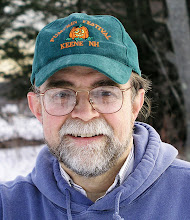
My photo
Spofford, New Hampshire, United States
Jeff Newcomer had been a physician practicing in New Hampshire and Vermont for over 30 years. Over that time, as a member of the Conservation Commission in his home of Chesterfield New Hampshire, he has used his photography to promote the protection and appreciation of the town's wild lands. In recent years he has been transitioning his focus from medicine to photography, writing and teaching. Jeff enjoys photographing throughout New England, but has concentrated on the Monadnock Region and southern Vermont and has had a long term artistic relationship with Mount Monadnock. He is a featured artist in a number of local galleries and his work is often seen in regional print, web publications and in business installations throughout the country. For years Jeff has published a calendar celebrating the beauty of The New England country-side in all seasons. All of the proceeds from his New England Reflections Calendar have gone to support the Pulmonary Rehabilitation Program at the Cheshire Medical Center. Jeff has a strong commitment to sharing his excitement about the special beauty of our region and publishes a blog about photography in New England.
Showing posts with label Scott Farm. Show all posts

Sunday, May 19, 2013

Taming the HDR Beast

HDR ..................................................................................Blending


HDR Blending
I have never been a big fan of heavily tone-mapped HDR images, but I appreciate that it is all a matter of taste. I frequently use various post processing techniques to expand the dynamic range of my pictures, but I draw my personal line somewhat short of "cartoonish", “painterly” processing. I want my viewers to see the image as I saw the scene and, at most, ask “Did you use HDR?” and not exclaim “WOW, you really used HDR”. When using HDR programs such as Photomatix or Photoshop’s HDR Pro, I often struggle to keep the effects under control and I find that a level of tone-mapping that works well in one part of the image may be over the top in another. Increasingly I have been using image blending to manage my HDR work. The techniques are simple and provide almost infinite control over the impact of HDR and tone-mapping. 


Enhancing the Depth
Last week I got out early to catch the effect of the morning fog on the

Westmoreland Fog
early spring colors. In Westmoreland, NH, I found a nice composition with the hay wagon sitting expectantly in a pasture and the classic red barn seen on the hill above. The arrangement provided a nice sense of depth with the fog having a much stronger softening influence on the distant barn. I liked the image but I felt the effect would be stronger if I could enhance the crispness of the wagon. Enter tone-mapping. 


Given the soft light, high contrast was not an issue, so I had no need for HDR techniques to capture the full dynamic range. I didn’t capture multiple bracketed images, but I could enhance tonal contrast by applying tone-mapping to a single image. In Photoshop, I processed the image to get the best result using my standard techniques. I didn’t want to punch up the colors and contrast too much and thereby loose the soft feel of the mist, but I felt that objects in the foreground, especially the hay wagon, could benefit from crisper detail. After I was happy with the base picture, I duplicated

Tone-Mapped Crazy
and flattened the image and then opened it in Photoshop’s Tone-mapping tool. A full discussion of the use of this tool is beyond the scope of this article and also pretty much beyond the scope of my expertise. Suffice it to say that my usual approach is to

play around with the sliders until I feel I have a good result or become frustrated and chuck the whole thing. Typically I end up with something that is dramatic but beyond what I would generally feel comfortable with as a reasonably natural representation of the scene. At this point, instead of giving up in despair, I often use image blending to mute the tone-mapping effect. 


Tome-Mpped Layer at 25% Opacity & Masked


 In this case, I copied the tone mapped layer to the top of the layer stack of the original. Proper alignment was not a problem given that the two layers were from the same image. I then was able to adjust the opacity of the overlying tone mapped layer to get just the amount of enhance contrast that I wanted in the foreground elements. This global adjustment resulted in excessive contrast in the distant background, especially the misty barn. By painting with black on the mask layer I was able completely remove the tone-mapping effect from areas of the background enhancing the sense of depth in the image. 


Blended Image

Blending together a tone-mapped and regular image allows full control of the amount and location of the enhanced effects. Various levels of HDR/Tone-Mapping can be painted in by applying different levels of gray to the layer mask. White reveals all, but middle gray shows only a partial effect and because all the work occurs on the mask you can adjust and modify as much as you want. In this picture I used a single Tone-Mapped image but a bracketed, multi-image HDR layer works just as well. 


Scott Farm Rainbow

Scott Farm Rainbow

In another example I worked on an image from a wedding at the Scott Farm in Dummerston, Vermont.  The union was blessed by a beautiful
Over the Top
rainbow.  I captured the color with the farm and a classic truck in the foreground, but I thought the truck was a bit dull and flat.  At home, I created a tone-mapped version.  I typically go a bit heavy with the toning, since I know it will be muted in post.  Again, I modified the effect with opacity and then use a mask to apply it only to the tuck.  I had a great time adjusting the opacity to find the right amount of enhancement and I still may mute it a bit further.

Tone-Mapped Truck

So get out there and HDR your brains out.  Not to worry, you can always calm the craziness with a little gentle blending.


Jeffrey Newcomer
Partridgebrookreflections.com

Sunday, February 24, 2013

Photographic Treasures of Dummerston, Vermont


Spring Sunset, Dummerston, Vermont

Living in Chesterfield New Hampshire, I am fortunate to have easy access both to New Hampshire's Monadnock Region and southern Vermont. There has been much written about the differences between Vermont and New Hampshire. Vermont has the reputation as a softer, rolling countryside while New Hampshire is know for its more dramatic and craggy mountains. Clearly these are silly distinctions, more related to marketing than reality, but there are subtle differences, more in feel than geography. I would be hard pressed to put that difference into words, but I'm just happy to be able to sample both on an easy basis. 


When I head out on a shoot my first decision comes at the end of the driveway where I must choose to turn left for New Hampshire or right for Vermont. It is an interesting choice since traditionally the political directions of the states have been the opposite. It is well understood that the progressive regions of New Hampshire are those that touch Vermont and that is fine for me. As I cross the Connecticut River into Vermont one of my favorite nearby places to explore is Dummerston and this week I would like to highlight some of the best photographic attractions of this lovely and peaceful slice of classic Vermont landscape.


Dummerston, Vermont
Dummerston lies just across the Connecticut River from Chesterfield,

Dummerston Back Road
New Hampshire. It is just north of Brattleboro but offers a quick and complete escape from that bustling town. It's 30.8 square miles feature rolling farm land and several classic New England villages. In addition to the Connecticut River on the east, it
Hay Rake Mist
is bisected by the West River, which in earlier times was a source of power for a number of mills. Now the river is a source of beauty and, in the summer, a favorite spot for tubing and white water kayaking. Dummerston has many lovely back roads, excellent for getting lost. There are wonderful photographic opportunities around every turn, but I definitely have my favorites. 


1) Dummerston Covered Bridge
Dummerston Covered Bridge
The 270 foot long Dummerston Bridge is the longest covered bridge still carrying traffic in Vermont. The bridge was built in 1872 to span the West River and offers numerous interesting perspectives. My favorite location has always been from downstream, looking back on the bridge with the hills in the distance, but I keep coming back to find fresh inspiration. 


2) Black Mountain
Just downstream from the covered bridge Black Mountain rises dramatically above the north bank of the river and is part of the 593

Pitch Pine on Black Mountain Summit
acre Black Mountain Conservation Area. The 1280 foot summit can be accessed from Rice Farm Road on the east side of the West River, but a much easier trail starts on the other side of the mountain off Black Mountain Road. This trail winds about 1 mile through a peaceful and varied woodland and provides a lot of reward for modest effort. The summit is well worth the short walk, providing lovely views along the Connecticut River Valley and east to distant Mount Monadnock. The rock outcroppings at the top provide great places for rest and contemplation, so be sure to bring a snack. Also notice the Scrub Oak and Pitch Pine trees around the summit. Both are quite rare in Vermont. 


3) Stickney Brook Falls
One of my favorite nearby cascades is along Stickney Brook just
before it reaches the West River. The area features a series of short falls and cascades as the brook tumbles past the location of a old mill site. The intensity of the falls vary greatly depending on the weather and supply of water. It is especially exciting during spring run-off or any time after a heavy rain. During the summer, the Brook's pools are a popular refuge from the heat. The falls are easy to find on Stickney Brook Road off of route 30. 


Stickney Falls


Orchards
Scott Farm Orchard & Mt Wantastiquet

Dwight Miller Orchard
Dummerston offers a number of beautiful orchards featuring an wide variety of apples and other native fruits. They also provide beautiful vistas for photography throughout the year, but especially during the brief spring blossom season. Dwight Miller and Sons Orchard (4) is located in East Dummerston. A drive up Miller Rd reveals long views to the north and east with a foreground
Connecticut River from Scott Farm
dominated by the hilltop orchard. In addition to their certified organic apples & cider, they feature peaches, pears, blueberries, and strawberries. The Scott Farm (5)is known for its wide variety of rare antique apple varieties. The orchard is on a hillside with dramatic views of the Connecticut River Valley and Mount Wantasiquet. In addition to great produce the farm is host to weddings and other events. I have attended a couple of weddings on the hillside and I can testify that the location is breathtaking. 

Scott Farm Rainbow
Orchard Vows


6) Walker Farm
In season drop by Walker Farm on Route 5.  The farm well deserves its ranking as one of Yankee Magazine's top 5 Nurseries and Garden Centers in New England.  The farm stand is always packed with the best 
seasonal fruits and vegetables, but my favorite is the extensive green houses, whose colorful flowers provide a desperately needed splash of spring just when I need it most.  I've talked before about using the greenhouses to cheat with my flower photography.  Within the shelter the blooms are always softly lit and there is no wind to smear my long exposures.  The staff is always helpful. Just be sure your tripod doesn't trip the customers!


7) Rudyard Kipling
Dummerston is also the location of "Naulakha" , Rudyard Kipling's

Naulakha
country home, where he wrote the Jungle Books and Captains Courageous. It is also where he invented Snow Golf. In the winters of the 1890's Kipling challenged guest to hit red painted golf balls into red cups that had been placed in the snow around the property. The game offered special challenges especially since a drive could occasionally skitter two mile down the icy slopes  into the Connecticut River.


Dawn Pasture, Dummerston
Dummerston has many special locations, but for me the greatest attraction is that a peaceful meander along the town's back roads almost always yields something new and classically New England.  The town is like many in New England, but  for me its proximity makes it easy to cruise by whenever I have an hour or two to explore. Most New Englanders have their own nearby treasures. With regular visits in all seasons and weather you will be  surprised how much beauty you can find in your own special corner of our unique region.