About Me

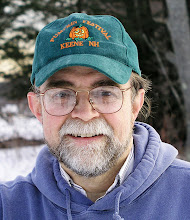
My photo
Spofford, New Hampshire, United States
Jeff Newcomer had been a physician practicing in New Hampshire and Vermont for over 30 years. Over that time, as a member of the Conservation Commission in his home of Chesterfield New Hampshire, he has used his photography to promote the protection and appreciation of the town's wild lands. In recent years he has been transitioning his focus from medicine to photography, writing and teaching. Jeff enjoys photographing throughout New England, but has concentrated on the Monadnock Region and southern Vermont and has had a long term artistic relationship with Mount Monadnock. He is a featured artist in a number of local galleries and his work is often seen in regional print, web publications and in business installations throughout the country. For years Jeff has published a calendar celebrating the beauty of The New England country-side in all seasons. All of the proceeds from his New England Reflections Calendar have gone to support the Pulmonary Rehabilitation Program at the Cheshire Medical Center. Jeff has a strong commitment to sharing his excitement about the special beauty of our region and publishes a blog about photography in New England.
Showing posts with label Ecuador. Show all posts

Sunday, August 3, 2014

What Camera Should I Buy (Part 2)


 Part of the "Basic Digital Series" 
 
Harvest Arch, Weston, Vermont Canon 5D Mark II


Random Thoughts on Digital Single Lens Reflex, Mirrorless and "Why Choose"

In last week's blog I discussed some of the important factors to
My Canon G11
consider when shopping for a Compact or Carry Around Camera. These little cameras can do a remarkable job particularly when conditions are not especially challenging. It is wonderfully liberating to have a camera that can slip into a pocket or a small fanny pack, but these cameras run into problems when dealing with more extreme conditions such as low light, high contrast or tricky depth of field. This is where Digital Single Lens Reflex camera offer a better and more easily manageable solution.

Digital SLRs


Canon 5D Mark II 400mm Lens


Digital SLR Cameras offer a level of quality and control beyond most compact cameras. In the days of film SLRs were contrasted to more compact "Range-Finder' cameras, with a major difference being that, with the SLR, images were framed directly through the lens rather through a eyepiece set off to the side. Today even the most inexpensive compacts provides a view through the lens on the LCD screen. Now the major advantages of a digital SLR include better controls, interchangeable lens, and larger sensors with better image quality, especially in low light. 


Better Control.

All modern cameras have automatic settings that employ remarkably sophisticated algorithms that can interpret brightness and color to create serviceable images in many situations. For
Canon 5D Mark III Controls
many, "snap shot photographers", the Automatic or Program settings are all that are needed, but, when condition are more challenging, an understanding of the effect of the basic camera controls can make the difference between a spectacular work of art and "Awh, that's too bad". As you consider a DSLR or even some of the more sophisticated Compacts look at how easily f-stop, shutter speed, ISO and focus can be controlled. Too often controls on Compacts require a search through menus on the LCD screen that can seem endless when you are trying to catch that fleeting shot. Digital SLRs usually provide much easier access to these controls. There is a lot to learn to fully master the potential of your camera, but happily DSLRs typically have the option to use automatic settings as you slowly explore your camera's remarkable potential.

Interchangeable Lens'

For serious photographers it is generally all about the glass. Camera bodies come and go every few years; the pace of advancement in

digital photography is amazing, but your lens' can be a life-long investment. Compact cameras have zoom lens' that can cover a wide range of focal length, but high quality interchangeable lens' are intricate optical works of art that provide a level of sharpness far beyond what can be achieved with the best fixed zoom lens. Many of the cheaper DSLRs have smaller, "Crop" sensors and are sold in a kits that usually will include a lens that is designed to work only with these smaller sensors. The Canon Rebel Cameras are equipped with a sensor which is about 62% of the size of a "Full Frame" (35mm size) sensor which is found on their higher end DSLRs. The Rebels are packaged with "S" lens' which are designed to work well with the crop sensors but will be useless if you decide to move up to a full frame camera. In the long run it may make sense to buy a full frame lens for your crop sensor camera, but remember, the crop sensor cameras multiple the effective focal length of regular lens'. Canon's Rebels have a "crop factor" of 1.6 which means that a regular 24-105mm zoom will 
Smaller Sensor Extend Focal Length
become a 38x168mm when the focal lengths are multiplied by a factor of 1.6. As you first dip your toe in the DSLR world, It is perfectly fine to start with a crop sensor lens. Early on, you'll have more than enough to worry about as you try to figure out why bigger f-stops mean smaller openings. When you eventually sell your first DSLR, it will be great to have a nice "kit" lens to slap on it for e-Bay. Full frames lens' can get crazy expensive, but the basic rule should be, "Camera bodies come and go, spend your money on the glass that will last forever."

Sensor Size

Here is the situation where size does matter. Larger sensors provide more room for each pixel, capturing more light with less noise. The
difference is especially visible with hight ISOs in low light situations, but technology is rapidly improving the quality that can be obtained from smaller sensors. In the end, decision about Megapixels and sensor size should be based on what you plan to do with your images. The number of mega pixels can improve your ability to enlarge an image but if your goal is to display your pictures on the web or perhaps make 4x6 or 8x10 prints, you don't need 20 megapixels crammed on your sensor. Increasingly it is understood that the important thing is the quality and not the quantity of pixels, and this is where larger sensor generally excel. Finally the physics of large sensors means shallower depth of field. This can be a challenge in macro photography but provides the nice soft background Bokeh that portrait photographers prefer.


The Cool Factor:

Ok, lets admit it, a massive, microwave sized camera looks cool and "professional". You don't want to show up at your next wedding shoot with a pocket sized compact, but do you always want to lug that behemoth around with you? And that brings us to the major disadvantage, other than cost,  of DSLRs.

Disadvantages:


Weight
10Lbs 4Oz of Lens' - Without the Camera
Digital SLRs are weighty items especially when your kit includes several lens'. My primary Canon lens' total over 10 Lbs and that's without the camera!  My SX50 HS tips the scale at only 1 Lb 8Oz.  The heavier the camera, the harder it is on your back and the less likely you are to carry it around with you to catch that unexpected, once in a lifetime shot. 

Obtrusiveness
Big cameras are also hard to hide when you are trying to catch candid shots such as with street or even family photography. People get very self-conscious when they find themselves staring down the barrel of a massive "professional" camera.

Temptation
 Finally it is unfortunately true that in some sketchy locations a big, obviously expense camera can be an invitation to theft or worse.  We had a fantastic time at the street festival in Quito, Ecuador.  The people were wonderful, but there was no way I was going to carry around my Canon 5D Mark II.  My little, unobtrusive G11 worked just fine and it was WAY easier to hold up over my head.

Quito Street Festival
  
Why Choose ? :

It should be obvious that the selection of a camera involves a long series of decisions all of which open some possibilities while closing others, but why choose. There are couple of options that provide hybrid solutions.

The Mirrorless Revolution:

All compact cameras are mirrorless that is, they don't use a mirror to see through the lens. What appears on the LCD screen is the actual image seen by the sensor. Many newer DSLRs have the same capability in "Live View" mode. In recent years a new class
Olympus "Micro Four Thirds System
of mirrorless cameras have appeared that combine the benefits of a relatively compact camera with the ability to use interchangeable lens'. Most of the major camera manufactures have come out with their versions of these cameras, which include the capability for full manual control. They have been called Mirrorless Interchangeable Lens Cameras (MILC), Mirrorless System Camera (MSC) or, my favorite "Evil" ; Electronic Viewfinder with Interchangeable Lens. I'll just refer to them all as"Mirrorless".  These cameras are advancing rapidly in terms of quality and capabilities. They come in a wide range of sensor sizes from the Olympus OM-D with a small "4/3" sensor to Sony's full frame A7. There is nothing that a mirror flapping in front of a sensor can do to improve image quality and I predict that Mirrorless will be the future of photography. For the time being Mirrorless cameras suffer from some of disadvantages. Although the quality of the images coming from cameras with even small
Sony Full Frame Mirrorless
sensors are quite remarkable they can't match noise level and low light capability of full frame digital SLRs. Mirrorless cameras generally use Contrast-based Autofocus rather that the faster Phased-based systems common in many DSLRs, but this difference is quickly disappearing as manufactures have upgraded their systems. The anchor that slows many of us elderly photographers from Mirrorless systems is our vast, and expensive collection of lens'. Mirrorless cameras are not compatible with standard DSLR lens' and although adapters are available, it seems awkward to carry around a massive 10 lb. lens with a tiny one lb. camera hanging off the end. For those of you just starting out, be grateful that you can approach your decision without this nasty encumbrance. If I was just beginning my photography career, I would have to strongly consider a larger sensor Mirrorless camera system. They are not cheap, and they are not as tiny as many compacts, but they do offer an interesting alternative to the big DSLRs.

Why Choose? Get Both.

Canon SX50 HS 'Carry Around"
1 Lbs 8 oz
Currently my solution to the camera dilemma is to have both a DSLR and a more compact "carry around". I like to have a decent camera with me at all times and that means more than just a camera phone. My new Canon SX 50HS is more than I can fit in my pocket without looking EXTREMELY excited to see everyone I meet, but I keep it in a small fanny pack making it easy to bring along whenever I don't want to be encumbered by my DSLR kit. I still have my G11 which can easily fit in a jacket pocket or my brief case. The two
Nellie with Canon SX50
camera solution works well and eliminates many of the awkward compromises necessary when relying on just one camera. The two major difficulties with this approach is, first, deciding which camera to bring on a shoot (I often bring both) and secondly, managing the cost of two cameras. No matter how much camera you need most of the time, a small Carry Around can be the best solution for special situations.


Once again, I apologize for my rambling and incomplete discussion of this difficult question. These articles have been two of my most challenging to write,  primarily due to how much of this expansive and evolving topic I had to leave out. My goal was to briefly introduce a few points that you will want to consider as you approach a decision about a new camera. Purchasing a camera should involve careful research, into both the equipment options, and, more importantly, your goals for your photography. The great news is that modern cameras are amazingly capable pieces of technology, and whether you pick a compact, DSLR or Mirrorless, you will be getting a magic-making machine which will be limited, not by its buttons and dials, but by the expanse of your own imagination. 

Part 1 of What Camera Should I Buy?
 

Jeffrey Newcomer
Partridgebrookreflections.com


Sunday, February 9, 2014

Galapagos Islands a Photographic Journey, Part 2


Like No Place on Earth


It is now about four years ago that Susan and I went on a dream trip, 600 mile off the coast of Ecuador,  to the magical Galapagos Islands.  It was our most unique journey and I'm not sure why it has taken me so long to finish posting about the experience.  Back last spring, I posted about the first part of the trip, and I' am only now getting back to complete the story.  I'm giving a talk next week about the Galapagos to a women's group in Keene and that finally gave me the excuse to finish part 2.


In December of 2010 we joined a photography cruise among the Galapagos Archipelago aboard the National Geographic ship the Endeavour.  This trip focused on photography with the timing and pace of our explorations arranged to meet the needs of serious photography.  The Galapagos is a paradise for wildlife and nature photographers and in this discussion of the second half of our trip I will focus on the images.  Check out my first post for more information about the trip and the Galapagos Islands.  I will only repeat my admonition from last time.  If you have a chance to go to the Galapagos, don't think, just go!


Isabela and Fernandina Islands
Cave Along the Punta Vincente Roca
On the morning of our fourth day we had traveled around the north end of Isabela, the largest island of the Galapagos Archipelago and in the process  crossed the equator twice.  In the morning we boarded Zodiacs to explore the rugged lava cliffs of Punta Vincente Roca.  The western islands are
Galapagos Peguin
younger with more active vulcanism resulting in a terrain that is dominated by barren lava flows, but, because of cool, nutrient rich, up-flowing currents, the shore was teaming with wildlife. The show included Sea Lions, Marine Iguanas, Sea Turtles, and the Galapagos Penguins.  Later we snorkeled among the amazing variety of ocean fauna.  I had a
Cormorant "Wings"
chance to tail a giant Sea Turtle and watch schools of fish reacting to the presence of Black Tipped Sharks.  In the afternoon, we explored Punta Espinosa on Fernandina Island. The ropy lava flows provided perfect cover for the carpets of Marine Iguana, and we got a close look at the comic appearing Flightless Cormorants.  These birds improved their swimming capabilities by evolving away from winged flight.  Their useless stubby wings look ridiculous, but, since the birds have no predators that might require an airborne escape, wings no longer provided a survival advantage .


 Wing Drying


Santa Cruz (Day 5)
Puerto Ayora Fish Market with Friends
Although the Galapagos Islands are 97.5% uninhibited park land there are a few small settlements. Puerto Ayora is a town of 15,000 people on Santa Cruz Island.  It is the home of the Charles Darwin Research Station which works to understand and protect the unique qualities of
Baby Tortoise Learning a Lesson
at the Darwin Station
the Archipelago.  The station is noted for its  Giant Tortoise breeding program and, until recently, the presence of "Lonesome George".  George was the last surviving member of the subspecies of Pinta Island Tortoises.  Sadly years of attempts to crossbreed George with willing mates failed and he died, without progeny, on June 24th 2012.   He was over 100 years old.
Lonesome George, Rest in Peace

After a touch of civilization in Puerto Ayora, we traveled into the damp and surprisingly verdant highlands of Santa Cruz and had the opportunity to mingle with migrating Tortoises.  These magnificent ancient beasts travel at a glacial pace across the fields and seemed little concerned with our approach as long as we matched their slogging pace.  We discovered that the migrating Tortoises are all male.  The females  are smart enough to let the males do all the work.
 A Quick Video of Slow Tortoises

Cerrro Dragon and Sombrero Chino (Day 6)

Cerro Dragon is know for its restored population of Land Iguanas.
Land Iguana
 The color of these animals has evolved to match the arid brown soil of their surroundings.  They provide a  stark contrast with the black Marine Iguanas that bask on the lava flows by the sea.  Cerro Dragon means "Dragon Hill" and refers to a beautiful peak which dominates the island.  I was lucky to catch a Gray Pelican lounging in front of the hill during our sunrise visit to the beach.

Dragon Hill and Grey Pelican

The afternoon included more snorkling and a lovely sunset across the aptly named Sombrero Chino, or "Chinese Hat".

Sunset Over Chinese Hat

Bartolome & Santiago (Day 7)
From Bartolome Peak


 In the early morning of our last full day of the cruise, we climbed the 359 foot peak on little Bartolome Island.  To avoid erosion the trail has a wooden walkway with 372 steps.  The climb was challenging, but the view was well worth the effort.  We were treated to a stark volcanic panorama across the moon-like landscape of the eastern shore of Santiago.  Later we had time to leisurely explore two beaches populated by frolicking Sea Lions, Sally Lightfoot Crabs, Sea Turtles and flocks of Frigates and other sea birds.  
Sally Lightfoot Crab

Lava Heron
Our last hike of the cruise was along the shore of Puerto Egas on the western side of Santiago.  The point overlooks Buccaneer Cove, which was once a favorite anchorage for pirates.  The hike was notable for the wide variety of sea and coastal birds wandering the shore.  These
Yellow Warbler
included Yellow Warblers, Lava Herons and American Oystercatchers.  The Sea Lions appeared to be enjoying the warm early evening light, basking on the Lava rocks and gazing at the
American Oystercatcher
surf as the swells crashed against the shore. It was a lovely evening and a fitting conclusion to an amazing trip.  We all were reluctant to board the Zodiacs for the ride back to Endeavor.

The next morning we were back in Baltra.  After the flight to Guayaquil Susan and I flew to Ecuador's mountain capital of Quito to spend a couple of days with friends who live in the city.  We then spent a few days birding at Maquipucuna in the Andean cloud forest.  It was a fascinating experience, but that will be another story, or blog.

 Our Galapagos trip was truly a once in a lifetime experience. Lindblad and National Geographic did a wonderful job designing a cruise with the serious photographer in mind.  And the food was great.  We will be doing another Lindblad photography cruise to Alaska this summer and I expect a fantastic experience, but it seems unlikely to match our cruise among the totally unique Galapagos Islands.

I can only repeat, if you get a chance to go to the Galapagos, Don't Think, Just GO!


Surf on James Bay

For more images of the Galapagos :


Jeffrey Newcomer