About Me

My photo
Spofford, New Hampshire, United States
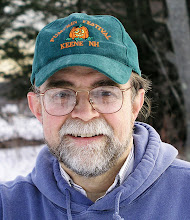
Jeff Newcomer had been a physician practicing in New Hampshire and Vermont for over 30 years. Over that time, as a member of the Conservation Commission in his home of Chesterfield New Hampshire, he has used his photography to promote the protection and appreciation of the town's wild lands. In recent years he has been transitioning his focus from medicine to photography, writing and teaching. Jeff enjoys photographing throughout New England, but has concentrated on the Monadnock Region and southern Vermont and has had a long term artistic relationship with Mount Monadnock. He is a featured artist in a number of local galleries and his work is often seen in regional print, web publications and in business installations throughout the country. For years Jeff has published a calendar celebrating the beauty of The New England country-side in all seasons. All of the proceeds from his New England Reflections Calendar have gone to support the Pulmonary Rehabilitation Program at the Cheshire Medical Center. Jeff has a strong commitment to sharing his excitement about the special beauty of our region and publishes a blog about photography in New England.
Showing posts with label studio. Show all posts

Friday, May 1, 2020

Bringing Spring Indoors


Rhododendron Bloom
In my last two articles I encouraged you to get outside to photograph the constantly changing signs of the exploding New England spring.  It is a great excuse to escape our claustrophobic pandemic isolation.  The buds are swelling, breaking open and showing signs of early spring color.   It is all out there for you to explore, but now I would like to suggest that you bring some of that beauty back indoors. 

Challenges of Outdoor Macro Photography
Last time I discussed some of the problems of outdoor macro photography.   Most importantly, it is often difficult to find a satisfactory balance between a small aperture to provide good depth of field and a short shutter speed to freeze motion.  This can be especially challenging in low light situations, but bright light can cause its own problems with stark shadows and blown-out highlights.  Photography is all about finding the best compromises, and with care and patience great images of nature’s fine detail can be obtained outdoors.  But since we have been told to isolate, I thought it would be helpful to discuss the advantages of bringing macro photography indoors.

My Spring Floral Cheat
It is usually about this time every “normal” year that I head out for my springflower photography “cheat”.  I go to my favorite local greenhouse (Walker’s Farm in Dummerston Vermont) and, while Susan buys plants for the garden, I shoot an amazing variety of healthy flora, all indoors with soft diffuse light and no problems with the wind.  


The only major difficulty is keeping people from tripping on my tripod. I always get great shots and the plants are all labeled for easy identification.  It is simple, and I am never the least bit ashamed of my lazy deceit. Sadly, this year the damn Covid 19 has prevented me from visiting  the greenhouse, and I have been forced to create my own special environment.


Trans-Illuminating Autumn
My Sunroom "Studio"
A few years ago, I decided to bring a selection of autumn leaves indoors to use trans-illumination to highlight their brilliant colors.  My setup was simple, a  bright light, a piece of black mat board and my macro lens.  In that situation, I was shooting with the light shining through thin leaves and the effects were stunning.  To avoid difficulty with depth of field, I pressed the leaves flat before shooting, and with the camera on a tripod, I could shoot with a small aperture.  My only real challenge was to get Susan to allow me to clutter half of our sunroom for the project.


Illuminating Spring

Over the last week I have worked to reproduce my indoor lighting to shoot the developing spring flora, and Susan is happy that I can set things up in my barn studio.  I do not have the focused tensor lamp that worked so well for my autumn leaves, but I found that the intense trans-illumination was not as important. 


 Unlike the flattened autumn leaves, spring buds and flowers have greater dimension and are more opaque.   To achieve balance illumination, I found that I needed to add a variable amount of front lighting, with one of my LED studio lights.  I kept the large light source close, allowing the light to wrap around the subjects.  


Focus
Maple Buds

In the controlled Indoor setting, focus was much easier to manage.  I could enlarge the depth of field with small apertures, routinely shooting at f32.  The diffraction associated with such small apertures can cause softening of image detail, but much of this can be corrected with sharpening in post-processing.


Single Image f 5.6
Even with small apertures, macro photography is associated with shallow depth of field, but a restricted DOF can be used to direct attention to a small area of the image.  Quite often this means leading the eye to the stamen.   A single exposure, with a small aperture, can be a pleasant solution, but when you want the entire subject to be sharp, focus stacking is a great solution.

Six Image Focus Stack


Focus Stacking
Six Image Focus Stack with Blended and Touch-up Layers
Focus stacking involves blending multiple images taken at different plains of focus.  I have discussed the details of this procedure in previous articles.  The technique is not complicated but does require the use of image editing software. If you are using Adobe software, Lightroom will not allow the required manipulation of layers, but  Photoshop simplifies the process of aligning, blending and touching up the images. 
  

Although variably focused images can be obtained in the field, it is much easier and more precise when in the controlled studio environment.  When both the subject and the camera are held stationary, a sufficient number of pictures can be obtained to result in sharply focused macro images.  Indoors, I routinely obtained six or more images each with subtle differences in focus and with greater numbers of layers the post-blending touch-up process was much less difficult.


Whether indoors or out, there are great photographic opportunities as our New England spring progresses.  Images captured in natural settings can be great, but consider experimenting with the control that comes with bringing those flowers and buds inside.  With a few simple tools, you will discover an exciting new world of detail and beauty.


Dogwood Bloom

Check out these links :


Jeffrey Newcomer NEPG
www.partridgebrookreflections.com


Monday, July 30, 2018

Photo Studio Dream

Brief Break in the Rain, Spofford NH


I have always been a great fan of photography in miserable weather.  Blizzards, dense fog or rain can all be opportunities to capture dramatic environmental landscapes.  Of all the different atmospheric conditions, I find the most difficult to manage is heavy and blowing rain.   I have the gear to handle most situations and I always argue that terrible weather is the best time for photography,  but the last couple of weeks have been soul crushing.  We have had more or less a continuous blast of showers and torrential downpours, all combined with persistent heat and humidity.


IR Works Anytime
I have done what I could.  Last week, I cut through the haze with my infrared camera.  Mid-summer is always the best time to shoot IR.  The progression of violent thunderstorms has provided the opportunity for rainbow shots, but I never seemed to be in the right spot to capture a balanced composition. 


With challenges outside it seems like a good time to discuss my big indoor summer project, the construction of my new photography studio.  It has been a long time coming.


My Household Sprawl

Studio Work Table
To begin, I should describe my current “studio” arrangement. Beginning from when I started to take my photography seriously, and to my wife’s great frustration, my studio has been scattered throughout our house.  I have taken Abigail’s former bedroom as my matting and framing workshop.  I find it a very productive space, but Susan contends that it is a chaotic trash heap – she has a point.  


Backup Clutter
The small downstairs bedroom is now my office, where I do my photo editing and printing, not to mention storing my gear and my collection of camera bags, 15 and growing.  It is a self-evident truth that a photographer can never have enough camera bags. It all combines to create another productive heap.  To maintain domestic peace, I try to keep these two rooms closed as much as possible.  It helps that they are the only two rooms in the house that are air conditioned.


So, for my photography business, I have grabbed two rooms, and if I could limit the damage to these, I think I could have slipped by.
BUT there is more! Photography seems to have the ability to gobble up space.  Susan doesn’t mind that every wall in our house displays/stores my framed photographs, but we have only so much wall space.  Especially when I am between major shows, I have at least two large bins of pictures with no place to go other than on the floor of our gallery.  The problem is that these pictures along with all my other work can’t be exposed to the heat or cold of our attic or barn. They have to be protected in the house.  In addition to the bins of framed work, I have a couple of display racks of matted images in plastic sleeves.  It occurs to me that, if more people would just buy my work, this storage problem would go away.

Gallery Storage

Mat Board on the Bannister
Wait!  There’s more.  In addition to storage of the finished photographs, I must find places for my other materials.  I have the standing racks for cards, and the tent and display system for my annual Keene Art in the Park Show.  Much of this can tolerate temperature extremes and ends up in the barn, but my boxes of stock mat board must be protected and ends up leaning on the banister at the top of the stairs. 


Over the years, Susan has not been shy about letting me know how annoyed she has become with my photographic clutter scattered throughout the house.  My response has always been, “Where else can I put all the stuff”, and then, one day to my surprise, she responded,  “Why don’t you build your own studio/ workshop in the barn.”  Until that moment, I hadn’t realized how desperate she was to get me out of the house.


I have dreamed of having my own dedicated photography space, not only to do my matting and framing, but also to work on image editing, to have a quiet space to write and an area I could dedicate to studio lighting.  This year, a number of factors came together to make it all possible.


Coming Together

Spousal Support

First and most miraculously, I found that my wife was enthusiastically behind the project, at least until I announced that I was planning to add a screened porch to the back of the studio.   Of course, Susan was excited that I would have a space to enjoy my photographic pursuits, but she was also thrilled that she would be getting back an upstairs bedroom and uncluttered floors throughout the house.  I prefer to believe that the fact that I would be out of the house for large portions of time had nothing to do with her support.


Location
Attached to our house is a beautiful and well preserved 1870s barn.  We have tried to avoid filling the barn with trash, and with the exception of the downstairs workshop have generally succeeded.  The workshop has suffered from a slow accumulation of “stuff”.  Tools, packing materials, an old Franklin Stove and assorted broken furniture had filled the space to the point that the room was too cluttered to be functional.  It didn’t require much thought to realize that that this was the obvious space for my new workshop. 


It took work to get rid of all the junk and litter, but after the purge we found 
Workshop Door, Not exactly Plumb
a space that was in remarkably good shape and ready for the major renovation.  Of course, we have learned that with old barns, as is true for old barns, nothing goes completely smoothly.  As we opened the wall for a door in the back, we discovered an area of rotting sill and, of course nothing was plumb.  We decided to just refinish the original irregular floor boards, but a few were eaten by carpenter ants and required replacement.  All of these problems added to the time and expense of the project, but I prefer to believe that my studio permitted us to find these issues before they became more severe and the barn fell off the bank into Partridge Brook.
Open Space - Looks Simple


The Builder

Jason and Floor Boards to Replace
The final piece for our project was getting a talented builder with whom we felt comfortable.  This was not a problem.  For some time we have considered Jason as a member of our personal staff and a trusted friend.  Jason has handled all of our recent projects and has always been available whenever he is needed, whether it is watching our house when we are away, helping with shoveling snow from our roof or bringing a ladder to help a friend who was locked out get into a second floor window.   He is experienced, easy to communicate with and, what is most important for a general contractor, he does what he says he will do.  From the beginning, Jason has been enthusiastic about this project, as he is whenever it comes to spending our money.


Jason Measuring the Sill Rot

With these key pieces in place, or project is proceeding.  At this point, Jason is completing the basic rectangular box which will be tightly insulated with foam and paneled with simple, rustic ship lap.  My job has been to anticipate everything I might need in the room, specifically all the lighting, electrical service, and cable.  I am only beginning to decide about the layout of the space.  It is all about what I want to be able to do in my studio.  I have a list, but that can be a discussion for another time as the project proceeds.  Let me just say that, in addition to all the photo stuff, the phrase “man cave” has also been mentioned.


Obviously a project like this can cut into my photography, but I am sure it will all be worth distractions.  Stay tuned for more up-dates.


Thinking about the design.  Fills up quickly!


Jeff Newcomer, NEPG
www.partridgebrookreflections.com

Sunday, October 4, 2015

2015 Fall Foliage Art Studio Tour


The autumn color is coming on fast and that means that it is time for the Fall Foliage Art Studio Tour in the Monadnock Region.

Art and Foliage

For some years a group of superb area artists have hosted a self-guided tour of their studios throughout the region during the Columbus Day Weekend. The group has included artists working in sculpture, painting, jewelry, fiber glass pottery and wood turning and this is the second year that I am participating as the only photographer. The tour includes the studios of 23 artists spread from New Ipswich in the southeast, to Stoddard in the north. Keene and Swanzey are well represented and I hold the western frontier in Spofford. The tour will run from 10am to 5pm, October 10th and 11th.  In each location you will be able to meet the artists, learn about their processes and enjoy their work. Given the distribution of locations, it will be a great chance to bask in the autumn beauty of our region while seeing some great art. More information is available in the brochures scattered everywhere and on the Tour Web Site and Facebook page.


Showing the Work

My involvement in the tour is again bitter sweat.  Last year I enjoyed meeting all the folks who took the trip out to Spofford, but I know that I am potentially missing two of the best foliage days of the season.  Of course the spectacular natural beauty is a big reason that we see so many people out on the tour and once again it appears that next weekend will be close to peak foliage.  I always talk about the importance of "showing the work" and there may be no better time to see some amazing art throughout what is the heart of New England. 


Touring the "Studio"
 Of course, unlike the other artists on the tour, my "home studio" is a computer, two high definition monitors, a large format archival printer and piles of hard drives.  I will be happy to provide the "tour", but my plan is to show as much of my work as I can cram into the first floor of our house and be ready to demonstrate my editing and matting techniques if anyone is interested.  I will be highlighting new work and autumn images.  Of course, I will offer some nice refreshments.  Sadly, next weekend Susan will be away at her high school reunion, but once again this year she is excited by the event because it will force me to try to clean my office and pick up the downstairs rooms.


Directions
I hope you will drop by the house on your foliage explorations.  My "Studio" is at 373 Route 9a in Spofford.  Follow Route 9 West from Keene, NH, or East from Brattleboro, Vt.  Take the east entrance to Route 9a.  Our house is the second on the right past the Post Office, a greenish cape with a thick stone wall.  Look for the sign.  Feel free to park in the orchard across the street, but if you bash one of my apple trees, expect to buy LOTs of art.


Tour Web Site
 
Jeffrey Newcomer
Partridgebrookreflections.com