About Me

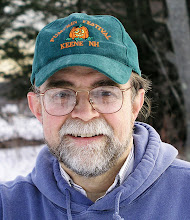
My photo
Spofford, New Hampshire, United States
Jeff Newcomer had been a physician practicing in New Hampshire and Vermont for over 30 years. Over that time, as a member of the Conservation Commission in his home of Chesterfield New Hampshire, he has used his photography to promote the protection and appreciation of the town's wild lands. In recent years he has been transitioning his focus from medicine to photography, writing and teaching. Jeff enjoys photographing throughout New England, but has concentrated on the Monadnock Region and southern Vermont and has had a long term artistic relationship with Mount Monadnock. He is a featured artist in a number of local galleries and his work is often seen in regional print, web publications and in business installations throughout the country. For years Jeff has published a calendar celebrating the beauty of The New England country-side in all seasons. All of the proceeds from his New England Reflections Calendar have gone to support the Pulmonary Rehabilitation Program at the Cheshire Medical Center. Jeff has a strong commitment to sharing his excitement about the special beauty of our region and publishes a blog about photography in New England.
Showing posts with label getting it right in the digital camera. Show all posts

Friday, March 8, 2013

Brattleboro Camera Club


I will start by apologizing for this weeks blog. Instead of my usual insightful and beautifully illustrated articles revealing the secrets of masterful photography, this week I descend to crass self-promotion. You are invited to join me and the Brattleboro Camera Club next Monday, March 11th for a discussion of photography in the digital age. The club will be meeting at the Brooks Memorial Library at 224 Main Street, at 6:30 PM

Over the last few years I have had the opportunity to talk to various groups including the Audubon Society, Keene State College and a number of regional camera clubs. It has been my goal to try to share some of my excitement about the expanding world of digital photography, but in these session, I always find that I learn more than I teach. I would like to do more teaching, but the challenge has been to find the time to assemble the materials needed for more formal coursesMy ideal would be to start with small personal workshops combining lecture with shooting and critique, but short presentation to interested groups is a great way to get started.  It is still challenging, but much more manageable. With each talk I have been building my PowerPoint slide collection and expanding the range of topics I can feel comfortable presenting.

Finding Something to Say
The first issue in preparing a talk is convincing myself that I have

Wet and Digital Darkrooms
something constructive to say. I have no degree in photography or fine arts, but I have been a student of photography for years, form film to digital.  Perhaps most importantly, I have accumulated a great deal of experience by doing almost everything wrong, at least once. So what should I talk about? I could drive myself crazy trying to figure out what people want to hear, so my approach is to talk about what interests me and hope I can find a few people to listen. Of course, I try to direct the talk to the interests and sophistication of the audience. For my presentation to the Southwestern Vermont Audubon Society, I guessed that I couldn't go wrong by discussing my experience photographing the remarkable wildlife of the Galapagos Islands off the coast of Ecuador. With that group, I had to be sure that I knew the name of every bird, fish and slithery thing that I had photographed. Camera clubs provide a much greater challenge. These clubs welcome the full range of photographic experience and expertise. Anything I say can be expected to seem overly simplistic to many and hopelessly advanced to others. In any discussion about the

Booby Dance
Blue Footed Galapagos Booby
benefits of digital photography, it is inevitable that digital editing and especially the magic of Photoshop will hold a prominent place. For those with no Photoshop experience I can only hope that my examples will open them to the possibilities that digital editing provides and entice them to consider jumping into the process. I work primarily with Camera Raw and Photoshop CS6, but I am aware that many photographers rely on Lightroom, Aperture, early versions of Photoshop, Elements and more. It is not possible to be familiar with all the different procedures, but again in a short talk the goal should be to open possibilities and not to present detailed work flows. 


Happily photographers are becoming more sophisticated. In my last talk to the wonderful folks at the Worcester Camera Club, I found that everyone seemed to be using some form of post-processing, mostly Lightroom and Photoshop. Only one was still shooting in JPG instead of RAW, and, of course, I was merciless with her. Given the growing sophistication of photographers and especially those who participate in camera clubs, I feel that I must go beyond discussions of pure technique. My goal is to try to link the fundamentals to a broader philosophy of how the digital world has change the approach to photography. That is, Getting It Right in the Digital Camera.


Getting Right in the Digital Camera, In the Can

For the few who have read my blog on a regular basis it can be no surprise that, on Monday, I will be talking about Getting it Right in the Digital Camera. It has been my perpetual theme that the best image in the digital camera is not the prettiest, but the one that provides the best material for the digital editing process. My blog is full of examples of this philosophy and the talk will be based on that discussion. Happily, I have presented the topic before and I have the advantage of many slides already in my Powerpoint collection (In the Can). The chore is to review, re-arrange and up-date the presentation. Powerpoint makes this all much easier, but it is important to keep all of the program's flashy bells and whistles under control. The message can be too easily lost among all the flying
Part of  "The Can"
images and exploding menus. Cutting is always the most difficult struggle. I inevitably have much more that I would like to say than the time will allow. I do my best when I leave plenty of time for discussion and questions. I hate to feel rushed. 


So, I'll stop here.  I have a lot of work to do. I hope to see some of you at the Brattleboro Camera Club meeting next Monday night.  Please be kind. If you can't come, keep checking in. I'm sure I will be assaulting other groups with my philosophies. The Queeche Camera Club is coming up on April 8th . Now I have some serious cutting to do.

Sunday, September 30, 2012

100 Posts - Where Did They Come From !


Great time in Vermont's Northeast Kingdom this week.
But this weeks article is about looking back


There is something challenging about milestones. I was surprised recently to discover that I was approaching 100 blog articles. Last week's post was my 100th and that seemed as good an excuse as any to take stock and make some changes. I started the blog nearly four years ago, but only got serious about the process in the last two years. Starting in January 2011 I committed to publishing on a weekly basis and despite the strain of trying to come up with something (ANYTHING) to talk about every weekend, the process has be rewarding. As I have worked to keep the posts interesting and constructive, I have discovered that I have learned more than I could ever teach in my short articles. My research often involves finding the actual basis for many of the photographic techniques that I have learned through painful trial and error. As a result I have been able to refine my own skills. 


Taking Stock


Reviewing the 100 articles, I have become aware of certain themes that recur throughout my posts. The most prominent of these is my frequent rants about "Getting it Right in the Digital Camera". My articles about photographic and post-processing techniques usually come back to the idea that the digital image in the field should be crafted to provide the best raw material for the digital darkroom and not the prettiest image on the card.

 
Galapagos Islands, Ecuador


Arlington Crossing
I'm not telling where I was standing
I have also enjoyed sharing information about many of my favorite locations. I have never understood the tendency of some photographers to horde their prize locations like precious trade secrets. The photographic art doesn't stem from the location, but from the magic of each individual's interpretation. When I see a beautiful, fresh interpretation of one of my favorite sites, I first curse the bastard, and then try to learn from his or her vision. It can be a struggle to get beyond the cursing phase, but it's been worth the effort. 


Ice Bound Harrisville New Hampshire
Sadly, I have discovered that too many of my articles involve my whining about disappointing conditions. No snow, no fall foliage, too much rain, too little rain, and the ubiquitous, bad light, but I live in New England, if I only shot in perfect conditions, I would get out two or three times per year! The goal is to convert the whining into a discussion about how to get the most out of any conditions.


Change is Good


What's in a Name?
I have always felt a bit self- conscious, about the title of my Blog. "Jeffrey Newcomer Photography" was a quick selection of convenience when I was signing up for the blog, but it has always seemed a bit too narcissistic. 100 articles seems a good time for a change, and given the flow of my discussions, I have decide that "Getting it Right in the Digital Camera" may be a better hook upon which to hang the blog. 

Getting a Grip: Indexing

Blog Index
It has always been my goal to create a body of material that can serve as a source of reference for developing photographers, but scrolling down through four years of articles, I was struck by how difficult it is to find anything in that disorganized mass of topics. I have sweat blood for many of these articles with the hope that fellow photographers will find them valuable and it is painful to see them lost in the pile. It seems obvious that the only way to make this information useful is to organize the articles in an index of related topics. This will take time to perfect, but in honor of the hundredth, I have made a start. I have placed a Blog Index on my ancient main gallery site. I have started by listing most of my articles covering technique for "Getting it Right in the Digital Camera". I expect to organize this into subheadings. I have grouped many of my "location" articles in a separate section and split them between New England and "Out of Town". Down the line, I will be considering other topics to help with the organization. One will certainly be for quick tips and tricks. I'm not sure about a special topic dedicated to whining.

Teton Sunset

Thanks to all my readers. Please stay tuned and let me know how I can improve the Blog. I am particularly interested in your feedback about the index, but be kind, like everything here, it is a work in progress.

Getting it Right in the Digital Camera Blog Index