About Me

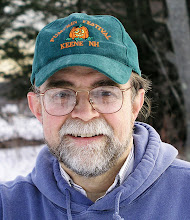
My photo
Spofford, New Hampshire, United States
Jeff Newcomer had been a physician practicing in New Hampshire and Vermont for over 30 years. Over that time, as a member of the Conservation Commission in his home of Chesterfield New Hampshire, he has used his photography to promote the protection and appreciation of the town's wild lands. In recent years he has been transitioning his focus from medicine to photography, writing and teaching. Jeff enjoys photographing throughout New England, but has concentrated on the Monadnock Region and southern Vermont and has had a long term artistic relationship with Mount Monadnock. He is a featured artist in a number of local galleries and his work is often seen in regional print, web publications and in business installations throughout the country. For years Jeff has published a calendar celebrating the beauty of The New England country-side in all seasons. All of the proceeds from his New England Reflections Calendar have gone to support the Pulmonary Rehabilitation Program at the Cheshire Medical Center. Jeff has a strong commitment to sharing his excitement about the special beauty of our region and publishes a blog about photography in New England.
Showing posts with label art. Show all posts

Monday, January 7, 2019

Grounds for Sculpture, and for Photography


A Great Reason to Visit New Jersey, Finally


As I am getting ready for the start of my Adobe Lightroom Course, which starts tomorrow, I wanted to step back briefly to share images of a magical location for art and nature in New Jersey.

Grounds for Sculpture is a sculpture park and museum situated among 43 acres of beautifully maintained gardens, occupying the former New Jersey State Fair Grounds in Hamilton New Jersey.  A wide range of sculpture, from massive modern works of abstract art to intimate, life-sized sculptural recreations of impressionistic paintings, are scattered along narrow paths which wind through the gardens.


The Scream
We visited on an unseasonably mild afternoon in late December, and although the gardens were anything but lush, they remained a lovely refuge. Additionally, visiting in winter meant that we shared the park with only a few other people.  We would like to return in the spring or summer, but we appreciated the quiet, and the lack of visitors made photography a much simpler task.

Art Recreated

Renor and Van Gogh

One of the most surprising features of the park is the many recreations of familiar works of art.  These elaborate sculptures were created by Seward Johnson who founded the park.   Perhaps the most striking and whimsical is seen as you leave the Welcome Center.  Right next to the park entrance is an massive sculpture of Renoir’s “Dance at Bogival”, and immediately in front is Van Gogh, sitting at his easel, gazing on the Renoir masterpiece, but painting his own, “CafĂ© Terrace at Night”.


Nearby, on a grassy hill, is Monet’s Woman with Umbrella.


After Manet's "Argenteuil"


Many of the sculptures allow visitors to become part of the art, as they can sit next to the works on benches, or around a beautifully set sculpture of a formal dinner table.


Questioning Reality
Many sculptures are meant to fit into the environment.  Around bends in the paths we came upon a couple embracing in the bushes or napping at the edge of the gardens. We had to cautiously approach to be sure that they were not alive.


 The exhibits both among the gardens and in the museums are constantly rotating.  We saw numerous abstract pieces along with others that were more representational.  The sculpture of a dramatic head surrounded by a herd of sheep was especially bizarre, but I particularly enjoyed the stately female figure-head which seemed to float on one of the park’s ponds. 


There were many more interesting works that I could mention, but for me it was mostly enjoyable to photograph my way through the park.  The bright light provided interesting challenges, and every bend in the path presented a new opportunity to capture examples of wildly varying artistic expression.  Grounds for Sculpture is definitely worth a stop, and it is great to know that now there is a good reason to go to New Jersey.

Grounds for Sculpture Gallery


Jefff Newcomer
www.partridgebrookreflections.com


Sunday, February 21, 2016

Is Photography Art ? Is it a Craft ?


A Few Disjointed Thoughts on the Art and Craft of Digital Photography


Some years ago I went through the process of applying to the League of New Hampshire Craftsmen for juried membership. My application and sample images were accepted and then, after a long silence, I was told that the decision had been made that digital photography would not be considered as either as craft or art. It was explained to me that digital processes where considered "automatic" and not requiring any artistic input. They would only accept photographers using "chemical" processes for their work.


I was annoyed by what I felt was a shallow understanding of the opportunity for art and craft that digital photography provides. I had been a "chemical" photographer for years, but like many, I moved to digital when I realized that I could exert much better control of the whole process, from the initial image to the final print. I must admit that I retain a strong nostalgia for my wet darkroom days. I would love to find a cologne with the intoxicating scent of fixer, but, earlier this year, I finally donated all my darkroom equipment to the Vermont Center for Photography.


Dealing with Rejection

Despite my rejection, I have always enjoyed the artistry of the members of the League and have admired the energy that the organization has exerted to promote the their work. The League has established 7 beautiful galleries throughout New Hampshire and runs its Annual Craft Fair every August at the Mt Sunapee Resort. I have a number of good friends who are members of the League and whenever I see them, I take the opportunity to engage in a little good-natured moaning about my rejection. Recently Juried member Bob England, who does remarkable wood-working, told me that the league was sponsoring a show on the impact of technology on the crafts and he thought this might be a good time to revisit the restrictions on digital photography. My ego hasn't been trampled in awhile so it seemed reasonable to take another pass.


Rules of the Craft

I can understand how traditional craftsmen might consider any photography to be on the fringe of what might be seen as a "hand-made" craft, but the league has embraced the work of many fine photographers. So why the absolute distinction between "chemical" and other methods of recording images? From my research I discovered that the same restrictions are still present in the League's guidelines for photography. In the first paragraph is the unequivocal statement, "The League accepts both traditional and chemistry-based photography". "All digital processes are excluded". Seems pretty strait forward, but then I reviewed the information on some of the league's twenty three photographers. I was impressed with the variety and quality of the work being done.


From an incomplete survey of information on the league web site, as well on personal sites, I found numerous examples of photographers who have switched to digital photography, often citing the benefits of better artistic control. Of those who proudly still shoot using film, many note that they scan there images and use printing techniques which appear to involve ink jet printers to create archival prints. Certainly many still use an "an all chemical process", but, as it should be, the techniques employed for artistic expression demonstrate a healthy degree of variation.


Digital Orphan
So why is digital photography seen as an orphan, not finding a home in either the definition of art or craft? To me the art and craft of Photography regardless of the recording medium are actual two separate pieces leading to the same goal, the unique expression of a view of the world.

Craft is the system one masters to be able to create a work which is the reflection of a personal vision. In photography we apply our craft both while shooting and in the "darkroom" (chemical or digital) to interpret the reality that we observe. Painters do the same with different tools, but it is the interpretation no matter how it is rendered that brings the art to life.


The Craft of Photography

So what is the "craft" of photography. It is actually the combination of many decisions and manipulations. It starts with choosing a subject and deciding when and in what light it should be captured. The angle of view and subtleties of composition are all crucial before the shutter is pressed, along with the impact of aperture and shutter speed on exposure, depth of field and motion. The manipulation of these factors is the same regardless of whether the recording media is film or digital.


Digital Photography
 In digital photography the image is recorded on the digital sensor.
The Digital Darkroom,  Photoshop
When shooting RAW the pixels captured are recorded in an un-modified form, without any "automatic" interpretation, and only come to life in the digital darkroom with the artistic interpretation of the photographer. Programs such as Photoshop and Lightroom provide an incredibly wide range of options to the digital artist, but it is his or her artistic sense and soul which is reflected in the final work. Because of the almost infinite range of controls, there is much craft that goes into the development of a digital image, as well as in the entirely different craft of print making.


Chemical Photography
"Chemical" photography is not especially different. With film, the
My Chemical Darkroom 1977
image is captured on a light sensitive emulsion smeared on a piece of plastic. Film can be chosen for different properties, but in the end the photographer is at the mercy of some unrelated chemist in a lab. The film photographer can manipulate the results from the negative to better express his vision. He can dodge and burn portions of the print, crop the image to achieve a pleasing composition or choose different papers to enhance or mute contrast, but all these adjustments are available in the digital darkroom and with broader range and better control. It is great that some observers feel that a print from film has a more pleasing appearance, but this preference is in the eye of the individual and need not apply to the broad audience.


That is what art is all about. Regardless of the craft used, art comes from an individual interpretation of reality. Whether done with pigment smeared on a canvas, a chisel on stone. the response of light sensitive chemicals on plastic or the signal from light sensitive chips on a sensor, It always comes down to the magical ability of the artist to draw the viewer to his or her special vision.

It would be an honor to be considered among the talented artists in the League of New Hampshire Craftsmen, but for me, it is a worthwhile exercise just to explore my own place, balancing craft and art, and glorying in the amazing range of human expression.

Jeffrey Newcomer
partridgebrookreflections.com