About Me

My photo
Spofford, New Hampshire, United States
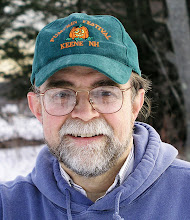
Jeff Newcomer had been a physician practicing in New Hampshire and Vermont for over 30 years. Over that time, as a member of the Conservation Commission in his home of Chesterfield New Hampshire, he has used his photography to promote the protection and appreciation of the town's wild lands. In recent years he has been transitioning his focus from medicine to photography, writing and teaching. Jeff enjoys photographing throughout New England, but has concentrated on the Monadnock Region and southern Vermont and has had a long term artistic relationship with Mount Monadnock. He is a featured artist in a number of local galleries and his work is often seen in regional print, web publications and in business installations throughout the country. For years Jeff has published a calendar celebrating the beauty of The New England country-side in all seasons. All of the proceeds from his New England Reflections Calendar have gone to support the Pulmonary Rehabilitation Program at the Cheshire Medical Center. Jeff has a strong commitment to sharing his excitement about the special beauty of our region and publishes a blog about photography in New England.
Showing posts with label Grand Teton National Park. Show all posts

Sunday, September 9, 2012

Geo Labeling with the iPhone


I am now firmly back in New England from my trip out west. I am still struggling to catch up, so this week, I wanted to briefly discuss something I learned while away.

Morning Window, West Chesterfield, NH
For a number of years I have been compulsive about recording the GPS coordinates of my photographs. As I have often said, "there are just too many red barns in New England for my old brain to keep them all straight". My usual work flow includes continuously recording my position with a separate GPS tracker and then, using the GeoSetter program to merge that data with my images back in the studio. This has worked beautifully as long as I keep the clocks on the tracker and my camera synchronized. The tracker is particularly important when I am exploring unfamiliar areas, so you can imagine my annoyance when I discovered on the first day of our recent stay in Yellowstone that the tracker was NOT tracking. I tired everything but I couldn't get the device to find me. After I resisted the urge to heave the useless chunk of plastic into the gaping maw of Old Faithful, I started looking for alternatives.

Steve Jobs to the Rescue

Koredoko App
Then I recalled that my sparkling new iPhone 4s automatically records GPS coordinates on every picture. A quick search at the App Store revealed "Koredoko", a little app that displays the GPS coordinates of each picture in the camera roll and, when connected to the net, also shows the location on a Google map. It was quick, simple and FREE. Before I got out of the cabin door, I was back in business. All I had to do was remember to grab an iPhone
picture for every new location. At the end of the day I opened the images in
GeoSetter and manually assigned the coordinates to the images. It was a little more cumbersome to type in the coordinates, but the
GeoTracker Batching
process could be batched so I only had to input once for each new location. Done! This was not as simple and elegant as synching the images with the tracker, but it worked. I will try to get the Tracker back working, perhaps it will do better now that it is in familiar territory, but it is nice to know that I have a workable backup.


Cascade Creek, Grand Tetons, Wyoming


Many but not all phone have GPS capability, but if yours does, you may want to consider using it to help find that old red barn for another shoot.

Wednesday, August 22, 2012

Photographing the Grand Teton National Park


Smoke Gets in Your Eyes
Jackson Lake Smoke Grand Teton National Park
After our all to short visit to Yellowstone Susan and I headed south to Jackson Hole and the Tetons. It was years ago that we had driven by these mountains on our way across country, and we were excited to finally have a few days to explore. We stayed in a great bed and breakfast in Jackson, but, sadly, we discovered that the dramatic mountains were largely obscured by the smoke from several forest fires in Idaho. We still had a wonderful time hiking the mountains and exploring the trendy town of Jackson, but photographically, the experience centered on trying to find ways of getting past the murk to capture memorable images of this iconic location.

So what can you do when smoke or haze obscures your beautiful landscape?

Patience
First you can wait and hope for a storm to pass through blowing away the grime. Unfortunately this didn't happen for us. I shrugged and promised to come back again, sometime, and then I had to make do. 


Get Close

Inspiration Point Trail
The impact of smoke and haze is magnified by distance. Some of the Tetons’ classic viewpoints, such as the Mormon Row of deserted farms, are several miles east of the mountains. On clear days, the classic barns and fences make wonderful foreground material against the rugged mountains, but through the smoke, the peaks were just a faint pastel backdrop. I quickly learned to seek out viewpoints closer to the peaks. The smoke still had its impact, but especially when hiking among the mountains, the effect was much reduced. And, of course, close encounters with the wildlife were always clear.


Mule Deer Fawn

Bull Moose


Celebrate the Foreground
Mormon Row Foreground

When the distant vistas are murky, it is a good time to focus on the foreground. I always look for good foregrounds to compliment my expansive landscapes, but in this situation, the sharp, clear foreground elements helped to offset the lack of distant majesty. Fortunately the Tetons are full of great detail; rocks, flowers, animals and old structures can all become nice foci of interest.  


Embrace the Smoke

Mormon Row Sunset
On our first night in the Tetons I decided to check out Mormon Row. This is traditionally a morning site with the warm sunrise illuminating both the barns and the distant mountains. Although I knew that the peaks would be obscured, I hoped to use the smoke to augment the sunset light. I was excited to see that by shooting through the murk the
Smoke Filtered Sunrise
waning sun was given added dimension. As it dropped behind the mountains, the rays of light became vividly palpable and with the mountains in silhouette the images became much more about the light and the foreground with the smoke just a necessary piece of the puzzle. The next morning from the same spot, the smoke still shrouded the mountains, but when I turned to face the sun, it was so heavily filtered that I was able to shoot the rising disc without blowing out the surroundings.


Back in the Digital Darkroom
Jackson Lake
Sharp Mask Enhanced Contrast
Of course post-processing can always help. With a careful selection, the mountains can be isolated for enhanced contrast and vibrancy. The Unsharp Mask tool can also be used to enhance contrast. In the Unsharp Mask menu (Filter/Sharpen/Unsharp Mask), I raise the radius setting to around fifty and then adjust the strength to achieve the desired level of contrast enhancement. This technique can work wonders on flat images regardless of the cause, including smoke and haze. It is a powerful tool that can be easily overdone, but in this case, I used a mask to limit the effect to the distant mountains and then fine tuned the impact by adjusting the layer's opacity slider.


HDR
HDR to the Rescue
HDR techniques can also be helpful. The image of the mountains behind the north end of Jenny Lake combines most of the techniques I have discussed. It was taken closer to the peaks and had strong foreground elements, but additionally I found that with HDR I could do a better job cutting through the smoke. I captured 7 bracketed images, and then used Photoshop’s HDR Pro just focusing on enhancing the contrast in the mountains.


Black & White Conversion
Smoke and haze unavoidably mutes the vibrancy of color in images and, in these situations, conversion to black and white can restore the photograph's impact.  Black and white images can be more aggressively edited without affecting color quality.  Finally contrast enhancement or HDR can be combined with black and white conversion and local adjustments to further restore the snap in those murky distant peaks.


Black & White Conversion, Schwabacher Road


Hidden Falls
The Grand Teton National Park is an amazing place and although I was terribly disappointed by the smoke, I enjoyed the challenge and, in the end I came away with images that have a different quality than those that are the typical postcard shots. Every now and then it is good to be forced adjust to challenging conditions, and vacation is the perfect time for fresh experiences.

Enough lame rationalizations. The next episode will feature Hood River and the Columbia River Gorge, highlighting spectacular waterfalls, majestic Mount Hood and of course a wedding. And all with much less smoke!