About Me

My photo
Spofford, New Hampshire, United States
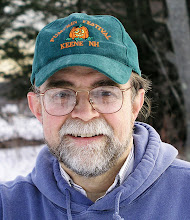
Jeff Newcomer had been a physician practicing in New Hampshire and Vermont for over 30 years. Over that time, as a member of the Conservation Commission in his home of Chesterfield New Hampshire, he has used his photography to promote the protection and appreciation of the town's wild lands. In recent years he has been transitioning his focus from medicine to photography, writing and teaching. Jeff enjoys photographing throughout New England, but has concentrated on the Monadnock Region and southern Vermont and has had a long term artistic relationship with Mount Monadnock. He is a featured artist in a number of local galleries and his work is often seen in regional print, web publications and in business installations throughout the country. For years Jeff has published a calendar celebrating the beauty of The New England country-side in all seasons. All of the proceeds from his New England Reflections Calendar have gone to support the Pulmonary Rehabilitation Program at the Cheshire Medical Center. Jeff has a strong commitment to sharing his excitement about the special beauty of our region and publishes a blog about photography in New England.

Sunday, April 24, 2011

My Favorite Cheapest Photo Accessory

Sue and I are in Washington, DC for a few days visiting our daughter and planning on catching the Red Sox at Camden Yards. I am happy to report that spring is well on its way in DC. On the drive down, it was fascinating to see the process of spring exploding in just a few hours and I can attest that it is coming our way up north. We have a busy schedule for the next few days, so I thought that this would be a good week to do a quick blog about one of my favorite, and cheapest, photo accessory.

 
A key part of composing a compelling landscape photograph is to avoid distracting elements that might draw attention away from the central theme of the image. As part of this, I always try to remember to scan the edges of my compositions to look for intruders including extraneous bushes or branches. Often the picture can be recomposed to avoid these problems, but sometimes the best angle can only be achieved by pulling the offending foliage out of the way. In this image of the Old Stone Arch Bridge in Keene, New Hampshire, I found an excessive amount of early spring foliage obstructing an interesting angle on the arches. There was too much to pull aside while still working the camera, but, with my beloved mini-bungee cords, I was able to tame the jungle leaving just the amount of green that I wanted to offset the cold austerity of the stone construction.  I can’t count how many times I have pulled out these little guys to manage an unruly scene. They are remarkably strong and, although only about 10 inches long, stretch to a surprising length. The bungees can also be daisy-chained when a longer cord is needed. When removed the branches invariably pop back to their former overgrown glory without significant injury. The best part is that, in this world of obscenely expensive cameras, lens’ and filters, a package of four chords costs less than $3 dollars at your local hardware store.


What more can I say. Stuff a few of these mini-bungees into your camera bag and you will be amazed at how often they will come in handy. Just a couple of points may be helpful. First, be careful how, and to what, you attach the cords. When they Break free, the elastic bungees become dangerous, whip-like projectiles. Second, remember to remove the cords when you are finished shooting. My region of the New England forest is decoratively laced with brightly colored cords that I have forgotten to remove. Thank goodness they are so cheap. If you find any of these, please keep them as my gift to you, but I would appreciate hearing that they have found a good and useful home. Now, off to photograph actual flowers!

Monday, April 18, 2011

Tubes!

Westmoreland, After
With the maple sugaring season winding down, this is my last opportunity to formally rant about tubes. After enjoying Stonewall Farms traditional Sap Gathering Contest, my nostalgia gene is working hard, but let me say from the beginning that I understand the attraction of using tubing through maple stands to efficiently collect sap. Maple sugaring is under the best conditions a marginally profitable effort fueled much more by love than avarice. Given the increasing cost of fuel, sugarers have to look for every efficiency just to survive. For generations the basic piece of equipment for maple sugaring was the sap bucket. The farmer would drill a small hole in the tree and then insert a spout from which the covered bucket was hung. During the sap run, buckets would need to be emptied at least once per day making for an almost continuous effort on big farms. Horse drawn sleds weaving there way through the woods to collect sap provides a wonderfully colorful image, but it is really hard work. I’m sure that if I was involved in commercial maple syrup production I would out there entangling my forest with a web of blue tubes. But I'm not a maple sugerer, I'm a photographer, and I hate tubes.


Westmoreland, Before
The use of plastic tubing to collect maple sap has increased in popularity since its introduction in the 1960's. Today it can be difficult in the late winter to find a beautiful stand of stately maples that isn't slashed through with ugly blue tubing. One of my favorite stands is in Westmoreland NH, but I have learned that I must capture it early in the winter before the blue invasion. It is somewhat like our constant struggle with the ubiquitous electrical and phone wires, but with wires you can often find an angle that minimizes their impact or remove them, arduously, in post. As can be seen, the tubes are usually so completely imbedded in the scene that the only thing you can do is walk away, praying that they will be removed when the season ends.  Happily, I can report that I descovered today that my Westmoreland stand has broken free once again.


Stonewall Farm Sap Gathering Contest
I don't see any solution to the tube problem - no photographic technique to evade their impact. I can appreciate that the use of tubes avoids the necessity of digging up and compacting the ground with the machinery needed to repeatedly collect sap from buckets and that this can actually protect the health and beauty of the forest. In the end the effect of tubing is to make the remaining pristine stands of maples a more precious photographic resource and events such as Stonewall Farm's Sap Gathering a wonderful gift. And, of course, whether from a tube or a bucket, I would not want a world without the sweat complex taste of maple syrup.

Check out my Sap Gathering Contest Flickr Set

Sunday, April 10, 2011

Searching for the Light

Yesterday the weather finally began to feel like spring. It was great to be able to open up the windows, install some screens and start airing out the winter dank. It was also a day spent trying to get a single picture in the best light. In the morning, Nelly (The dog of infinite patience) and I headed out on our usual Saturday morning rounds, visiting the Post Office, bank and dump, and then, also as usual, we  did the morning rounds of some of my favorite photography sites. Living in Chesterfield, I don't have to go far to sample wonderful examples of classic New England landscapes. Yesterday my tour took me by one of my favorite local working farms. The maple sugaring season is winding down here, but this farm still had the buckets up along the road leading to the barn and house. I've explored these views before, but I found an angle that really drew my eye. The trouble was that the sky was clear, the sun was warm and the light was horrible. The scene was nothing but starkly brilliant highlights and impenetrably dark shadows. I knew I should have just walked away, but I couldn't resist exploring different angles for future use. There was an interesting shadow coming at me in the foreground to play with, but my overwhelming thought was that I had to come back when the light was better. I hoped that, if the clouds didn't take over, I could catch this scene bathed in the warm, glowing light just before sunset.


For the rest of the day I kept watching the sky for the first signs of the "Golden Hour" and prayed that the clouds would stay away. Sadly it is an axiom of New England Weather that if it is sunny in the morning it will be cloudy in the afternoon. Things were not looking good, but, shortly before 5pm, I decided that I couldn't wait any long. Since the farm sits high on a ridge, I was hoping that the sun would be poking through. The light was much softer than in the morning, but the warmth was muted by milky clouds in the west. I grabbed a few shots, but as I scanned the sky it was obvious that conditions were not going to improve. I couldn't see any hope for even a sliver of an opening to spotlight the scene. On the way home I consoled myself with the possibility of better luck on another day, although I wasn't sure how much longer the buckets would stay in place.
 

After I had unloaded the car and planted Nelly on the "towel" side of the couch, I took one last look outside. I noticed to my horror and excitement that the sun was brightly illuminating the church across the village. I threw my camera back in the car and flew out of the driveway. On the way back to the farm I found myself behind a plodding Mini Van. I could feel the moment slipping away and as expected by the time I slammed on the brakes and leaped out of the car the sun was drifting behind another merciless cloud. Still the light was a bit warmer and I grabbed more exposures from the same locations.  But this time I wasn't leaving. I settled down on the dry grass on the bank and waited for the sun, or darkness, whichever came first. After about ten minutes the sun was approaching the horizon, but there seemed to be the possibility of a thin break in the clouds. The light began to warm, first slowly, but then it exploded. The "Golden Hour" turned out to be a "Golden" three minutes and I grabbed shots as fast as I could.


By the time the day faded I found that I had taken more than 80 exposures from the same spot during four separate visits. It is common for me to go back many times to favorite locations in the region, sampling all seasons and lighting, but seldom has the search for the right light been compressed into such a short period of time. I ended up with a nice photograph and an even nicer way to demonstrate how searching for the right light can make all the difference.

And sometimes you get a nice bonus sunset on the way home.

Tuesday, April 5, 2011

Sap Gathering Contest

Andre Palmer's team took first place in this year's contest
Stonewall Farm is a remarkable regional resource in Keene, New Hampshire. It is a nonprofit working farm established as a educational center to “connect people to the land and the role of agriculture in their daily lives”. One of the highlights of the farms winter season is the Annual Sap Gathering Contest. This year the weather was kind to the 11th Annual Contest. It was chilly, but the sun stayed out most of the time and the biting morning wind softened as the day went on. This is was my fourth year shooting the event and it remains a unique opportunity to step back in time to experience maple sugaring with the traditional techniques. This year 12 teams of horses competed pulling wood sleds through the forest course collecting sap from buckets. Teams were scored on speed, efficiency, control and on the amount of sap collected, but the competition was really secondary to the chance to see all these magnificent animals work under the control of their dedicated owners. I especially enjoyed observing the different ways that drivers maintain a close connection with their teams. Vocal tone and gestures often seemed more important than pressure on the reins.


Visitors are encouraged to watch the competition from various locations along the open areas of the course. Again this year, I had the special opportunity to photograph the teams working in the woods instead of being confined to the roped off observation areas. With the experience of a few years of trial and error I had staked out my favorite spots for capturing the action while avoiding being trampled by these massive beasts. I tried to find angles that included the colorful buckets and avoided, as much as possible, the hard working judges and helpers that line the course. The helpers are there to fill the buckets with water after each team comes through. Sorry to break the magic, but you didn't really think that the trees at the farm can actually produce a gallon or more of sap every 10 minutes throughout the day. This year I tried to catch more of the action by finally trusting my camera's high ISO capability. Along with the generally sunny weather the 800 ISO allowed me use fast shutters and wider depth of field, and the new noise reduction algorithm in Camera Raw took care of the grain.


The Sap Gathering Competition is much more than just a contest. It has the feel of a late winter harvest festival. After all maple syrup is the winter harvest in New England. There was plenty of food and drink as well as the opportunity to see many of the teams close-up, but the most popular attraction of the day was the sugar shack which was furiously boiling down the real sap all day long. As always, the smell in the shack was subtly sweet as 40 gallons of sap was boiled down to make each gallon of maple syrup. It was wonderful observing the mesmerized expressions of little children as they watched from the foggy interior of the shack and even more exciting to see the kids react as they sampled the warm syrup fresh from the evaporator. I can think of nothing that so clearly demonstrates the reason why Stonewall Farm's mission must be applauded and supported.

You can discover more about Stonewall Farm's year-round programs and learn how you can support this uniquely valuable community asset by visiting their web site :

 You can check out more images on my Sap Gathering flickr set .

Tuesday, March 29, 2011

Great Place / Great Space : Jaffrey Civic Center April Show 2011


The Jaffrey Civic Center in Jaffrey New Hampshire has some of the nicest gallery space in the region. Pristine white walls, a great hanging system and wonderful light makes the facility an impressive cultural gem for this small rural New England town. The Center is a remarkable example of community pride and energy. The Jaffrey Civic Center first opened in April 1966 as a non-profit cultural facility funded and built by Marion Mack Johnson, a Jaffrey native and teacher, to provide a community center for educational and artistic purposes.

I'm thrilled to have the opportunity to show in the first floor gallery for the month of April 2011.  It's a big space, easily accommodating 32 of my images, the most I have been able to show at one time.  In the last few years I have had solo shows over 30 times. Of the all the restaurants, banks, town halls and more, this is one of the nicest venues. I have appreciated every opportunity to show my images.  I have learned, however, that dark moody light is great for atmosphere in a restaurant but not for showing photographs.  This place is a treat.  If you get a chance come check it out through April. The opening reception is on Sunday, April 3 from 2-4pm. I would love to see you.

Check out the images on my show flickr set:
Here are the directions taken for the Center's web site : www.jaffreyciviccenter.com/

From Keene you take route 124 South from Marlborough and look for the sign on the left shortly before the traffic light in "downtown" Jaffrey.

FROM BOSTON AND POINTS EAST


Route 2 West to exit 24B to Route 140 North. Follow 9.5 miles to the end of 140. At the traffic light, continue straight onto Rt 12 North. 9/10th mile up, take first right onto Glen Allen Street to Route 202. Follow into New Hampshire to Jaffrey. At Route 124, take a left. The Jaffrey Civic Center is the second brick building on your right after the bank.


FROM NY, CT AND POINTS SOUTH AND WEST


I-91 North (in Massachusetts) to Exit 28A, Route 10 (Northfield and Bernardston). Follow signs to NH, to Winchester. Take right onto Route 119 East. Follow through Fitzwilliam and Rindge. Take a left onto Route 202 North and follow to Jaffrey. At Route 124, take a left. The Jaffrey Civic Center is the second brick building on your right after the bank.


FROM MANCHESTER, NH AND POINTS NORTH


Route 101 West into Peterborough, NH. Take left onto Route 202 South into Jaffrey. At first light, take a right. At second light, proceed straight on Route 124. The Jaffrey Civic Center is the second brick building on your right after the bank.


HOURS


Tuesday: 10 - 6 • Wednesday - Friday: 1 - 5 • Saturday: 10 - 2

Sunday, March 27, 2011

Finger Cloning


Just a brief thought about photography and my personal responsibility to the environment. I recently a stopped by a familiar red barn in Keene NH.  I had never tried to shoot here before, but after passing by I decide to come back and explore for possibilities.  Although the light was blindingly strark, I found some reasonably pleasing angles looking up the hill at this imposing structure.  At home I discovered that the hillside had the usual modern archeologic collection of societal artifacts.  That is to say trash.  I thanked the gods at Adobe as I smugly cloned out the distracting garbage.  The whole process took about one minute, but then it struck me.  It probably would have taken about the same amount of time to have removed the trash from the site itself.  I believe that as photographers we sometime miss the small stuff as we scan for grand themes of  light, line and color.  
 I try to be aware of distracting elements in my images, but it is easy to become lazy about removing them when Photoshop can so seamlessly correct these small blemishes.  Often I never really see this stuff until it is flattened onto my monitor screen.  I need to be more alert, not only to improve my images, but also to pay back the limitless debt that I owe to the environment for feeding my imagination and creativity.  I appreciate that many dedicated people commit there time to removing trash along our highways and trails and I have worked with trash removal crews especially on our local trail system.  But photographers have a special opportunity to contribute to this effort as our eyes scan many of the most beautiful, and fragile vistas in our country.  So here is my simple commitment.  I will keep a trash bag in the trunk of my car and in my pack and whenever possible I will remove rather that clone the junk I find along the way. Let's think of "Finger Cloning" as simply a new, unteathered, Photoshop plugin to improve our images and maybe a small piece of the earth.

Sunday, March 20, 2011

Shooting the (biggest) Moon

As everyone knows this weekend's full moon was the largest in more than 18 years. The combination of a full moon within 50 minutes of its Perrigee (closest orbital point) makes it appear about 14% larger than at Apogee. The Japan earthquake aside, the world didn't come to an end as it was ripped by disastrous tidal forces, but it did lead photographers all over the earth to wonder the same thing ... where do I go to get the shot. Living in the Monadnock Region of New Hampshire, I had little choice. I had to find a place to record the moon rising over the mountain profile that so dominants our corner of New England.

 
I started with a few simple requirements for my observation point. First I needed to be in an unobstructed position to catch the moon rising directly above Mt. Monadnock. Second I wanted to be far enough away to allow my 400mm telephoto to do its work magnifying the moon against the mountain's silhouette. Finally I was hoping that, after the shot, I wouldn't have to hike miles in the dark to get to my car. Thank heavens for the wonderful program "Photographer's Ephemeris" (http://stephentrainor.com/tools). This remarkable freeware program not only shows the time of rising and setting of the sun and moon, it also shows on a Google Map the precise location of the objects at any time and from any location. I was able to find a line along which the rising moon would appear from behind the mountain. By following the line westward I could then scan for potential view points that would meet my criteria. As seen on the screen capture, I eventually settled on a spot on Pinnacle Springs Road overlooking Spofford Lake in Chesterfield. From this location I could see that the moon would rise above the northern shoulder of the mountain (blue line) and then move south across the peak. This placed me about 20 miles from Monadnock which worked well with my long lens. I set up my tripod, experimented with framing and then settled in to wait for the show. Remarkably the moon peeked from behind the mountain in exactly the spot Ephemeris predicted. Then the challenging stuff started.


The night was clear and the moon was spectacularly large as it appeared above the mountain. Because of an optical illusion the moon always looks larger next to the horizon, but this was amazing. The problem of course was the contrast. Unfortunately the moonrise on Saturday was at 7:22pm, and it was actually a few minutes later before the moon crept up over the mountain ridge. Sunset was at 7:02pm making the dwindling twilight quite dim on Monadnock. It is important to realize that at night the moon is still bathed in brilliant full daylight and to properly see the detail on the surface you must use daylight exposures. I found that, even with
a moderately underexposured foreground, there was still an 8 stop difference between moon and mountain. Obviously this was a job for multiple exposures. With the two images included here you can see the range of exposure required for the final picture. You can also see that, yes, the moon was REALLY that big! Both exposures were at f8, ISO 400. The trick was to jump quickly between the 1/60 exposure for the moon and 4 seconds for the mountain, all before the moon moved out of line. I ended up taking about 40 images including some pulled back to see the lake in the foreground. I then packed up and ran to the annual dinner in Keene for which I was already 2 hours late. I think my priorities were precisely in the right place. So what if my dinner was cold.


Of course I couldn't wait to get home to start working on these images. It took some painstaking PS work to get the moon selection just right and to balance the lighting and color, but I think the result is a good representation of magnificent display that met my eye last evening. It was also a good example of how careful planning and a shameful neglect of social responsibilities can lead to some nice results.


If you missed the record moon last night, don't despair. A full moon comes along every month or so and you don't have to wait another 20 years to get spectacular results.