About Me

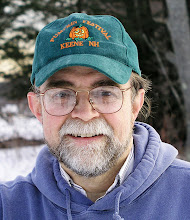
My photo
Spofford, New Hampshire, United States
Jeff Newcomer had been a physician practicing in New Hampshire and Vermont for over 30 years. Over that time, as a member of the Conservation Commission in his home of Chesterfield New Hampshire, he has used his photography to promote the protection and appreciation of the town's wild lands. In recent years he has been transitioning his focus from medicine to photography, writing and teaching. Jeff enjoys photographing throughout New England, but has concentrated on the Monadnock Region and southern Vermont and has had a long term artistic relationship with Mount Monadnock. He is a featured artist in a number of local galleries and his work is often seen in regional print, web publications and in business installations throughout the country. For years Jeff has published a calendar celebrating the beauty of The New England country-side in all seasons. All of the proceeds from his New England Reflections Calendar have gone to support the Pulmonary Rehabilitation Program at the Cheshire Medical Center. Jeff has a strong commitment to sharing his excitement about the special beauty of our region and publishes a blog about photography in New England.
Showing posts with label digital. Show all posts

Sunday, April 8, 2018

Digital Camera Sensors

Rhododendron Light, Spofford, NH

In many of my classes and articles I have referred to the sensor on a digital camera.  I have discussed its sensitivity, dynamic range and noise, all without much understanding of what goes on in that little chip of silicon behind the DSLR’s mirror.  Many of my blog articles have been trigger by my own desire to learn something new, and this week it is about discovering a little of how digital sensors actually capture the images that we spray upon their surfaces

.

CCDs and CMOS Sensors

At their essence, all camera sensors work the same way.  The two common sensor types, CCDs (charged coupled device) and CMOS (complementary metal-oxide-semiconductor) both translate light, in the form of photons, into electrons.   The electrons are amplified and create an electrical current which is constructed into an image by the camera’s software. That is an overly simplified description of a very complicated process.  CCDs and CMOS sensors differ as to how the electrons are collected and amplified, and these differences affect the quality and noise of the image, as well as the cost and speed of the sensor.

Photon Harvesting


Both CCD and CMOS sensors are made up of an array of silicon 
Monochrome Sensor Receive all Colors of Light
Cambridge in Color
based sensors which capture electrons generate by the interaction with photons of light.  On CDDs, the electrons move along a row and are sequentially amplified and sent on to the processor.  The process is slow but results in a high quality image with better  dynamic range and less noise.  On CMOS sensors, each pixel site has its own amplifier which makes the sensor faster and more efficient, requiring much 
less power.  They are also cheaper to manufacture, but because the amplifier on each pixel site takes up space on the sensor, the amount of light that can reach each photon sensing pixel is reduced.  This deficiency has been largely overcome by the use of microlenses in front of each photodiode, which focus light into the photodiode that would have otherwise hit the amplifier, and not been detected.  


Microlenses Focus light around obstructions


The new CMOS sensors are thought to perform as well our better than the conventional CCDs, but CCD sensors are still used in some video cameras and in situations where the highest quality is required such as in telescopes.  Nevertheless, the improved CMOS sensors are now the used in  most consumer and professional camera.  They are the standard in both Canon and Nikon Cameras.


Seeing Color


Filters Restrict colors Received by Pixel SitesCambridge in Color
Whether on a CCD or CMOS sensor, the individual pixel sites can only measure the intensity of the light and are blind to color.  Most often, color is recorded using an overlying array of color filters (red, green or blue) which allow only one color to penetrate to each pixel site.  Other colors are extrapolated from these primes by using complicated algorithms to combine the input from adjacent pixels. 


Bayer Array on Sensor Detail
wilipedia
Bayer Array


Most often a “Bayer” color filter array is used.  This has an arrangement which includes twice as many green filters as red and blue, since the human eye is more sensitive to green light.


Zoom in on a Leaf Edge


Raw Pixels show a full color range - All from just Red, Green and Blue


This is only a brief description of how digital sensors work.  The complexity of the digital algorithms required to translate the data coming from the sensor into a beautifully detailed image is truly mind numbing. 

Bigger is Better
Canon 5D Mark IV Full Frame Sensor
This superficial understanding of sensor function may be helpful in appreciating why larger sensors have advantages over the small sensors placed in compact and consumer cameras. The race to have high numbers of sensor mega pixels, has caused manufacturers to densely jam smaller pixel sites to fill the tiny sensors of smaller and less expensive cameras.  But all pixels are not alike, and despite the rush to market high megapixels, it is generally not the quantity but the quality of the pixels that is most important.  So why is a full frame (ie 35mm size) 20 megapixel sensor better than 20 megapixels jammed on a sensor less than half the size?  


Dynamic Range
Canon SX50 HS, Sensor 3% size of Full Frame
The major advantages of a large sensor are in superior dynamic range and lower noise.  Larger sensors can have larger pixel sites which can hold more electrons before they become saturated and can hold no more.  A pixel site with a full bucket of electrons appears blown-out, losing all detail in the highlights and limiting dynamic range.

Noise
All sensors have a certain amount of digital noise, but this is less apparent when the signal to noise ratio (s/n) is high.  Larger pixels “contain” more light “signal” and therefore the images are cleaner.   Finally, pixel sites that are small and jammed close together can be leak charge to neighboring sites, called “Blooming”.  Larger pixel sites can contain a greater tonal range without this becoming an issue.


5D Mark IV                                  SX50 HS


Small sensors have their own advantages.  The cameras can be smaller and less expensive, and cropping factors expand the effective focal length of lenses.  But for image quality, dynamic range and noise reduction, bigger and better pixels have clear advantages.

Sensor Mosaic
Modern digital cameras seem to produce wonderful images almost by magic.  It is fine to simply accept the wizardry, but I found that even a small appreciation of the what is going on underneath the hood can make the experience even more remarkable.   So, go out and harvest some photons.    


Jeff Newcomer
www.partridgebrookreflections.com

Sunday, June 28, 2015

Why I Photograph


Why do I keep coming back to New England photography. Why do I get up early, endure the bitter, finger numbing, winter cold, wade in fringed water and spend hours wandering rutted back roads? It's a valid question.


Rye Beach Ranbow
Ewing Arts Awards
Recently I was honored to be named one of the recipients of the first James and Ruth Ewing Arts Awards. The Awards are sponsored by the Keene Sentinel and Arts Alive and recognize local artists who, "through their work define excellence". Needless to say I am thrilled to be considered among the first recipients of this award. There is so much incredible creativity in the Monadnock region and it is wonderful that I was thought worthy to be among such company. But there was a problem, 

The Question.


Numb Fingers


THE Question

Michael Moore, Dedication
Photographers hate to be placed in the spotlight. We love to hide behind the camera, and so, over the last week, it was with considerable trepidation that I was subjected to an
interview and photo shoot for the special magazine that will be published to acknowledge the Ewing Award recipients. Additionally I endured a video interview to be shown at the Awards event on July 23rd.

Except for the fact that I was the reluctant subject, the photo shoot was surprisingly enjoyable. Sentinel photographer Michael Moore and I got to stand in the rushing water of Wilde Brook at Chesterfield Gorge. I was shooting him while he was shooting me, and, while we both struggled to avoid being washed down stream. The problem came with the interviews and especially the recurrent question, "Why do you photograph?". Terry Williams and Cecily Weisburgh were relaxed and professional inquisitors. They both gave me every opportunity to sound accomplished and intelligent, but I stumbled through various awkward explanations of why I do what I do. I'm terrified to see how it comes out in print and video.


Its not a question that I have spent much time considering or trying to put into words, but all my fumbling attempts at an explanation caused me to ask the question of myself. So here is an attempt to express some of my reasons for continuing to try to capture the New England experience in photographs. Hopefully it will come across more coherently than from my jittery interviews. I apologize for these personal and blatantly self-indulgent musings. This process of self-examination is obviously a very individual endeavor, but I believe it can be of value to photographers and others involved in artistic expression. Whether or not it is stated formally, an appreciation of what drives us can go far to establish a path that is both successful and fulfilling.

Why Do You Photograph?

I Do it Because I Must


Numbing Cold
Years ago, and without much forethought, I discovered that I needed a creative escape. Medicine is a challenging and rewarding profession, but it is also stressful, and at times both physically and mentally exhausting. Since early in my medical career I found myself searching for decompression through creative outlets. Photography offered such an outlet. My photography evolved over the years in response to specific needs and opportunities. At first I shot to supply the images for the hospital and Chesterfield Conservation Commission web sites and of course to record the growth of my family. As these imperatives melted away, I was finally able to focus my eye on the unique beauty of the New England landscape.


The Empty Chair

Professional photography is both a business and a path of artistic expression. In retirement I have been able to pursue both aspects and although sometimes the business demands can seem excessive, I enjoy working with clients and striving to respond to their needs. I also find special rewards from the opportunity to use my photography to benefit worthy local causes.  Most notably, the sale of my New England Reflections Calendar has supported Cheshire Medical Center's Pulmonary Rehabilitation Program, to which I have a long and personal connection.

But it all comes back to the photography. I can come up with a long list of reasons for my photography, but they all seem to be organized around two essential joys:
Being there and Sharing


Two Essential Joys


1) Being There

Chesterfield Rainbow
 Photography has provided a reason to explore New England, especially in my home base of the Monadnock Region and Southern Vermont, discovering the beauty and history of the region in all seasons. Photography is about being at the right place at the right time and that has provided me with a sometimes reluctant excuse to make the difficult trip to spots that I might otherwise have never seen. Ungodly hours and miserable weather are the life blood of great images and without photography to push me out of my snug house and warm bed, I would have missed the marvelously dramatic moods of natural New England. For me, everyday of photography is a fresh and exciting treasure hunt. I often start with a vague idea about where I want to go and what I expect to see, but I always come home with images that I never expected. New England has a funny way of dictating the agenda.
Being There,  Last Touch of Alpine Glow


Layers


Photography has drawn me out to discover the forests and pastures, the farms and animal of this remarkable area. Once on location the excitement comes from "Working the Scene", finding the best arrangement of light and the physical elements of the location. Trees, hills, barns, silos, clouds, streams and animals are all stirred by the direction and quality of the light to make a balanced and dramatic image and I get to be the cook. Each location provides a set of problems to be solved and it is marvelous when it all comes together.


And Then There is 'OUR' Mountain

First Circumnavigation, 2004
On the day that I decided to take my photography more seriously, my first act was to circumnavigate Mount Monadnock. It was a damp overcast early spring day and there was no foliage on the trees. While Susan was at home playing bridge with her friends, I escaped to the car and headed out on my first adventure. I had no goal other than to drive around the mountain. It was strictly a scouting expedition, but in those few hours of rambling I found countless locations that I knew would be rich sources of beauty in all of our varied seasons and for years to come. I also began to understand that I wanted to focus my attention at home. I didn't need to travel around the world to find remarkable beauty and drama. Instead of being one of millions to capture the Grand Canyon at dawn, I would strive to be one of the best at recording the more subtle, but no less special, beauty of our own corner of New England. 


Monadnock in Infrared


The People

Tom at Roads End Farm
Photography has also given me a pathway to meet the remarkably interesting and varied people who encircle the mountain. I try to approach people on my shoots and they have been nearly uniformly friendly, interested and helpful. As I have returned time and again to favorite locations the locals appreciate that I share their love for the land. Many have become good friends and often are partners in my efforts to capture the beauty. The phone rings and I hear John's breathless voice, "Jeff you better get over here right away, the sunset is going to be amazing !". As I run out of the door, it is then that I realize the rewards of shooting locally.


Glenn Stonewall Farm


2) Sharing the Experience
Prime Roast Show
The second joy comes when I am able to share my experiences in the natural world. As I said in a recent article, the most satisfying compliment that I can receive about my photography comes when someone says,"Your pictures make me feel that I am standing right there in the scene". For me that is the magic and the
Hubbard Falls
art of photography, the ability to transport. Dating back to my first time spent in the inky darkness of the wet darkroom, I have been challenged by the desire to bring images of nature as close as possible to the look and the feel of natural experience. Many photographers are annoyed by every minute they must spend at home editing their images. They say, "I want to be out shooting, not staring at a computer monitor." But I feel that editing is the natural and necessary extension of the careful work that I do in the field. To bring my vision to life, my images deserve my full effort and I enjoy working with the expanded visual canvas that programs like Lightroom and Photoshop provide. 


Monadnock, "Super" Moon Rising

So, why didn't I say something like that in the interviews? Come to think of it, I could have answered the question much more succinctly.

"Why do you photograph?"

"To see and to share"

Now go look at the work. 


Jeffrey Newcomer
Partridgebrookreflections.com

Sunday, June 7, 2015

The Photoshop Challenge


The more I show my work in galleries and on-line, the more I recognize a set of routine comments and questions. There are the welcomed reactions; "Beautiful work", "I love your work", but these satisfying comments are often paired with the less straight foreword, "Looks like a painting".  I'm no longer annoyed by the "painting" comment. I simply choose to interpret the sentiment as meaning that my photograph doesn't look like the standard film photograph with all its limitations of color, focus and dynamic range.

Then there are the two most common questions. The first "What camera did you use?" makes me want to bludgeon the questioner with the
The Right Moment
"camera I used", but instead I try to patiently explain that the success of the image had much more to do with being in the right spot at the right time and planning the shot to give me the best image for the editing process. That answer doesn't always satisfy, but it often leads to the second, and more problematic question,
"Did you use Photoshop on that?"
and its corollary,
"Did it really look like?".


Storm Over Portland Head Light


The Photoshop Stigma


The world has become thoroughly familiar with the power of image editing programs, such as Photoshop, to alter reality.   Everyone has seen the atrocious examples of flawless models with legs twice as long as anatomically possible, and breasts which are incompatible with an upright posture. It is not surprising that our audience would wonder how well our images actually reflect the natural experience. Of course, Lightroom now enters into this discussion, but it is Photoshop which by far carries the greatest stigma.  As someone who invariably incorporates Photoshop into my artistic process, I have struggled with the appropriate answer to this pointed challenge and I have come to appreciate that the answer must vary depending on how editing contributes to our own images and how much the critic really wants to hear.


Old Faithful Dawn


Although I can't say that I've found the perfect response, my own explanations have evolved, and hopefully matured, over time.

Oops You Caught Me

An early reaction to this question stemmed for a embarrassed sense of insecurity and guilt. "Well yes, but only a little.", followed by an apologetic listing of every wire that was removed and every tweaked shadow or highlight. Partially, the goal was to overwhelm with enough minute detail to make the questioner wander away from shear boredom.  But I think I was also trying to convince myself that I wasn't cheating Mother Nature. The whole process became exhausting, leading to the natural over-reaction.

Damn Right I Used Photoshop,
What Are You Going to Do About It!

Probably not the best retort, but it does tend to end the discussion more quickly.


Question; "Did that sunset really look like that?".

 
Answer; "I can't precisely remember what it really looked like, maybe I should have taken a picture? Wait a minute, I DID! and here it is! You moron!!"


Ok, as much as I would have enjoyed it, I never actually said that. Although infinitely more satisfying, the aggressive responses are no less a sign of insecurity and don't accomplish anything to explain the nuanced decisions that go into editing choices in digital photography. So take a deep breath.
Let's start again.


-----------------------------------------------------------------------------------------------

Did You Use Photoshop on That?


Yes


 Not "Yes, But", but, without hesitation, "Yes absolutely". "And here's why my images deserve everything I can do to make them the best they can be".

Start by estimating how much your questioner is likely to want to hear. I can go on for hours about the ability of Photoshop to bring out the best in an image, but a long involved dissertation is usually not the most effective approach. Based on the interest of the listener, the best response can be some combination of a number of different tracts of reasoning, and they range from the quick and coldly practical to the prolonged, warm and artsy.


The Practical

Shooting in the RAW

 
It's often my first response. "I always shoot in RAW, so I must use an editing program like Photoshop".  RAW images embody the most complete and accurate reflection of the natural scene (The purist critics love to hear that kind of stuff) .  RAW images contain the most information and provide the greatest flexibility during editing, but basic RAW images come from the camera appearing unnaturally flat, and dull. They must be edited to bring out their natural fidelity and so, of course, I must use Photoshop on every image. Quick and Simple, and although it doesn't remotely do justice to the process, sometimes that is all you need say.


Seeing Nature


Seeing What the Eye Sees

Here is where things get a good deal more complicated and lengthy. Compared to film, digital photography provides the opportunity to capture a scene in a way which is much closer to how our eyes actually see it. We can; expand the dynamic range, preserving detail from brilliant highlights to the deepest shadows; achieve tack-sharp focus from foreground to distant background; and keep color balance true to the subject despite the contaminating effect of varying illumination. The capabilities are amazing, especially to someone who shot film for years, but none of this magic is possible without editing software such as Photoshop. Although any editing can be taken too far, at its best, Photoshop is the key to capturing the world as we actually see it. When those unfamiliar with the "magic" look at one of these images and say, "It doesn't look like a photograph", I believe what they are really saying is "It doesn't look like what I expect from a standard film photograph", with all its innate limitations and its inability to see as we see".
And to that I say, "Absolutely !"


Seeing Beyond What We Can See

Chesterfield Gorge - Infrared


Photoshop is not solely about a slavish duplication of our natural vision. Digital photography and editing software are also about extending our vision to places we can only imagine.


Dublin Lake


I wrote a previous article about the ability
digital photography to extend our visual perception. This includes seeing into the infrared spectrum, capturing motion in time laps video and gazing deeply into the far reaches of our galaxy. And yes, Photoshop is the window to many of these remarkable, but otherwise unseen worlds.


Pemaquid Light - HDR - Don't be Afraid, Its Only Art


It's All Art


The most satisfying compliment that I can receive about my photography comes when someone says,"Your pictures make me feel that I am standing right there in the scene". For me that is the magic and the art of photography, the ability to transport. There is no approach to image recording that can produce a completely accurate representation of the "real" world. Whether it is captured with colored paint, microscopic flecks of silver or tiny pixels, all methods of recording the world can only be imperfect approximations governed as much by the strength and limitations of the medium as by the actual experience. The art comes from the mastery of the particular medium in an attempt to capture the feel as well as the look of the scene.


Sunset in the Field
When I stand in a field, marveling at the remarkable beauty of a distant mountain, I know that I can't capture the aroma of the freshly cut grass or the gentle brushing of the cool breeze on my arms, but I can try to use the visual elements to reflect a small part of the complete experience. Photoshop is the brush I apply to my digital canvas to speak of what I felt, as well as what I saw. I could merely regurgitate the scene unedited, but, to me, that would seem false and would not do justice to the layers of beauty that bring me back again and again.


Lupine Sunrise

To me, someone who looks at any image and asks, "Is that what it really looked like" is fundamentally missing the point. If they want to know what
it "actually looked like", they should get out of bed at four in the morning to actually see and feel the sunrise for themselves. The test of any artistic rendering of reality extends far beyond the mere fact of the image, and how it was created, to how the work makes you feel. That deeper sense of the art comes only when questions about the kind of brush used or the way the pixels where brought to life are set aside. When the viewer can be transported, to stand next to the artist in the field and smell the freshly cut grass.
Rye Beach Rainbow


Whew! That was undoubtedly the most intense collection of artsy gobbly-gook I have ever produced, but  don't blame me, the question was asked. I would love to hear how you respond to the Photoshop Challenge. Hopefully after all the talk of RAW images, the nature of seeing and the art of reality, the poor victim's eye will have glazed over and he will just buy the damn painting.


Oops,  I mean photograph!


Jeffrey Newcomer
Partridgebrookreflections.com