About Me

My photo
Spofford, New Hampshire, United States
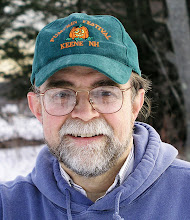
Jeff Newcomer had been a physician practicing in New Hampshire and Vermont for over 30 years. Over that time, as a member of the Conservation Commission in his home of Chesterfield New Hampshire, he has used his photography to promote the protection and appreciation of the town's wild lands. In recent years he has been transitioning his focus from medicine to photography, writing and teaching. Jeff enjoys photographing throughout New England, but has concentrated on the Monadnock Region and southern Vermont and has had a long term artistic relationship with Mount Monadnock. He is a featured artist in a number of local galleries and his work is often seen in regional print, web publications and in business installations throughout the country. For years Jeff has published a calendar celebrating the beauty of The New England country-side in all seasons. All of the proceeds from his New England Reflections Calendar have gone to support the Pulmonary Rehabilitation Program at the Cheshire Medical Center. Jeff has a strong commitment to sharing his excitement about the special beauty of our region and publishes a blog about photography in New England.

Sunday, December 6, 2015

Burdicks Show : Great Art and Even Greater Food


Graze the Fence, Alstead, NH

Earlier this week I hung a show of New England photography at the Restaurant at Burdicks in Walpole New Hampshire. Burdicks has always been one of my favorite exhibition locations and with the holiday spirit all around it is a great time to be offering the work. Burdicks is an elegant restaurant with excellent french inspired cuisine in the heart of beautiful historic Walpole. In a previous article I explored the desirable qualities of the perfect exhibition site which includes, good lighting, a flexible hanging system and an attentive audience, and Burdicks fulfills many of theses attributes.


Audience

Ferrier's Touch


Restaurants that encourage relaxed dining provide an atmosphere which is conducive to looking up from the food and, at the risk of sounding pretentious, Burdicks seems to attract customers who are more likely notice and appreciate the art on the walls. I have nothing against a busy pizza parlor, but in those venues my concern is less about a beautiful display of my images and more about keeping the the pictures high enough to avoid being splattered by cheese and beer.


Hanging
Orchard Wall, Dublin, NH

I hate pounding nails into crumbling plaster. Burdicks has a nice hanging system that allows easy adjustment of the pictures for uniform spacing and height. From the restaurant's perspective, hanging systems such as this require an initial expense, but they are simple to install, allow neat professional displays and, perhaps most importantly, avoid the periodic need for costly repairs to the walls. I am still amazed by how many venues still allow artist to damage their walls with haphazard and insecure nails. 


Let There Be Light 

  The one problem with the Burdicks has always been the lighting. This is a common difficulty in restaurants, that try to maintain a dark romantic atmosphere illuminated by candles, and leaving the walls in murky shadow. Burdicks attracts some wonderful art to its wall. It is an important part of the decor and to hide it is a disservice to the artists as well as to the patrons (see below).  I have long argued that spots casting focused light on the walls could enhance the interest and beauty of the environment without intruding on the soft ambiance at the tables. 

Romantic Dining  Low Light of  Previous Show

Onward, Chesterfield, NH


For this show there has been an improvement in this issue. The restaurant has been recently remodeled and, at least for the holidays, sparking lights, attached to networks of branches have been suspended from the ceiling. The effect is festive and provides a modest general increase in illumination which I think may be continued after the holidays. It is improvement, but a few spots would make an amazing difference.


Choosing the Show
Multnomah Falls, Oregon


Selecting images for any show is always a struggle. I rely on lists from previous exhibitions to give me an idea of about how many pictures will be needed and then I bring about 50% more than seems necessary. I have displayed my work at Burdicks four or five times so I knew I needed between 12 and 14 pictures. I wanted to show only new images and it was a great opportunity to work on prints of some of my more recent work. I ended up printing 5 new pictures and framing another that had been previously matted.


Super Moon, Saybrook Lighthouse

I'm not sure that it was a clear intention, but the images are mostly of recent autumn color in our region. Two prominent exceptions are the image of the majestic full "super" moon rising behind the Saybrook Lighthouse in Old Saybrook Connecticut and the mystical Multnomah double waterfall along Oregon's Columbia River valley. I alway agonize about the pictures I have to leave out from a show, but in the end I was very pleased with selections and how they fit into the wall space. 


Giant Sugar Maple, Guilford, Vermont

Of Course It Comes Down To the Food AND the Chocolate

Burdicks Chocolates Cafe
Many of my exhibition venues turn out to be restaurants and in talking about the attributes of a great site I always come back to the food. After lauding L.A. Burdick's cuisine for lunch and dinner it would be tragic to neglect to mention the chocolate. Connected to the restaurant is L.A. Burdick Handmade Chocolate. Burdick's chocolate is renowned. 


Add caption
The shop and cafe have also been remodeled and is a warm comfortable environment for a cup of coffee or a diet crunching dive into the many tempting deserts, pastries and, of course, chocolates in all sorts of configurations. It is fast becoming one of my favorite places to settle in to write. I just grab a coffee and try to find a corner to hide from the treats.


Ashuelot Floaters, Keene, NH


So if you are near Walpole during this month, drop by Burdicks for great food, amazing deserts, and of course, spectacular photography. The hours for the restaurant and chocolate are listed below. Both are well worth the trip 

For more pictures of Burdicks and the full show, check out the gallery on my New England Reflections web site:

Restaurant at Burdicks Show


And if you find yourself short of 2016 calendars for the holidays, the  
 is available at the Walpole Grocery, right next door.


Jeffrey Newcomer
Partridgebrookreflections.com

Sunday, November 29, 2015

Sensor Dust


Dealing with the Dust

Do I need to say anything more. Anyone with a DSLR knows the frustration of dealing with the blotches on their images created by tiny of pieces of dust, pollen and hair which inevitably settle on the sensor and require long periods of painstaking editing to remove from the final images.


Dust Detected

Lightroom Ready for Spot Detection


Newport Sunrise : Cleaned


First I should point out that dust usually does not actually contaminate the sensor, instead it lands on the overlying glass anti-aliasing filter.  Although not as expensive as the sensor this piece of glass is liable to scratching and is not cheap to replace. We live in a dusty world and there is no way to fully avoid the problem of sensor contamination. Given that there is no completely satisfactory  cure for the problem, I have only a few incomplete thoughts on the subject of dealing with the dust.


Dust Avoidance.

Since prevention is always the best approach how can sensor dust be reduced or avoided. I can suggest only one absolutely reliable preventive measure, use a fixed lens camera or never change your lens. 


Canon SX50 HS
Dust almost always enters the camera at the time of lens changes and if the lens is never removed the sensor should remain pristine. In especially dusty environments, I will occasionally restrict myself to my fixed lens cameras. Actually dust can come from the shutter enclosed within fixed lens cameras, but modern cameras are designed to avoid this problem and the images from my Canon G11 or my SX50 have never shown dust spots. If I must use my DSLR in these situations I try to restrict my camera to one all-purpose lens and only consider changing the lens if I can find a protected area.


DON'T Changes Lens'


If lens changing is unavoidable I try, although not always successfully, to follow a careful lens switching technique. I start by getting my replacement lens ready for the switch. To reduce the time of exposure, I keep it close at hand. Since much of the dust comes from the internal element of the lens, I use my pocket rocket to blow away any contamination and I try to keep the internal lens cap clean. To keep gravity working for me, I try to keep both the open camera body and the lens pointing down. It is also important to be sure that the camera is turned off during lens changes. Power flowing to the sensor creates an electrical charge that can attract the dust particles.


Reducing the Dust Effect
 
Dusty Sky
You have been fanatic about following good "lens hygiene" and yet dust inevitably can match your efforts with an equal or greater fanatic attraction for the cozy environs of your sensor. Before we talk about approaches to dust removal there are a couple of steps that can help reduce the impact of the contamination.


The visibility of sensor dust on an image is closely related to the
Jaffrey Center Sky : Aperture Effect
camera aperture and since the dust actually lies on the filter overlying the sensor, the apparent sharpness of the dust particles is also related to the distance between the sensor and the anti-aliasing filter. The particles are much more obvious at small apertures. You can demonstrate this relationship by comparing images of a clear sky take at high and low f stops. In my example the dust is seen sharply at f22, but is only a vague smudge at f4. Obviously there are many factors that contribute to the decision to use a specific aperture, but if all else is equal a wide aperture can reduce the need for intense editing when you get home.


What You Can't See

Cut Out the Sky
Sensor dust is primarily a problem in bright homogeneous areas containing little detail. In other words it is mostly an issue in the sky. Reducing the impact of dust is just another reason why you may decide to minimize the amount of uninteresting sky in your images. I still scan all of my images for dust, including areas of high detail, but dust hidden among the forest greenery is much less likely to require cloning than the flecks seen overlying the clear sky.


Getting Rid of the Dust
There is a long list of techniques to physically remove sensor dust and as might be expected the most effective approaches are also those most likely to cause sensor damage, but let's start with the noninvasive techniques.


In-Camera Dust Removal

 Many cameras have built-in sensor cleaning functions. Automatic dust removal generally works by generating an ultrasonic vibration in the overlying anti-aliasing filter to dislodge the dust and allow it to fall to a dust collection area below the sensor. This works well for loose particles but sticky contamination such as pollen may not be removed.


Blowers
My next step is to use a blower. I use my Giotto Rocket blower to clean the lens elements as well as the sensor. My Canon 5d has a lens cleaning function which locks the mirror up to expose the sensor. I insert the blower right over the sensor and apply several vigorous squirts of air. I generally do this with the camera aimed down in hopes that the dust will fall away. This procedure should not be done with canned compressed air since the jets may be contaminated with oils or other solvents. The use of a blower is a reasonably safe procedure, but it is not totally risk free. The danger is that if the power shuts off during cleaning, the mirror and shutter will close potentially leading to severe damage. Ideally the camera should be attached to an external power source or at least have a fully charged battery.


Touchy-Feely
If after I have applied a vigorous blow there is still substantial amounts of dust on the sensor, I am faced with a dilemma. The next steps in cleaning are more vigorous, involve touching the anti-aliasing filter and can cause scratches or leave residues. I am very reluctant to risk damage to the sensor and I have to consider very carefully weather physically removing the remaining dust is worth the risk. I have only rarely resorted to the use of brushes and swabs and have never suffered a disaster, but I don't like pressing my luck. Most often I have decided to accept the requirement to remove dust splotches in post processing. Dust removal tools in Lightroom, Photoshop and other editing programs have improved to the point that there is less need to risk your sensor, but, if you are an adventurous sort, the internet contains many excellent reviews of the more invasive dust removal techniques.


An Plan of Action

Use Levels Adjustment to Reveal Dust
My general approach is to do all I can to reduce the exposure to dust and minimize its effect. I use the automatic sensor cleaning and when necessary I carefully blast away with blower. In general I can manage the remaining dust with the use of Photoshop's Healing and Cloning brushes. 


Remove with Healing Brush
 
I usually use a Levels adjustment to darken the image, which reveals even the more subtleblotches. Dust spot removal is just part of my routine detailed inspection of my images and does not add significantly to my processing time. Both Lightroom and Photoshop have specialized spot removal tools, but I usually still stick to my careful manual approach.  I find that I have better control over the size of the brush and the source of the healing pixels.

Five Barns, Putney, Vermont : Cleaned Sky


Lightroom Spot Removal


More Foreground, Less Sky
Don't get me wrong, I still get annoyed by all those blemishes and when they get too prominent and refractory to ordinary cleaning methods, it is probably a good time to send the camera to the manufacturer for a thorough cleaning. It means having to fall back on my smaller "pocket" cameras, but it can be nice to be liberated for a couple of weeks from my massive beast. And, when the monster returns, it is nice to have a spanking clean camera with that lovely, new camera smell and no dust.


Jeffrey Newcomer
Partridgebrookreflections.com


Sunday, November 22, 2015

October Therapy : Autumn Glory, Part 1


Forest Pillars Chesterfield, NH


November Excitement
  

It is mid November and without any snow in sight I am in the middle of my usual November malaise. I know that, photographically, November provides the opportunity to focus on the intricate bare patterns and textures of the season. It is a great challenge to find things to shoot in the grip of this unrelenting gray "stick" time of year, but It is nevertheless all too easy to sink into despair.  When I finally run out of creative ways to make dead leaves and other lawn liter appear artistic, there is a blessed source of relief from this malady, October Therapy.


October Therapy
Madame Sherri's Arches, Chesterfield, NH


There is no greater contrast in the moods of our seasonal journey than that from October to November. We reveal in the brief riotous colors of the peak October foliage and then, almost overnight, the trampled earth jealously reaches up to claim the leaves. November is upon us, but we can still call forth the glory of October's brilliance.


Autumn Shadows, Westmoreland, NH


October is always a frantic time, trying to get out to capture the autumn colors at there best. With luck, the result is a pile of RAW images begging to be processed to there full warmth and brilliance. In November I warm the cold damp weather with a fire in the stove and with the opportunity to immerse myself in the images of fall's spectacle.


Two in Pasture, Walpole, NH


A Very Good Season

 
Wind Vane, Chesterfield, NH


This year's foliage seemed more brilliant and long lasting than during many recent seasons. After the fact, It is seems easy to explain the character of each fall season.  Perhaps the richness of this year's color was related to the warm dry summer.  This autumn's longevity was likely related to the lack of major rain and wind driven storms.  For me each fall is a mysterious surprise and my goal is always the same, to get out to shoot as often as I can, in as many conditions of light and weather as possible. 


This year the range of my explorations were more limited than usual. I found myself tied to home by a list of projects and demands including my digital photography class at Keene Community Education, the Columbus weekend Fall Foliage Studio Art Tour and a couple of lovely trips to New England's southern coast. Happily there was plenty of color nearby in my local region and, as the last leaves gave up their struggle, I was left with my usual pile of images begging for attention.

Roadside Ferns, Chesterfield, NH

Dealing with the Pile

Holding On, Guilford, Vt


As I process this year's color, I have tried to be more organized than usual. It is always tempting to jump around my collection of images, latching on to whichever picture grabs my attention, but I am trying to work through the images in a more chronological order. Lightroom is a great help, allowing me to identify and label each set of images and then flag the most promising for closer attention.  


Feathery Retreat, Weathersfield, Vt


 In this weeks article/album I concentrate on images from the first half of October. In the Monadnock Region peak color tends to occur in the middle of October, around the Columbus Day weekend and a division of the month down the middle results in a fair distribution of the color.  There are limits to how many images I can show in one or two blog articles and I am dealing with that frustration by placing more pictures from the season in an Autumn 2016 Gallery on my web site.


Explorations

Downers Bridge, Weathersfield, Vt   


Perkinsville Green
In early October I headed north to look for the best color, before it descended closer to home. One of my favorite route is up Route 106 from Springfield Vermont wandering through Perkinsville, Weathersfield and Reading. In a short distance is found the Perkinsville Community Church with it compact green, the Downer Covered Bridge over the Black River and of course the Jenne Farm.  Reading is famous for the classic and over popular Jenne Farm but the town
Jenne Farm, Reading Vt
has many other attractions which do not require a fight with fifty other photographers to find a place for your tripod. On the opposite side of 106 up Caper Hill Road is the Springbrook Farm. Along the road are lovely pastures, one of my favorite birch groves and a classic sugar shack. On the top is a view to Mount Ascutney.  If you find it absolutely necessary, some of the pastures open to a vista across the valley back to the over photographed Jenne Farm. Route 106 continues north through beautiful countryside to Woodstock, but on this day I had to head home and responsibilities.


Black River cascade, Weathersfield, Vt

Close to Home

Chesterfield, NH
The countryside around our home in the southwest New Hampshire is resplendent in classic rural New England charm. No towering mountains or large masses of water, but soft rolling hills, snuggly settled farms and calm restful lakes that perfectly accent the warm tones of our New England autumn. Even our isolated Mount Monadnock has a settled inviting feel that compliments the surrounding, rather than dominating the bucolic settings.

Fencing the Color, Dublin, NH


Leading up to the Columbus Day weekend the color was building and I was able to find plenty of early and mid-season foliage within easy range of home. I hit many of my favorite locations Chesterfield, Westmoreland and Keene, including the Roads End and Hubner Farms, the Madame Sherri Forest, Spofford Lake, and the Poocham Road.


Roads End Bend, Chesterfield, NH


Class Work
Flight Risk Keene, NH
By the middle of the month I was finishing up my Basics of Digital
Photography Class. One the best parts of the course was the chance to bring the students out for a couple of shoots. The first was at Ashuelot River Park in Keene NH and the second was around Keene's classic Central Square. The conditions were challenging in the center of Keene, but that provided some important teaching opportunities. My friend and great photographer, Steve Hooper was kind enough to help out on my field trips. At the same time, Steve was teaching his own advanced landscape photography course at Keene State College's Cheshire Academy for Lifelong Learning, and I had the chance to reciprocate by joining one of his shoots in a wetland area around the Ashuelot River.


Ashuelot Floaters, Keene, NH

More Color to Come

Eden Run Autumn, Dublin, N\H


By mid and late October we saw more beautiful color, especially around the Monadnock Region and southern Vermont. I'm still working my way through many of those images and will save them for the second part of my October Gallery posting. In the meantime I will be uploading many more images to the Autumn 2016 Gallery on my web site.   Now get back to work on your Autumn images and if you get tired you can always go outside and take some more pictures of dead leaves and twigs!
Barn at the Bend, Keene, NH