About Me

My photo
Spofford, New Hampshire, United States
Jeff Newcomer had been a physician practicing in New Hampshire and Vermont for over 30 years. Over that time, as a member of the Conservation Commission in his home of Chesterfield New Hampshire, he has used his photography to promote the protection and appreciation of the town's wild lands. In recent years he has been transitioning his focus from medicine to photography, writing and teaching. Jeff enjoys photographing throughout New England, but has concentrated on the Monadnock Region and southern Vermont and has had a long term artistic relationship with Mount Monadnock. He is a featured artist in a number of local galleries and his work is often seen in regional print, web publications and in business installations throughout the country. For years Jeff has published a calendar celebrating the beauty of The New England country-side in all seasons. All of the proceeds from his New England Reflections Calendar have gone to support the Pulmonary Rehabilitation Program at the Cheshire Medical Center. Jeff has a strong commitment to sharing his excitement about the special beauty of our region and publishes a blog about photography in New England.
Showing posts with label foliage. Show all posts

Wednesday, May 13, 2026

Spring At Last

Golden May Dummerston Vermont


West Guilford Valley Vermont
It was a long, cold and snowy winter, but happily spring has arrived with its spectacular explosion of wildly varied color. It always seems unfair that the best seasons for natural beauty in New England are the shortest. The period of maximal color in both spring and fall last for only a couple of weeks. In autumn the vibrant leaves crash to the ground burdening photographers with the torment of the long dull “stick season”. During spring, the leaves hang on, but the wonderful variety of colors that explode as the foliage arrives quickly transforms to the monochromatic shade of deep green that predominates for most of its photosynthetic life span. 


Black Mountain Cascade Brattleboro Vt
Spring Flow Dummerston Vermont


Ferns Uncoil Brattleboro Vermont
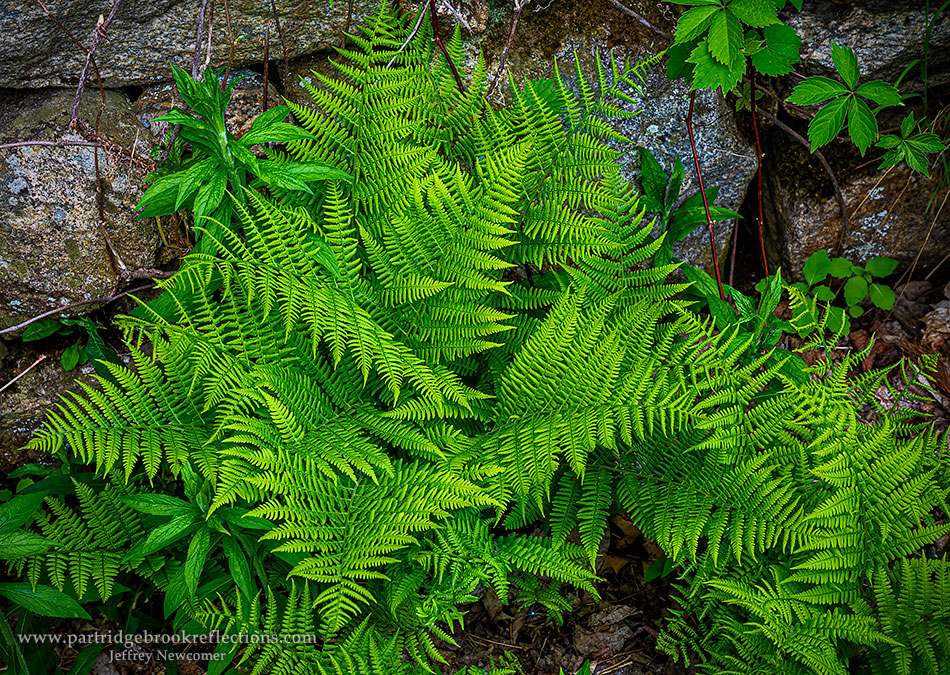
I love the colors of early spring that vary from glowing yellows to rich browns. The hillsides always take on a patchwork array of hues that I think rival the more garish colors of fall foliage. Also, as the fresh buds first open there are often bizarre forms of unfolding greenery to study with macro photography. It all pushes me to get out as often as possible to capture the brief sublime symphony of color. Included here are several of the images that I was able to collect during this year's special season. 


Spring Bloom Brattleboro Vt
This year my ability explore was limited by the fact that I was committed to participation in the spring concert of Keene Choral. We performed Mozart’s Requiem, a challenging piece that required intensive rehearsal and time taken up by practice at home. It was painful watching colors evolve from my studio, but I did get out shooting several times over the course of the season. We had I great concert on May first supported by a wonderful orchestra and soloist and since then I have had more time to devote to the remainder of the fresh color. 


Country Club Rainbow Keene NH
Partridge Brook Dam Spofford NH

 
Westmoreland NH
Early in the season I spent time exploring my local area, checking out some of my favorite locations including one of my favorite hilltop barns and the cascades of Partridge Brook as it flow through my village. I also was able to catch a lovely rainbow that predictably appeared as a spring storm passed over as we were having dinner at the Country Club in Keene NH. The shot shows again that, with care, great images can be obtained with the improved cameras in today’s iPhones. 


Against the Drop Brattleboro Vt
Stickney Drop Brattleboro Vt


Hillside spring Dummerston Vermont
Later in the season I was able to spend much of a day exploring many of my favorite spots in Southwestern Vermont, accompanied by Benji our very patient Golden Doodle. Benjamin loves to go for drives and on many of the quiet back roads I was ale to let him loose to explore, sniff and collect his allotment of ticks. We wandered through Dummerston, Brattleboro and Guilford. The weather varied from overcast to bright sun as I found views including overlooking the West River Valley, Stickney Brook Falls, and Guilford's Green River. Truly, even though it was a bit late, the colors were spectacular every where I looked.


Green River Bridge Guilford Vt


Green River Falls Guilford Vt


Miniwawa Gold Roxbury NH


Although the colors are calming down, just the other day when I had some time to kill in Keene, I was able to catch some nice sparkling backlit views along the upper Miniwawa Brook in Roxbury and finally the obligatory vista of Monadnock still framed by the spring gold. 


Monadnock in Shadow Keene NH


Ancient Cemetery Granite Spofford NH


Bonnyvale Vista Brattleboro Vt
The foliage is now rapidly settling into its mature hues, but I still have many images to work on and I must reconcile myself to enjoying the building warmth. Of course the spring rains are still filling the local waterfalls. That should keep me busy for awhile and I’m sure I’ll find something to shoot throughout the summer. Autumn will be here before you know it. 


Spring Home Spofford NH


Jeff Newcomer
 www.partridgebrookreflections.com

Tuesday, June 2, 2020

Spring Green

Spofford Village Spring


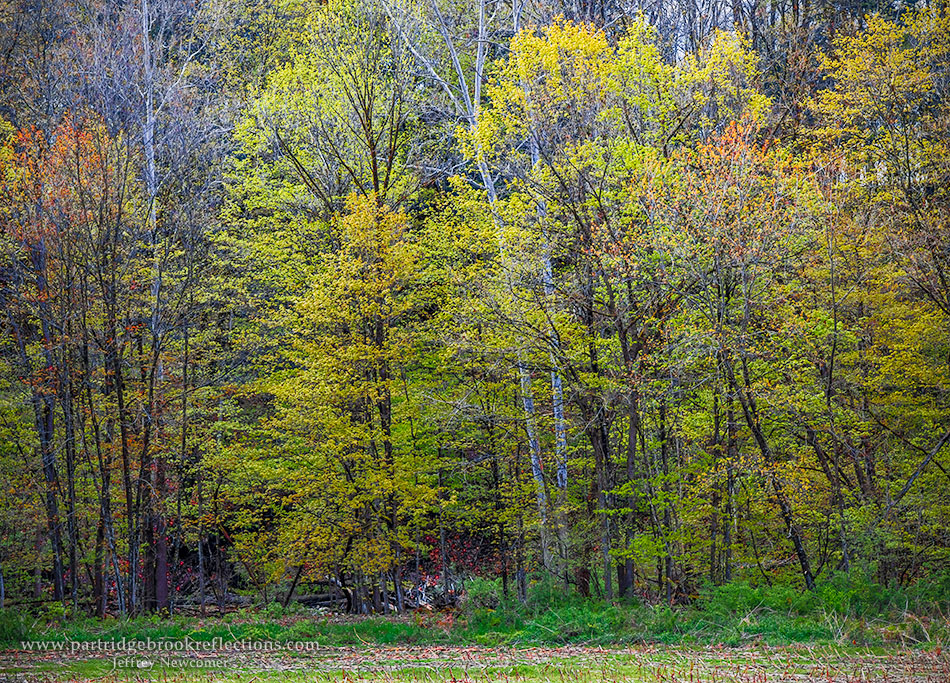
As the spring foliage in the Monadnock region has grown and matured to its settled summer green, it seems a good time for me to finish my “Spring Photography, Get Out of Isolation” series with a look at the richly varied hues of our early foliage.  Spring is a short but remarkable time for photography.  Much like autumn, which marks a brief transition from the extremes of summer warmth and the cold dormant months of winter, spring is the seasonal inflection point back to growth.  Both autumn and spring are brief times of change, but for all the momentary beauty of the fall colors, I believe that spring is more varied and interesting and has its own special attractions.


Westmoreland NH
Over the last couple of months, I have tried to show how photography can help provide an escape from the claustrophobia of our difficult, but important, period of self-imposed quarantine. With sensible precautions, nature and landscape photography can be safely pursued and while we are all carefully distancing from each other, we can still closely approach the glories of spring, especially with macro photography.

Spring Isolation Series
Partridge Brook Spofford NH


Park Hill, Westmoreland NH

In my early articles, I focused on the fantastic explosion of early buds, as our trees and shrubs rushed to begin their short season of photosynthesis.  I concentrated on macro photography, both outdoors and in the controlled environs of my studio.  This week I will celebrate the wide range of colors, mostly greens, that are on display for just a few days, from when the foliage first appears, until the chlorophylls settle into their, rich, maximally photosynthetic, greens.  This is a period about as short as that of the peak fall colors, and I find that it is just as spectacular.


As the leaves first arrive, they appear as a subtle dusting of color against the stark network of branches and often show a wide range of colors from deep red to orange and warm yellows. The variety of colors are usually best on the hillsides in diffuse overcast light, but as is true in the autumn, the spring colors are often most dramatic when seen in bright trans-illumination. 
Connecticut River Westmoreland NH


My restricted foliage view while stranded on our deck
One of favorite times of spring is when the leaves have expanded to cover much of the underlying branches, but before their colors have settled.  It is during this time that, on a hillside, a wide range of greens can be appreciated.  Sadly, this year it was precisely during this magic few days that I was frustratingly stuck at home by and infection in my knee which left me moving about on crutches or a walker.  My mobility, returned in several days, but by the time I was able to resume exploring, summer was largely established.

Gulf Road Curve Chesterfield NH


Roads End Farm Chesterfield NH
What I show here is a few early images from before my infirmity and several from the late spring color.  I can’t complain about what I missed, well clearly, I can, and have complained, but I am grateful for what I was able to experience this season.  I have many images from past springs and look forward future seasons of exploding green.


Fire Pond Reflection Spofford NH


For me, a wonderful new distraction has arrived.  After a careful period of self-isolation, Abigail, Grayson and, most importantly, our delightful 8-month-old grandson Owen, have arrived for an extended stay.  Needless to say, for a while, the primary subject of my photography will not be trees and shrubs.


Spring may be coming to an end but, sadly, despite all the political wishful thinking, the pandemic continues.  I hope you all stay safe and continue to find relief and joy from using photography to discover the unaffected natural beauty all around us.


Jeffrey Newcomer
www.partridgebrookreflections.com


Monday, July 1, 2019

Lush Summer Green


As the lovely variety of spring greens have evolved into the dark hue of summer, we can enjoy our next New England mini-season: the perfect lush green of early summer.    

Lush Green Season
In the early summer the leaves of the trees and plants show a deep green, but this uniform color seems to fade and become more irregular as the season proceeds.  Leaves become speckled with various pests and fungi and other insects begin munching on the leaf edges.  It is a slow process which accelerates as we approach autumn and, as a part of their normal senescence, the leaves lose their chlorophyll pigment.


Within the next few weeks it will be time to enjoy the deepest and unblemished colors of summer.  Get out and fight off the black flies to capture some great images.


Clouds are your Friend

As is true of much landscape photography, overcast days are the best for catching the rich shades of early summer foliage.  The reflected glare from bright sunlight can block the color and create troublesome high contrast, but during these conditions, nice effects can be created by trans-illuminating the young leaves.


Even on cloudy days a polarizing filter can enhance the depth of color in summer foliage.  I routinely keep a polarizer on my camera and experiment, balancing its effect against the loss of one or two f stops.


Walldog Distractions
The beautiful green is all around but I have been busy recording the wonderful work of the “Walldogs” in Keene.  Over 5 days, more than 200 mural artists have descended on our city to create 16 large murals which celebrate important aspects of the history of Keene and the Monadnock region.  Every year the “dogs” pick one location in the country to decorate and this year we are the lucky ones.  I’ve been recording their efforts – stand by for more images, but in the meantime get out and enjoy the perfect green!


Jeffrey Newcomer

Sunday, September 30, 2018

Five Essentials for Fall Foliage Photography


Ashuelot River Contrasting Color

Hancock New Hampshire
The early color of autumn is beginning to show and I’m getting excited about my Third Annual Fall Foliage weekend workshop.  As always, it will be over the weekend after the Columbus Day weekend, October 12th-14th.  It is impossible to predict the extent and location of the best color, but I already know that the workshop will include a great group of photographers.  We have just a couple of slots still open, but the list is already full of friends from my previous classes and workshops.  Suckers for punishment.  With the season fast arriving, I thought it would be a good time to review a few of the photographic essentials which are especially important when capturing fall foliage.  Here are five things to consider as you get out to enjoy this special time of year.

1) Polarizer
With the possible exception of a camera, a polarizing filter is the essential piece of equipment for fall foliage photography. A polarizer is designed to cut through reflections. Direct sunlight reflecting off most surfaces becomes polarized to a specific angle which can be filtered by rotating the polarizer to block that angle. The degree to which a polarizer can filter out the glare is related to the direction of the light, being most effective when it is at 90 degrees to the subject. On the other hand, when the light is coming from behind or directly in front of the camera, the effect is essentially nonexistent. The filter is great for 
Sometimes you need reflection
No polarizer  
darkening skies, seeing beyond reflection into the depths of lakes and streams, but for fall foliage, its most significant effect is to improve the color saturation of the leaves. It is often noted that the ability of a polarizer to block reflection is one of the few filter effects that cannot be duplicated by digital editing and it is for that reason that it is considered THE essential filter and it is why my polarizer stays on the camera for most of the autumn.

The best approach is to get a polarizing filter and start experimenting and don’t skimp on quality.  A high end, multi-coated glass filter is best.  You will be using it a lot.  


There are just a few additional points about the use of this most essential accessory.

  • First, there are two kinds of polarizers, linear and circular. Without descending into a swamp of unnecessary detail, you should know that linear filters can adversely affect your camera's auto-focus or metering. Only use circular filters.
  • Given the optimal orientation to the sun, polarizers can dramatically darken a blue sky, and this is often the most 
    Polarizer sky gradient
    obvious effect as seen through the viewfinder. Because the polarization effect varies with the angle of the sun, the darkening of the sky can vary dramatically across the sky, especially when wider angle views are used. It can produce an interesting, but unnatural gradient of brightness. One solution is to avoid the use of a polarizer when wide angle views are captured. Another is to stack two images, one with polarization and the other without, and then blend the images to avoid the brightness gradient in the sky. I will often reduce the polarization in these situations, but there are post-processing techniques which can smooth out the brightness gradient. A polarizer should not be used when shooting multi-image panoramas, since the effect will vary from image to image, making smooth blending very difficult.
  • By its nature Polarizers require frequent rotation and it is possible to inadvertently unscrew the filter, occasionally leading to a disastrous drop to the ground. Trust me, I know from painful experience. To avoid accidents, I try to rotate the filter only in the clockwise direction, keeping the filter tightly attached.
  • Finally, it is important to remember that polarizers reduce exposure by 1 - 2 stops. In low light situation the filter's effect may not be worth the loss of light.


2) Avoid Color Mush/ Zoom in
Nice color, but mush
I must confess that I generally hate pictures of broad hillsides dominated by a chaotic blend of fall colors. No matter how richly saturated, I get a bit dizzy as my eyes have no idea where to go. With fall foliage, the smaller you go, the easier it is to create an image that draws the eye to a strong center of interest. The guidelines of good composition apply equally for small subjects as they do for grand landscapes.
Drawing the eye
 As I drive the autumn backroads, I am always scanning for these small tableaus, or features that draw the eye, usually with a strong single color and contrasting elements. Often a couple of brightly colored leaves can be more dramatic than a whole hillside of reds and golds.  On my way to Harrisville a couple of years ago I saw this simple combination of bright red and gold leaves splashing behind a white birch trunk. All I needed was a simple two image focus stack to get both elements in sharp focus.


A splash of color, Reading Vermont


3) Manage Bright Sunlight
 
Shade and Back-lighting
Despite what visiting city-folk think, we photographers know that bright mid-day sunlight is the worse time to shoot fall foliage. The reflections off the leaves dulls the colors and the high contrast hides much of the foliage in impenetrable shadow.  As I discussed, a polarizer can help, but you can also look for areas of shade to soften the light.  For me, the best approach to bright days is to take advantage of back-lighting or trans-illumination. Capturing light coming through the foliage is like flipping an electric switch.  Even modest early color can appear brilliant.  Looking into the sun, you may also catch a star-burst of light.

Back-lighting on a sunny day

Overcast Light
Cloudy skies, mist and even rain are great times to get out and capture the foliage. The diffuse, soft light eliminates reflections and allows the color to shine through.  Sadly, wind and rain also tend to knock the leaves to the ground, but while it lasts, foul weather is great weather to capture the full beauty of the season.


Overcast Light


A couple of years ago, I was cruising central Vermont for foliage. The weather began bright, but, as is often true, the clouds gathered as the day progressed. As I explore the road through Pomfret I found this old barn engulfed in foliage that was enriched by the soft light. Even in the overcast my polarizer helped to bring out more of the deep colors.


5) Autumn is about more than color
Keene's Farmer's Market
New England Autumn is about much more than the crazy brilliance of our trees. Visitors and natives alike miss most of the best features of the New England autumn by focusing only on the foliage. The season is also defined by the activities that are unique to our harvest time, the sounds and smells as well as the sites of this dramatic, fleeting time of climatic transition. Most of all, the fall is a time to enjoy the people of New England. We are often a quiet, guarded lot, but something about the nip in the air, and the impending winter, can bring out personal interactions that are, almost, cordial.  Take a hike, visit a farm stand, or immerse yourself in the excitement of a harvest festival or craft show.  All these provide great photographic opportunities without a leaf in view.


Hiking the Monadnock-Wantastiquet Trail


I predict that it is going to be a spectacularly beautiful fall foliage season.  It often seems that the brighter the color, the shorter the season lasts, so don’t miss a day.  I hope these tips will help and get in touch soon if you are interested in joining us for the foliage workshop.


Abby and Samantha - A "Few" years ago