About Me

My photo
Spofford, New Hampshire, United States
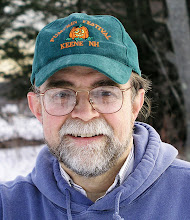
Jeff Newcomer had been a physician practicing in New Hampshire and Vermont for over 30 years. Over that time, as a member of the Conservation Commission in his home of Chesterfield New Hampshire, he has used his photography to promote the protection and appreciation of the town's wild lands. In recent years he has been transitioning his focus from medicine to photography, writing and teaching. Jeff enjoys photographing throughout New England, but has concentrated on the Monadnock Region and southern Vermont and has had a long term artistic relationship with Mount Monadnock. He is a featured artist in a number of local galleries and his work is often seen in regional print, web publications and in business installations throughout the country. For years Jeff has published a calendar celebrating the beauty of The New England country-side in all seasons. All of the proceeds from his New England Reflections Calendar have gone to support the Pulmonary Rehabilitation Program at the Cheshire Medical Center. Jeff has a strong commitment to sharing his excitement about the special beauty of our region and publishes a blog about photography in New England.
Showing posts with label West River. Show all posts

Thursday, October 2, 2014

Southern and Central Vermont Color Preview


Autumn Ranks, Reading, Vermont

Alaska Will have to Wait
Mill Brook Shack
Pomfret, Vt

This week I had every intention to add another article about our fantastic tour in Alaska. The next episode was to be about our time in Seward and our SUNNY cruise along the Kenai Fjords. That's right we actually had gloriously sunny weather for our day-long exploration, and the rocky shoreline, the glaciers and the remarkable wildlife could not have been more dramatic. I've got some wonderful photographs to share, but that blog will have to wait. I'm back in New England, and if there is one hard and fast rule of New England photography, it is that autumn color rules. My Alaska images will still be there to brighten the November gloom, but for now I must talk about the color.


I've been out for a couple of serious shoots in the last few days, each heading north to gauge the progression of the color. First, over
Coming Color
Jenne Farm, Reading Vt
last weekend, I cruised around the Newfane and Townsend areas of Vermont and then, on Monday, further North from Springfield, up Route 106 past Woodstock into Pomfret and Hartland.  Autumn color in New England is always spotty depending more on the altitude, orientation to the sun, and the dampness of the soil than to a specific date on the calendar. My general impression is that, as of Monday the color was fairly thin in Southern Vermont, but as I traveled North of Woodstock things improved significantly. Leaving Woodstock I climbed the justly famous Cloudland Dr and saw more consistent color as I gained altitude. My thoroughly fallible opinion is that things will be at, or approaching, peak in this area by this coming weekend, which is why I'm publishing early this week.


What follows are some of my images from the last few days. Obviously, I chose to shoot scenes with nicer color and this may give a false impression of the overall hillside drama, but it may be a reasonable reflection of how the color will have bloomed by this coming weekend.

Newfane and Townsend

Smith Brook, Newfane, Vt
Sunday was a bizarrely warm and sunny day for late September. I only had a few hours and limited my explorations to nearby towns
in Vermont. I cruised up Route 30 to Newfane where I was saddened to discover that the nice folks at the Newfane Country Store are permanently closing shop. I hate to see them go, but I appreciate how difficult and exhausting it is to run a country store in a small New England village. I wish them luck, but I was happy to have found a new venue in town for my New England Reflections Calendars. Check them out at the Newfane Market . Color here was scant, but I found some nice patches up nearby Cemetery Road. Heading north toward Townsend I got distracted exploring a road along the West River. The color was generally better along the damp banks and it was pleasant to explore an unfamiliar road in the warm September weather.


Sunny West River, Townsend, Vt


Route 106 to Woodstock and Beyond

Harvest Bales, Reading, Vt
Route 106 is one of my favorite paths through Central Vermont. On
Monday, I got out early and, as usual, I shot up US Route 91picking up the road in Springfield, Vermont. The Route north includes lovely green valleys nestled in the mountains and at this time of year the bales of drying hay provide interesting patterns. The weather was mostly overcast but I generally prefer softer light for fall colors. Even with a polarizer, the reflections from bright light dulls the rich colors.  This day was all about the color, but I had to stop when I spied a Zebra pacing in a pen above the road. It's Vermont, so why not a Zebra! Of course, traveling up 106, I had to
Jenne Farm, Reading, Vt
check out the famous Jenne Farm. Being a bit early in the season and on a Monday there was, remarkably, only one other photographer roaming the familiar hill. Unfortunately, every year the shrubs grow a bit higher in front of the red farm house, but I prefer the view from down the hill where the meandering fence provides a nice line to the buildings and the house is less obscured. I predict richer color and bus loads of photographers for this coming weekend. Be sure to buy some maple syrup, or slip a buck or two into the donation box on the hill.  The sugar shack at nearby the Spring Brook Farm was unimpressive, but the birch groves are always interesting and I came across some adorably friendly calves grazing on an upper pasture.


Spring Brook Farm, Reading, Vt


Who says Black & White
Doesn't Work in Autumn?
Reading, Vt


Through Birches, Reading, Vt


Cloudland Road

Cloudland Beckons, Pomfret, Vt


"Perfect" Barn
Sleepy Hollow Farm, Pomfret, Vt
My Ride into Woodstock included a stop at the South Woodstock General Store. This is a classic New England store with a
wonderful collection of traditional necessities, including my two favorites, good coffee and a clean bathroom. Happily now the store is also stocked with a supply of my calendars, so stop by. Woodstock is a lovely town, but way too touristy for me, even on a Monday. As I often do, I shot through the village and north up Cloudland Road. This road is justly famous for its collection of lovely farms and highland pastures. Of course the road is most known for Sleep Hollow, a carefully coifed "farm" which although arranged perfectly for photographers, bares no obvious
Pasture Flame, Pomfret, Vt
resemblance to an actual New England farm. Sleepy Hollow was once owned by Aerosmith's guitarist Joe Perry, and I do feel sorry for the current owners. Imagine having hordes of strangers with long telephoto lens photographing your house on a daily basis. Feeling sympathy, I respectfully took my 30 or 40 pictures and then moved on. Happily Cloudland is home to a number far more authentic farming establishments and by the time the road joins Pomfret Road your can count on being thoroughly saturated with rural New England color.


Climbers
Cloudland Road, Pomfret, Vt


Enveloped, Pomfret, Vt


I worked my way a bit further north then across to Hartford Vermont and eventually back home on Route 91. The fall color was definitely filling in as I traveled north above Woodstock and, again, I think it will be lovely by this coming weekend. Back home I am seeing the reds and golds build almost hourly. It is a great time to live in New England and Alaska will just have to wait.


Jeffrey Newcomer
Partridgebrookreflections.com

Monday, December 2, 2013

Editing Your Photos With the "Blow-Up" Scan


West River Valley. Dummerston, Vermont

Looking for the Bodies
Thanksgiving Gathering
Since  Susan and I are just getting back from a week visiting our daughter in Washington, DC,  this week's blog will be mercifully short.  We gathered at Abigail's house for Thanksgiving with Abby, her boyfriend Grayson, and a number of Abby's  friends and their families. Even our son Jeremy came down from New York City.  It was our typical intimate holiday feast for 15, with lots of
fascinating new friends, a
Space Shuttle Discovery
great  feast and a lovely visit.  Washington has a limitless supply of interesting things to see, and just about everything is free.  On this trip we went to the Air and Space Museum in Chantilly, Virginia and the amazing National Gallery of Art.  The Gallery's collection is remarkable and It was a reminder of how much we can learn from the masters about photographic composition and the use of light . 
National Museum of Art

 We got home late Saturday night, leaving little time to put together an article.  I thought this would be a good time to mention a simple editing step that I use on all of my pictures.  My "Blow-Up scan" harkens back to a classic '60s movie that should be on every photographer's must see list.


The Film

Michelangelo Antonioni's classic 1966 film, "Blow-Up" tells the story of a fashion photographer in mid-60s London.  The film studies the glamorous world of high fashion photography, but for me the key moment comes when the photographer, played by David Hemmings, escapes the glitz to do some voyeuristic street photography.  In the park he catches a couple in an intimate

embrace.  He is seen and the woman (Vanessa Redgrave) does everything she can to get the film, including offering money and "companionship", but without
The Body
success.  Later, in the darkroom, yes a real darkroom, the photographer finds evidence of a murder.  While scanning the detail of the image he discovers the grainy image of a man in the trees apparently holding a gun and later the suggestion of a body lying in the grass.  The movie devolves into reflections on the nature of reality, but it was what the photographer found while scanning the image detail that made a lasting impression.


Where are the Bodies?


The Trash


The "Blow-Up" Scan


Part of my editing routine is to zoom in to 100% and then systematically scan every inch of the image.  I start at the top and move slowly across the image, row by row,  to the bottom. In the sky, I'm looking for dust specs, erasing them with my healing brush.  If the sky is bright, I will darken it with a levels layer, to make the blemishes more apparent.  The new version of Lightroom has a Spot Detection Tool which has a similar effect.   As I get down into the rest of the image, I look
Spots Highlighted with Levels Adjustment
for trash or other distractions.   I clone out the random candy wrappers and cigarette packs, but I also look for distracting elements, such as bright patches, that might draw attention from the main subject(s) of the image.  Of course, while I'm performing this systematic clean-up, I never forget Blow-Up.  Perhaps it is a bit macabre, but I always watch for the occasional dead body.  Creepy?  Yes,  but it keeps me remembering to carefully scan my images, and that's what is most Important.  

White Distractions, or Perhaps a Bleached Femur?

Check out "Blow-Up".  It is a classic, of particular interest to photographers and, although you will probably never discover a body,  scan your images carefully, You never know what you'll find.

Jeffrey Newcomer
Partridgebrookreflections.com

Sunday, December 9, 2012

Working a Photographic Site


Dummerston Covered Bridge

Getting the Most From a Photographic Location


Bridge on Another Day

You have all experienced it. You have been out looking for the perfect photographic location and suddenly a turn in the road reveals the perfect scene. Lovely light, majestic vista and interesting foreground elements. Oh Yah!. You try to catch your breath and then the practical photographic technician intrudes and you have to try to figure out how best to Work the Site. There is a strong tendency to want to grab everything all at once, but a systematic approach can make a big difference in getting the most from the opportunity. There are many good plans, but, in talks I have given over the last couple of years, I have used at shoot at the Dummerston Covered Bridge to illustrate my approach to working the scene.


The Dummerston Covered Bridge across the West River River is one of my favorite locations in Southern Vermont. On this day I discovered the bridge appearing fresh and clean after an early winter snow storm. The overcast sky muted the strong contrasts and the water flow provided foreground interest. I was excited to get shooting , but I took a breath and tried to apply a plan.


First Things First
Safety should always be first. I parked my car where it wouldn't block traffic. This is especially important when snow plows may be rumbling by. I usually start by catching an iPhone image to record my location and then a quick "shot gun" shot. The shot gun shot is a broad image featuring the whole landscape taken as if I am expecting the land owner to, at any moment, chase me away, gun in hand. Never happened, but you never know and it gives me a broad reference for all my other images.


Zooming With Your Feet
Over the years I have tended to favor the broader compositions, working to find interesting arrangements of the many elements in the scene. A location such as the Dummerston Bridge provides a wide variety of photographic opportunities. I moved around finding angles that would use the sweep of the West River to draw the eye to the bridge while framing the image with the surrounding river banks and trees. Pulling the view down to the river also helped to minimize the dull uninteresting sky. I love playing with the complex interactions of the elements of the scene. It is amazing how just slight movement can change the focus and strength of an image. Sometimes the best viewpoints are obvious from the first glance, but more often a systematic exploration is required. After I've nail the broad "postcard" images, the important thing is not to give up on the location. The real fun starts when I drop kick my eye into full "work the scene" mode and this generally means zooming with my feet.


Closer & Closer

I start looking for individual elements that would make interesting subjects on there own, and I move in. The standard rule is to compose and shoot and then move a little closer, compose and shoot and then move closer still. The only theoretical limit is when the front of the lens bumps into the subject. For me it is like forcing different compositional filters over my eyes to shift my attention from my comfortable and familiar broad views to increasingly close subjects. It takes patience and discipline, but when I go through the exercise, it is amazing how much interest and beauty can be mined from one location. 


Another situation when moving from broad to more intimate compositions is particularly important is when shooting in the snow. As I discussed in my previous "Winter Plan of Attack "article, the key is to avoid tromping all over the pristine white foreground until you have captured all the broader compositions. 


Working the Snow
 

So the next time you you stop to capture the perfect majestic landscape move beyond the postcard and work the scene. Turn on that continuously looping recording in your brain that repeats, "closer, closer, CLOSER ....