About Me

My photo
Spofford, New Hampshire, United States
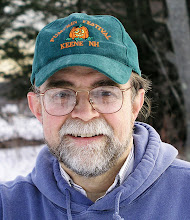
Jeff Newcomer had been a physician practicing in New Hampshire and Vermont for over 30 years. Over that time, as a member of the Conservation Commission in his home of Chesterfield New Hampshire, he has used his photography to promote the protection and appreciation of the town's wild lands. In recent years he has been transitioning his focus from medicine to photography, writing and teaching. Jeff enjoys photographing throughout New England, but has concentrated on the Monadnock Region and southern Vermont and has had a long term artistic relationship with Mount Monadnock. He is a featured artist in a number of local galleries and his work is often seen in regional print, web publications and in business installations throughout the country. For years Jeff has published a calendar celebrating the beauty of The New England country-side in all seasons. All of the proceeds from his New England Reflections Calendar have gone to support the Pulmonary Rehabilitation Program at the Cheshire Medical Center. Jeff has a strong commitment to sharing his excitement about the special beauty of our region and publishes a blog about photography in New England.
Showing posts with label Macro Photography. Show all posts

Friday, May 1, 2020

Bringing Spring Indoors


Rhododendron Bloom
In my last two articles I encouraged you to get outside to photograph the constantly changing signs of the exploding New England spring.  It is a great excuse to escape our claustrophobic pandemic isolation.  The buds are swelling, breaking open and showing signs of early spring color.   It is all out there for you to explore, but now I would like to suggest that you bring some of that beauty back indoors. 

Challenges of Outdoor Macro Photography
Last time I discussed some of the problems of outdoor macro photography.   Most importantly, it is often difficult to find a satisfactory balance between a small aperture to provide good depth of field and a short shutter speed to freeze motion.  This can be especially challenging in low light situations, but bright light can cause its own problems with stark shadows and blown-out highlights.  Photography is all about finding the best compromises, and with care and patience great images of nature’s fine detail can be obtained outdoors.  But since we have been told to isolate, I thought it would be helpful to discuss the advantages of bringing macro photography indoors.

My Spring Floral Cheat
It is usually about this time every “normal” year that I head out for my springflower photography “cheat”.  I go to my favorite local greenhouse (Walker’s Farm in Dummerston Vermont) and, while Susan buys plants for the garden, I shoot an amazing variety of healthy flora, all indoors with soft diffuse light and no problems with the wind.  


The only major difficulty is keeping people from tripping on my tripod. I always get great shots and the plants are all labeled for easy identification.  It is simple, and I am never the least bit ashamed of my lazy deceit. Sadly, this year the damn Covid 19 has prevented me from visiting  the greenhouse, and I have been forced to create my own special environment.


Trans-Illuminating Autumn
My Sunroom "Studio"
A few years ago, I decided to bring a selection of autumn leaves indoors to use trans-illumination to highlight their brilliant colors.  My setup was simple, a  bright light, a piece of black mat board and my macro lens.  In that situation, I was shooting with the light shining through thin leaves and the effects were stunning.  To avoid difficulty with depth of field, I pressed the leaves flat before shooting, and with the camera on a tripod, I could shoot with a small aperture.  My only real challenge was to get Susan to allow me to clutter half of our sunroom for the project.


Illuminating Spring

Over the last week I have worked to reproduce my indoor lighting to shoot the developing spring flora, and Susan is happy that I can set things up in my barn studio.  I do not have the focused tensor lamp that worked so well for my autumn leaves, but I found that the intense trans-illumination was not as important. 


 Unlike the flattened autumn leaves, spring buds and flowers have greater dimension and are more opaque.   To achieve balance illumination, I found that I needed to add a variable amount of front lighting, with one of my LED studio lights.  I kept the large light source close, allowing the light to wrap around the subjects.  


Focus
Maple Buds

In the controlled Indoor setting, focus was much easier to manage.  I could enlarge the depth of field with small apertures, routinely shooting at f32.  The diffraction associated with such small apertures can cause softening of image detail, but much of this can be corrected with sharpening in post-processing.


Single Image f 5.6
Even with small apertures, macro photography is associated with shallow depth of field, but a restricted DOF can be used to direct attention to a small area of the image.  Quite often this means leading the eye to the stamen.   A single exposure, with a small aperture, can be a pleasant solution, but when you want the entire subject to be sharp, focus stacking is a great solution.

Six Image Focus Stack


Focus Stacking
Six Image Focus Stack with Blended and Touch-up Layers
Focus stacking involves blending multiple images taken at different plains of focus.  I have discussed the details of this procedure in previous articles.  The technique is not complicated but does require the use of image editing software. If you are using Adobe software, Lightroom will not allow the required manipulation of layers, but  Photoshop simplifies the process of aligning, blending and touching up the images. 
  

Although variably focused images can be obtained in the field, it is much easier and more precise when in the controlled studio environment.  When both the subject and the camera are held stationary, a sufficient number of pictures can be obtained to result in sharply focused macro images.  Indoors, I routinely obtained six or more images each with subtle differences in focus and with greater numbers of layers the post-blending touch-up process was much less difficult.


Whether indoors or out, there are great photographic opportunities as our New England spring progresses.  Images captured in natural settings can be great, but consider experimenting with the control that comes with bringing those flowers and buds inside.  With a few simple tools, you will discover an exciting new world of detail and beauty.


Dogwood Bloom

Check out these links :


Jeffrey Newcomer NEPG
www.partridgebrookreflections.com


Monday, March 30, 2020

Isolation Photography 1


Photography, and especially photography in New England is always about finding ways to make the best of the condition with which you are presented. Rain, fog, snow or just “bad light” all have their own particular challenges.  Capturing special images is always about getting the most from what nature provides.

Captain Rodolph Bowles Sargent
In the last couple of weeks, we have been faced with a frightening new challenge with impacts far beyond trivial questions of photographic subjects.  We are learning about Covid 19, about disinfecting, social distancing and “flattening the curve”.  I trust we are all doing what we can to blunt the awful effects of this pandemic, and for many of us, that means isolating ourselves in our homes.  During ancient plagues, measures were a bit more draconian such as bloodletting or flagellation.  A little time at home on the couch with Netflix doesn’t seem so terrible, but we are all looking for other options for sanity preserving entertainment.  Photography could be part of the answer.


For some professional photographers, social distancing and cancellations can be a devastating issue.  I assume wedding, sports and event photographers are hurting, but for most recreational and landscape photographers, there is still plenty to shoot.  I don’t have to worry about social distancing from trees, lakes or mountains.  All I must do is stay away from other photographers.  Still, self-quarantining has affected our lives in many ways and since photography offers chances for escape from these pressures, I thought it might be helpful to suggest some photographic opportunities both in and out of the home. 


Since on the outside, we are still in the middle of the dismal gray spring “stick season”, this week I’ll start with photography within the house.

Photography “In Place”

Details Matter
We live in a beautiful part of the country, but what can you shoot when you are stuck inside of your home.  After hip surgery, a few years ago, I was largely restricted to the house.  After the Hycodan wore off, I started looking within my limited sphere for things to photograph and actually found quite a lot.  I started with macro photography, and discovered detail all around that I had never noticed before. I hobbled from room to room scanning for compositions made from some of the simplest things, a clock face, detail in an old portrait and the decoration on a gourd from the Galapagos Islands.  Indoor plants and flowers were also great subjects.


Galapagos Gourd


Back-lighting


In floral photography, precise focus is always important.  The key is to make sure that, if nothing else, the stamen is sharp, and the background is soft and uncluttered. You might try shooting some of the flowers with backlighting.  Trans-illumination can have an electric effect on the floral colors.  You will find that the indoor macro subjects are endless.  You don’t need a special camera or lens to photograph the familiar around the house, but as you move close, depth of field and shutter speed can become an issue  A tripod or some other means of stabilization can be helpful to keep your images sharp.


Finding Friends
Nellie at Eye Level
As the days of isolation pile on, photographs of our aggravated fellow human cellmates may be problematic, but our pets always seem to enjoy the heightened attention. You can get close to your cats, dogs, turtles and more – none of them can get the virus.  Since we lost our Nellie a few years ago, Susan and I have desperately missed having a dog, and never more than since we have been isolated.  It is great to catch your pets in cute or mischievous activities, as long as they have nothing to do with chewing up the toilet paper. 


Just two quick keys to better pet photography.  First get down on your knees (if they still work), or lay on the floor, to shoot your friends at eye level.  Whether you are photographing wild animals or your pets, this is always a more personal and dramatic angle.  Secondly always focus on the eyes.  Everything else can be fuzzy, but if the eyes are sharp, no one will notice.


Black-capped Chickadee
Feeder Through the  Open Window
Don’t have any pets?  Just hang a bird feeder close to house near a convenient window, sit quietly and wait for the action to start.  As we see warmer weather, you can get clearer shots by opening the window.  Again, keep the background clear of distractions, but some stage dressing can help. Try sticking a few branches into the ground to provide more natural appearing perches.  Finally, unless you want to experiment with bear photography, you might want to bring the feeder inside for the evenings.
House Finch Pair


Image Management
Drowning Pool Iceland
Finally, considering all the extra time you have on your hands, you may want to consider editing some of the piles of pictures you have clogging your hard drive(s).   I have just finished my Iceland images, and now I’m neck deep in the mass of pictures from our autumn tour of Ireland.  This is a great time to learn how to use Lightroom, Photoshop or some other image management and editing software.  If the phrase “software program” tends to give you the hives, you can always start by just deleting all those pictures of your feet or those that are hopelessly out of focus. It’s a start.


Lightroom Magic


I hope this brief discussion will trigger your own photographic exploration of your restricted space.   I would welcome your ideas about other sources of indoor inspiration.  For the members of Keene State College’s CALL program Photography Club, I look forward to seeing some of your pictures as you find ways to brighten this challenging time.   To spare my mailbox, please send only small jpg images.


Tufted Titmouse


Doolin Rainbow, Ireland


For more inspiration, check below for some other links to my relevant blogs.  Also go to Part II of my Isolation Blogs where  I will explore some of the opportunities available outside as the drab “stick season” gives way to the buds of early spring.


Jeffrey Newcomer, NEPG
www.partridgebrookreflections.com
jeffn49@myfairpoint.net

Sunday, May 18, 2014

Early Spring Macro Photography


Capturing The Greening
There is no single season for Macro photography.  The world of up close opens endless possibilities for fresh vision regardless of time or place, but early spring is one of my favorite times to slap on my 100mm Macro and start wandering about familiar places looking for new inspiration.


The Greening
We are currently in the middle of the surprising spring greening.
  At this time every year the leaves explode as if they knew that their preciously short time to gather sunlight has arrived.  I love the variations of green that appear in the early spring, but, for me, the earliest part of the season is the best for macro photography.  During the first few days of the awakening, the buds break open providing a wide variety of fragile and succulent projections that create opportunities for unusual micro compositions.  I can usually find all the excitement I need by just wandering about my neighborhood, but his week I also stopped by Ashuelot River Park in Keene for additional opportunities.

Birth Spiral


The Equipment
My usual lens for  routine photographic explorations is the wonderfully capable Canon 24-105 f4 L Lens.  It covers the

Spring Icon
majority of my interests and is my one choice when I am traveling light, but occasionally, I like to force my vision in new directions by limiting myself to a different lens.  It may be a wider view with my 16-35mm, but most often I will select my 100mm Macro.  This is a wonderfully sharp and fast lens.  The 100mm makes it a great portrait lens and its macro capabilities gets me  to that magic 1:1 ratio that is especially good for capturing the first signs of the spring awakening. Of course, you don’t have to buy an expensive macro lens to get close.  Both close-up lens and lens tubes are considerably cheaper although not as convenient.

Pasture Cover


Finding Focus
The key to striking spring macro images is to find the fresh buds in good light and at a time when the wind is not strong.  Depth of
Shallow Focus
field is often a challenge with macro photography.  The ability to stop down to small apertures may be limited when the subjects are blowing in the breeze and long exposure only produce an artistic blur.  Higher ISO levels can allow shorter exposures but at the cost of image quality and noise.   Focus stacking is another option, but blending the images can also be challenging when the subject is being blown about.  One cheat that I have discussed previously is  to shoot flowers and greenery in a greenhouse where the light is diffused and the wind is minimal.  When a subject can not be fully in focus, the challenge is to pick the critical portions to bring into sharpness.  It is remarkable how much soft focus the eye can forgive as long as areas of sharpness draw attention to key elements. 


The Light 


Overcast weather is always preferred to capture the true colors in their full depth, but when shooting macros in bright sunlight the stark contrast can be reasonably managed with a small diffuser or by taking advantage of trans-illumination to light up the young foliage.  A flash may also be used to fill the shadows, and a polarizing filter can help to hide the bright reflections and to bring out the rich colors.


The Background
 One great thing about macro photography is that even terribly ordinary locations may hold magnificent treasures at the macro level.  It is important to remember that the same rules of composition apply, and it is often easier to arrange small nearby elements in a pleasing fashion than it is when the elements to be arranged are trees and mountains.  An ugly cluttered background can be reduced to a lovely backdrop with the soft Bokeh created by wide apertures.  Distracting background elements can still be a problem, but can often be eliminated with small changes in composition.


The Restless Spring

The one inevitable truth about the New England spring is that it is always changing.  Too soon the fascinating virginal buds will mature.  The detail in the wanton spring flowers will continue to provide excellent subjects for macro shots and the young leaves will continue to hold their fascination for a couple of weeks before they take on the deeper fixed green of the languid summer.   The attractions of the New England Spring are ever changing and always spectacular, so while you have a chance get out and enjoy the wonder of the awakening macro world.

Apple Blossom


Jeffrey Newcomerp

partridgebrookreflections.com