About Me

My photo
Spofford, New Hampshire, United States
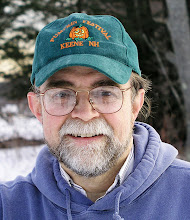
Jeff Newcomer had been a physician practicing in New Hampshire and Vermont for over 30 years. Over that time, as a member of the Conservation Commission in his home of Chesterfield New Hampshire, he has used his photography to promote the protection and appreciation of the town's wild lands. In recent years he has been transitioning his focus from medicine to photography, writing and teaching. Jeff enjoys photographing throughout New England, but has concentrated on the Monadnock Region and southern Vermont and has had a long term artistic relationship with Mount Monadnock. He is a featured artist in a number of local galleries and his work is often seen in regional print, web publications and in business installations throughout the country. For years Jeff has published a calendar celebrating the beauty of The New England country-side in all seasons. All of the proceeds from his New England Reflections Calendar have gone to support the Pulmonary Rehabilitation Program at the Cheshire Medical Center. Jeff has a strong commitment to sharing his excitement about the special beauty of our region and publishes a blog about photography in New England.
Showing posts with label brooks. Show all posts

Monday, May 19, 2025

Spring Attractions 2025


West Guilford
Spring is progressing and I have been getting out trying to capture the beauty before it disappears.   For me, the season really comes to an end when the fresh, multi-toned green of the early foliage settles into the rather monotonous deep greens of summer. Surely, the bright spring flowers continue to explode, but once the variety of colors in the trees and scrubs begin to fade, I’m ready to move on to summer.


Guilford Vermont
Overall, it has been a good spring.  After a prolonged late winter “stick season”, the buds slowly began to pop.  As always, I love the variety of greens that decorate the hills and roadsides.  I call it our second “autumn” season of color and in many ways it is more interesting and longer lasting – with the  added benefit of no leaves to rake after it is all over.


Pleasant valley Farm Rockingham Vt


First there is the Flowing Water

Partridge Brook Chesterfield New Hampshire

Chesterfield NH

Of course, early spring isn’t only about the waves of color.  The second major attraction is the flowing water. Even without much melting snowpack the streams and waterfalls have been bursting with this years spring rains.  Waterfall photography is often an early spring gift even before the greens begin to grow.


Chesterfield Gorge
This year, I enjoyed a fun early waterfall exploration with a short workshop for a group from the Monadnock Garden Club.  I had planned to visit a number of waterfalls around Chesterfield area over a morning in early May.  I first brought the group to Chesterfield Gorge.  The Gorge has a wonderful variety of dramatic drops and babbling cascades and it turned out that location provided more than enough to keep the folks busy for the entire morning.  The group came with a wide range of experience and equipment, from sophisticated digital SLR’s to iPhones.  I was happy that everyone had a tripod, but some barely qualified for that designation.  There certainly were many opportunities for diplomatic instruction and the brisk flow of the stream provided all we needed to capture lovely images.


Saxon River Falls

Brockway Mills Falls Chester Vt
The waterfall photography has been great all spring and I have been out a number of times to catch the action.  I love it when I discover new waterfalls.  This year, my friend Lucky introduced me to a couple of dramatic falls around the Bellows Falls, Saxon River area in Vermont.  It is exciting that, no matter how long I wander about the roads of my corner of New England, I still can find fresh areas of beauty and wonder.


Partridge Brook Chesterfield NH

There are various ways that shutter speed can render the appearance of flowing water.  Rapid exposures freeze the splash capturing the turbulent energy of the water, but I continue to be enamored with the soft dreamy appearance created by long exposures.  Previously, I have discussed my view of the optimal shutter speed, but it depends on the rate of flow, the distance to the falls as well as your own taste.  My goal is to get a soft look without losing all the detail in the water.  There is no one “perfect” shutter speed, a bit of experimentation is usually required.


Partridge Brook Dam Spofford NH

Nearby, my local falls were all brimming with action.  Partridge Brook, which flows behind my house on its way to the Connecticut River, provided many interesting cascades as it ran through the old mill dam and down alongside the road toward Westmoreland.  The Gulf Road, in the southwest corner of Chesterfield, has a number of falls which are dependent on the fresh run-off, but when the rain is strong, the falls can be dramatic.   


Gulf Road Falls Chesterfield

Jelly Mill Falls Dummerston Vt

I also got across to Vermont for one of my favorite falling water spots in Dummerston, where Stickney Brook drops through the Jelly Mill Falls, with a series of lovely cascades to the West River.


Spring Green


Roads End Farm Chesterfield NH
As spring progresses, my attention is increasingly drawn to the evolving color of the bursting greenery.  It was great to have an excuse to explore around my familiar locations in both New Hampshire and Vermont.  


Each day, I found different shades of color as the season progressed.  I could also vary the colors by simply heading north or south, or by changing my altitude. The greens are settling out down here in far southern New Hampshire, but just last week I was able to catch some beautiful hillside greens on a misty afternoon farther north in Charlestown along the Connecticut River.  


Twin Peaks Charlestown NH


Every year, I am amazed at how quickly the leaves explode on the trees.  They must know how short a season they have to store energy for the long winter.  It is sad to see the multitude of shades of green settle out, but I do have a pile of images to work through, and I can sit back and enjoy the relaxing shade until the blast of autumn color shakes me from my summer lethargy.


Broad Brook Guilford Vt


Jeff Newcomer
www.partridgebrookreflections.com


Sunday, March 18, 2018

Looking Through Stuff


Through the Trees, Warwick Ma.
After grinding out over 400 blog articles, including my Getting It Right in the Digital Camera Blog, my contributions to the New England Photography Guild blog and various other articles, it is getting increasingly difficult to come up with sparkling new things to say.  I have covered all the camera basics including exposure, composition, focus and file selections, but the nice thing is that this situation works to encourage me to buy new equipment to review, and to travel to fresh locations, in and out of New England.  


Snow can Screen, Chesterfield NH

In the last couple of weeks I have discussed my new set of neutral density filters and the latest installment from our tour of Italy, including Bologna and Lake Como.  This week I decided to get back to my personal roots of more basic challenges of effective imaging .  I asked myself, “How has my photographic eye changed over the years ?  What have I learned?”.  One thing that immediately came to mind is that I am much more willing to look through stuff.

Stuff Gets in the Way!
Spire Screen, Keene NH
One of the great frustrations of landscape photography is that things always get in the way of my perfect compositions.  Trees, bushes, grasses and wires always seem to be In the wrong spot, and, when I am able move to a clear location, a have to accept an suboptimal point of view.   I can always choose to stay in the perfect spot, but I then must spend hours in Photoshop cloning away the offending junk. I still work to open many of my images, but increasingly I have come to accept and appreciate the attraction of looking through stuff.


Photoshop’s Disappearing Acts

Spofford Village, NH
About five years ago, I published an article reviewing the various ways that distractions can be removed using Photoshop.  Specifically, I was trying to remove a branch from in front of a church in Spofford New Hampshire.  I used simple cloning and patching to erase the branch and Puppet Warping to move it to the side.  Sadly, at that time, Smart Fill was not yet available. All of these techniques can be challenging and time-consuming, but I always love the process of removing distracting stuff.

Puppet Warped Branch

Steeple Cleared - Much Work
In this case, as I stepped back from the removal process, I discovered that I actually preferred the original image, branch and all.  Over time I have become more aware of how some natural screening elements can enhance the interest of compositions.


The Glory of Tangles
I reviewed my archive of favorite images and found many in which the screening elements seemed to add to the image’s attraction and I tried to understand the situations in which a little screening was not so bad.


Autumn Rush,  Wardsboro Vermont

I found a few broad categories of images in which there seemed to be value in looking through foreground “stuff”.  Of course, I am talking to photographers here, and you will inevitably have your own tastes and preferences, but perhaps this exercise will encourage reflection on the when screening is ok.  

My Categories

Contribution of the Foreground to the Story
Weathersfield Barn, Vermont
It is obvious the tangle of brambles in front of the dilapidated barn in Weathersfield Vermont is essential to the focus of the image.  The same is true of the ice coated bushes screening the barn in Marlborough New Hampshire, taken in the aftermath of the disastrous ice storm of 2008.

2008 Ice Storm, Marlborough NH
Westmoreland NH
The line of trees with classic sap gathering buckets screens the barn, but, in all these images, the screenings do not distract, they add an essential aspect to the story of the images.


Contrast with the Background
Stickney Brook Falls
For me, the foreground screens are most effective when they contrast with the background.  I see this most frequently when I place sharp features in front of the soft flowing water, whether it is cascading brooks or waterfalls.  


Beaver Falls, Colebrook NH

Spofford NH


Contrast may also include differences in color or tone, such as the brilliant foliage in front of the dark house or the snow covered branches contrasting with the rich red building  


Roads End Farm, Chesterfield NH

To Mt. Monadnock, Jaffrey NH
I also found images in which the contrast was primarily between near and far, with distant grand landscapes.

Distant View, Newfane Vermont


Framing
Northfield Pasture
Foreground elements can also partially frame and highlight a key portion of the more distant subject.  The sunlit trees in the picture of a Northfield Massachusetts pasture break only slightly to reveal a distant horse, gazing in the October light, and the three trees on a hillside in Pomfret Vermont nicely draw the eye to the distant barn.


Pomfret Vermont


Practical Considerations and Sheer Laziness
There are many times when it is not possible to frame a composition without including screening stuff, but I often try my best to crawl into some awkward locations, which are usually wet or dangerous, to get around the obstructions.  Even when that is possible it often means accepting a suboptimal composition.

Perkins Pond Falls, Troy NH
  I like the image of the Perkins Pond Falls in Troy New Hampshire, looking down from the edge of the steep bank and screened by trees. On another occasion I found a spot down-stream, from which I could descend to the level of the brook, but it required considerable effort to work my way up to the level of the falls.  A pretty picture and without obstruction but I think I prefer the shot from the bank, including the lovely trees.  And, of course, it was also much easier to shoot.


Perkins Pond Falls  - Brook Level

As always, the final decision about composing with screening elements comes down to personal taste. Although my nature is generally to avoid distractions, the benefits of a little contrast is often worth considering.


Jeffrey Newcomer

Saturday, January 12, 2013

A Photographic Meander Along the Back Roads of Vermont

Grafton Wreath
Boldly Going Where No Lens Has Gone Before


The other day, it suddenly occurred to me that I hadn't gone out on a significant photo shoot in several weeks. First it was dealing with the Christmas orders, then the joy of having the kids home for the holidays and finally going through the extended process of moving to a great new web site. There are always distractions, even work gets in the way occasionally, but whatever the excuses I decided I had to get out at least for a few hours of photographic treasure hunting.  

When planning a shoot I often set a defined goal, a specific location at a precise time. It may be a lake at dawn or the moon rising over the mountains, but my greatest joy comes from heading out for visual adventures with no agenda. My simple goal is to wander the back roads looking for new locations and letting the light be my guide. It is a bit "Star Treky", "Boldly going where no lens has gone before".


On this day, I decided to explore in Vermont. We still have snow

cover and although the snow is no longer fluffy and coating the trees, it is still a blessing that we are firmly out of stick season. As is typical, I got out a little later than I had planned, but in the dead of winter, the sun is persistently low in the sky making the soft morning light linger until it is replaced, early in the afternoon, by the equally soft evening light. In January, the days are short, but we never get the stark, flat overhead illumination of summer. My plan was to head north through Putney and Townsend and then wander off onto every obscure back road I could find. I often talk about the
Stranded Rake
value of getting lost in country side, but it is hard to get truly lost these day when I have my GPS, iPhone and a dog eared but detailed Vermont Atlas. Of course the GPS is not infallible, especially in the country. It is surprising how often it has directed me to a road which turned out to be an impossibly narrow cow path, but the great thing about confronting a dead end is that you get to turn around and go back . Country roads often appear completely different when traveled in the opposite direction. Never assume you know a road until you have traveled it both ways.


On this day I had a lovely, relaxed exploration and, along the way, I was reminded of a number of challenges and opportunities that are unique to winter photography

Wanderings

Mill Brook
Most of my wanderings on this day were in Townsend and Grafton Vermont. I first came across Mill Brook weaving around the ice encrusted rocks in Townsend. When photographing a stream, I often rotate the framing to favor one side, changing the banks from monotonously centered parallel lines to a more dynamic diagonal path. A little change that can make a surprising difference in the energy of the composition. Nearby was a lovely farm with attractive foregrounds and framing provided by trees, farm equipment and stone walls. I spent about 45 minutes working through the various options, but my exploration had only started. The nice thing about back roads is that you can slowly inch along
looking for attractive scenes without having to deal with as many impatient drivers roaring up from behind. As I did my meander along the forested roads I was on the lookout for interesting arrangements of trees and light. The dense and chaotic New England forest provides few of these opportunities, but at times the foreground and background elements come into alignment with an almost audible snap. I find it relaxing to scan the forest for the "snaps", but I have to occasionally remind myself to check to see if I am going off the road.

Challenges of Forest Lighting
The day was consistently sunny, making capturing the high contrast between brilliantly illuminated snow and forest shadows a constant

Snap
challenge. As always the histogram was a critical aid. Watching the graph, I was able to avoid muddy shadows by exposing to the right, while also guarding against going too far and blowing out the highlights. As I often say, the key was to get the best image data that would provide the raw material for the best post-processing results. Back in the digital darkroom, Photoshop’s “Shadow/Highlight” tool is especially helpful in maintaining texture in the snow without making it look gray. It is remarkable how precise exposure control and the expanded dynamic range provided by shooting RAW can tame previously impossibly contrasty scenes and can be superior to HDR and tone mapping techniques for all but the most extreme situations. The result is images that look like what I actually saw on site.

Brooks


Simpson Brook
I came across several lovely little brooks in the forest. Winter
waterfalls are often more challenging to capture without the contrast of sparkling water cascading next to dark, rocky ledges.  In fact, in winter, the relationship between the water and the surroundings is reversed, with the water best seen dark against the white banks. When flowing water is surrounded by soft snow, I tend to use shorter exposures to provide more texture to contrast with the flat, homogenous appearing snow. I love to shoot flowing water with long exposures, but the velvet streams can become lost in the surrounding white. 


Grafton Inn
Grafton
After wandering for a few hours I made it to the Townsend Road. Sadly I was back on pavement, but it led me to the classic New England Village of Grafton Vermont. The town is known for the traditional warmth of the Grafton Inn, but I was drawn to the Grafton Village Store where the Chili was outstanding. 

Great Chili, Car Needs a Wash!

 
From Grafton I discovered a few more back roads and old farms. By the time I got to Saxton River, I had been out for about six hours and 80 miles. I was ready to head home to see what I had on the memory card. I find I get a bit hazy after 6-7 hours of head swiveling. On the way back, I got a chance to revisit Westminster West and it's famous sign post. It is always interesting to be reminded that London and the North Pole are both about 3000 miles away. 


Add caption


Back in Spofford I resisted the strong urge to dive right into the images and instead, went through my usual post-shoot workflow. I downloaded the 97 images, applied the GPS coordinates, inserted appropriate meta data and renamed the collection with the date and successive numbers. Then I FINALLY got to actual look at the images. I always feel that a shoot has succeeded if I get even one true “keeper” and although I didn’t find any “breath takers” there were several definite “keepers”. This was as expected with the nice, but not spectacular, light and the somewhat settled snow. Nevertheless the pictures are interesting and quintessentially New England. They may be just what someone is looking for. I have learned that it is impossible fully anticipate someone else’s taste, especially from those who don't have the good fortune of living in the midst of all this beauty.

Most importantly I explored some interesting terrain that I have filed away for future visits when the conditions may be different - they are always different. Learning more about your local country-side is never a waste of time and can be exciting even without a camera in hand.