About Me

My photo
Spofford, New Hampshire, United States
Jeff Newcomer had been a physician practicing in New Hampshire and Vermont for over 30 years. Over that time, as a member of the Conservation Commission in his home of Chesterfield New Hampshire, he has used his photography to promote the protection and appreciation of the town's wild lands. In recent years he has been transitioning his focus from medicine to photography, writing and teaching. Jeff enjoys photographing throughout New England, but has concentrated on the Monadnock Region and southern Vermont and has had a long term artistic relationship with Mount Monadnock. He is a featured artist in a number of local galleries and his work is often seen in regional print, web publications and in business installations throughout the country. For years Jeff has published a calendar celebrating the beauty of The New England country-side in all seasons. All of the proceeds from his New England Reflections Calendar have gone to support the Pulmonary Rehabilitation Program at the Cheshire Medical Center. Jeff has a strong commitment to sharing his excitement about the special beauty of our region and publishes a blog about photography in New England.
Showing posts with label DSLR. Show all posts

Sunday, August 3, 2014

What Camera Should I Buy (Part 2)


 Part of the "Basic Digital Series" 
 
Harvest Arch, Weston, Vermont Canon 5D Mark II


Random Thoughts on Digital Single Lens Reflex, Mirrorless and "Why Choose"

In last week's blog I discussed some of the important factors to
My Canon G11
consider when shopping for a Compact or Carry Around Camera. These little cameras can do a remarkable job particularly when conditions are not especially challenging. It is wonderfully liberating to have a camera that can slip into a pocket or a small fanny pack, but these cameras run into problems when dealing with more extreme conditions such as low light, high contrast or tricky depth of field. This is where Digital Single Lens Reflex camera offer a better and more easily manageable solution.

Digital SLRs


Canon 5D Mark II 400mm Lens


Digital SLR Cameras offer a level of quality and control beyond most compact cameras. In the days of film SLRs were contrasted to more compact "Range-Finder' cameras, with a major difference being that, with the SLR, images were framed directly through the lens rather through a eyepiece set off to the side. Today even the most inexpensive compacts provides a view through the lens on the LCD screen. Now the major advantages of a digital SLR include better controls, interchangeable lens, and larger sensors with better image quality, especially in low light. 


Better Control.

All modern cameras have automatic settings that employ remarkably sophisticated algorithms that can interpret brightness and color to create serviceable images in many situations. For
Canon 5D Mark III Controls
many, "snap shot photographers", the Automatic or Program settings are all that are needed, but, when condition are more challenging, an understanding of the effect of the basic camera controls can make the difference between a spectacular work of art and "Awh, that's too bad". As you consider a DSLR or even some of the more sophisticated Compacts look at how easily f-stop, shutter speed, ISO and focus can be controlled. Too often controls on Compacts require a search through menus on the LCD screen that can seem endless when you are trying to catch that fleeting shot. Digital SLRs usually provide much easier access to these controls. There is a lot to learn to fully master the potential of your camera, but happily DSLRs typically have the option to use automatic settings as you slowly explore your camera's remarkable potential.

Interchangeable Lens'

For serious photographers it is generally all about the glass. Camera bodies come and go every few years; the pace of advancement in

digital photography is amazing, but your lens' can be a life-long investment. Compact cameras have zoom lens' that can cover a wide range of focal length, but high quality interchangeable lens' are intricate optical works of art that provide a level of sharpness far beyond what can be achieved with the best fixed zoom lens. Many of the cheaper DSLRs have smaller, "Crop" sensors and are sold in a kits that usually will include a lens that is designed to work only with these smaller sensors. The Canon Rebel Cameras are equipped with a sensor which is about 62% of the size of a "Full Frame" (35mm size) sensor which is found on their higher end DSLRs. The Rebels are packaged with "S" lens' which are designed to work well with the crop sensors but will be useless if you decide to move up to a full frame camera. In the long run it may make sense to buy a full frame lens for your crop sensor camera, but remember, the crop sensor cameras multiple the effective focal length of regular lens'. Canon's Rebels have a "crop factor" of 1.6 which means that a regular 24-105mm zoom will 
Smaller Sensor Extend Focal Length
become a 38x168mm when the focal lengths are multiplied by a factor of 1.6. As you first dip your toe in the DSLR world, It is perfectly fine to start with a crop sensor lens. Early on, you'll have more than enough to worry about as you try to figure out why bigger f-stops mean smaller openings. When you eventually sell your first DSLR, it will be great to have a nice "kit" lens to slap on it for e-Bay. Full frames lens' can get crazy expensive, but the basic rule should be, "Camera bodies come and go, spend your money on the glass that will last forever."

Sensor Size

Here is the situation where size does matter. Larger sensors provide more room for each pixel, capturing more light with less noise. The
difference is especially visible with hight ISOs in low light situations, but technology is rapidly improving the quality that can be obtained from smaller sensors. In the end, decision about Megapixels and sensor size should be based on what you plan to do with your images. The number of mega pixels can improve your ability to enlarge an image but if your goal is to display your pictures on the web or perhaps make 4x6 or 8x10 prints, you don't need 20 megapixels crammed on your sensor. Increasingly it is understood that the important thing is the quality and not the quantity of pixels, and this is where larger sensor generally excel. Finally the physics of large sensors means shallower depth of field. This can be a challenge in macro photography but provides the nice soft background Bokeh that portrait photographers prefer.


The Cool Factor:

Ok, lets admit it, a massive, microwave sized camera looks cool and "professional". You don't want to show up at your next wedding shoot with a pocket sized compact, but do you always want to lug that behemoth around with you? And that brings us to the major disadvantage, other than cost,  of DSLRs.

Disadvantages:


Weight
10Lbs 4Oz of Lens' - Without the Camera
Digital SLRs are weighty items especially when your kit includes several lens'. My primary Canon lens' total over 10 Lbs and that's without the camera!  My SX50 HS tips the scale at only 1 Lb 8Oz.  The heavier the camera, the harder it is on your back and the less likely you are to carry it around with you to catch that unexpected, once in a lifetime shot. 

Obtrusiveness
Big cameras are also hard to hide when you are trying to catch candid shots such as with street or even family photography. People get very self-conscious when they find themselves staring down the barrel of a massive "professional" camera.

Temptation
 Finally it is unfortunately true that in some sketchy locations a big, obviously expense camera can be an invitation to theft or worse.  We had a fantastic time at the street festival in Quito, Ecuador.  The people were wonderful, but there was no way I was going to carry around my Canon 5D Mark IIMy little, unobtrusive G11 worked just fine and it was WAY easier to hold up over my head.

Quito Street Festival
  
Why Choose ? :

It should be obvious that the selection of a camera involves a long series of decisions all of which open some possibilities while closing others, but why choose. There are couple of options that provide hybrid solutions.

The Mirrorless Revolution:

All compact cameras are mirrorless that is, they don't use a mirror to see through the lens. What appears on the LCD screen is the actual image seen by the sensor. Many newer DSLRs have the same capability in "Live View" mode. In recent years a new class
Olympus "Micro Four Thirds System
of mirrorless cameras have appeared that combine the benefits of a relatively compact camera with the ability to use interchangeable lens'. Most of the major camera manufactures have come out with their versions of these cameras, which include the capability for full manual control. They have been called Mirrorless Interchangeable Lens Cameras (MILC), Mirrorless System Camera (MSC) or, my favorite "Evil" ; Electronic Viewfinder with Interchangeable Lens. I'll just refer to them all as"Mirrorless".  These cameras are advancing rapidly in terms of quality and capabilities. They come in a wide range of sensor sizes from the Olympus OM-D with a small "4/3" sensor to Sony's full frame A7. There is nothing that a mirror flapping in front of a sensor can do to improve image quality and I predict that Mirrorless will be the future of photography. For the time being Mirrorless cameras suffer from some of disadvantages. Although the quality of the images coming from cameras with even small
Sony Full Frame Mirrorless
sensors are quite remarkable they can't match noise level and low light capability of full frame digital SLRs. Mirrorless cameras generally use Contrast-based Autofocus rather that the faster Phased-based systems common in many DSLRs, but this difference is quickly disappearing as manufactures have upgraded their systems. The anchor that slows many of us elderly photographers from Mirrorless systems is our vast, and expensive collection of lens'. Mirrorless cameras are not compatible with standard DSLR lens' and although adapters are available, it seems awkward to carry around a massive 10 lb. lens with a tiny one lb. camera hanging off the end. For those of you just starting out, be grateful that you can approach your decision without this nasty encumbrance. If I was just beginning my photography career, I would have to strongly consider a larger sensor Mirrorless camera system. They are not cheap, and they are not as tiny as many compacts, but they do offer an interesting alternative to the big DSLRs.

Why Choose? Get Both.

Canon SX50 HS 'Carry Around"
1 Lbs 8 oz
Currently my solution to the camera dilemma is to have both a DSLR and a more compact "carry around". I like to have a decent camera with me at all times and that means more than just a camera phone. My new Canon SX 50HS is more than I can fit in my pocket without looking EXTREMELY excited to see everyone I meet, but I keep it in a small fanny pack making it easy to bring along whenever I don't want to be encumbered by my DSLR kit. I still have my G11 which can easily fit in a jacket pocket or my brief case. The two
Nellie with Canon SX50
camera solution works well and eliminates many of the awkward compromises necessary when relying on just one camera. The two major difficulties with this approach is, first, deciding which camera to bring on a shoot (I often bring both) and secondly, managing the cost of two cameras. No matter how much camera you need most of the time, a small Carry Around can be the best solution for special situations.


Once again, I apologize for my rambling and incomplete discussion of this difficult question. These articles have been two of my most challenging to write,  primarily due to how much of this expansive and evolving topic I had to leave out. My goal was to briefly introduce a few points that you will want to consider as you approach a decision about a new camera. Purchasing a camera should involve careful research, into both the equipment options, and, more importantly, your goals for your photography. The great news is that modern cameras are amazingly capable pieces of technology, and whether you pick a compact, DSLR or Mirrorless, you will be getting a magic-making machine which will be limited, not by its buttons and dials, but by the expanse of your own imagination. 

Part 1 of What Camera Should I Buy?
 

Jeffrey Newcomer
Partridgebrookreflections.com


Sunday, July 27, 2014

What Camera Should I Buy? (Part 1)


Canon SX50 HS

The question comes right after the usual "What camera did you take that with?".  "What camera should I buy?"  They usually don't let me get away with explaining that it isn't the camera that is important but the knowledge and soul of the person looking through the viewfinder, So then the conversation begins.


This week's blog will, I hope, be the first of a series of articles directed towards folks who 
Snowliage Canon 10 meg G11
are just beginning to explore the wonders of digital photography. I meet many people who are terribly intimidated by what seems to be an endlessly confusing whirl of technical issues that surround the mastering of today's digital cameras, but most of the issues have not changed from the days of film photography. The importance of f-stop, shutter speed, media sensitivity and color balance have not altered. There is really very little which is different about the process of taking a picture. What has changed, with digital photography, is that once the shutter has been clicked, we have a much broader range of options for processing the images. Still many of these options are only refinements of what we could do with film in the wet darkroom.

I greatly envy those people who are just getting into digital photography since they have an amazing adventure before them. There has never been so much exciting stuff to learn and learning has never been so easy. Today novices don't need to wait a couple of weeks for their pictures to come back from the lab to see what mistakes they've made. The feedback is right there on the LCD screen within a second of shooting and corrections can be immediately explored. Folks who never shot with film have no idea what a game changing advancement this is for professional as well as amateur photographers. Secondly the internet is saturated with immediately accessible answers to any questions you may have about photography. Photographers are remarkably generous with their knowledge and many sources, this site excepted, are quite reliable.

That is the end of my pep talk. There is much to learn, but the rewards are great and the potential for growth is boundless. Let’s start the journey with the essential first question, "What camera should I buy?". 


Range of choices:

It may seem obvious that the range of power and sophistication for digital cameras is massive. We can start by establishing the extremes of the available choices, but even these are changing monthly.


On the low end we have camera phones which are becoming increasingly sophisticated. The iPhone 5 has an 8 megapixel sensor and a world of apps to expand its capability. It probably should not be surprising that some studies have suggested that as many as 90% of those who take picture do so only with a camera phone. Of course a high percentage of those pictures are of their food. I will start by assuming that you are reading this because you are not satisfied with camera phone photography.


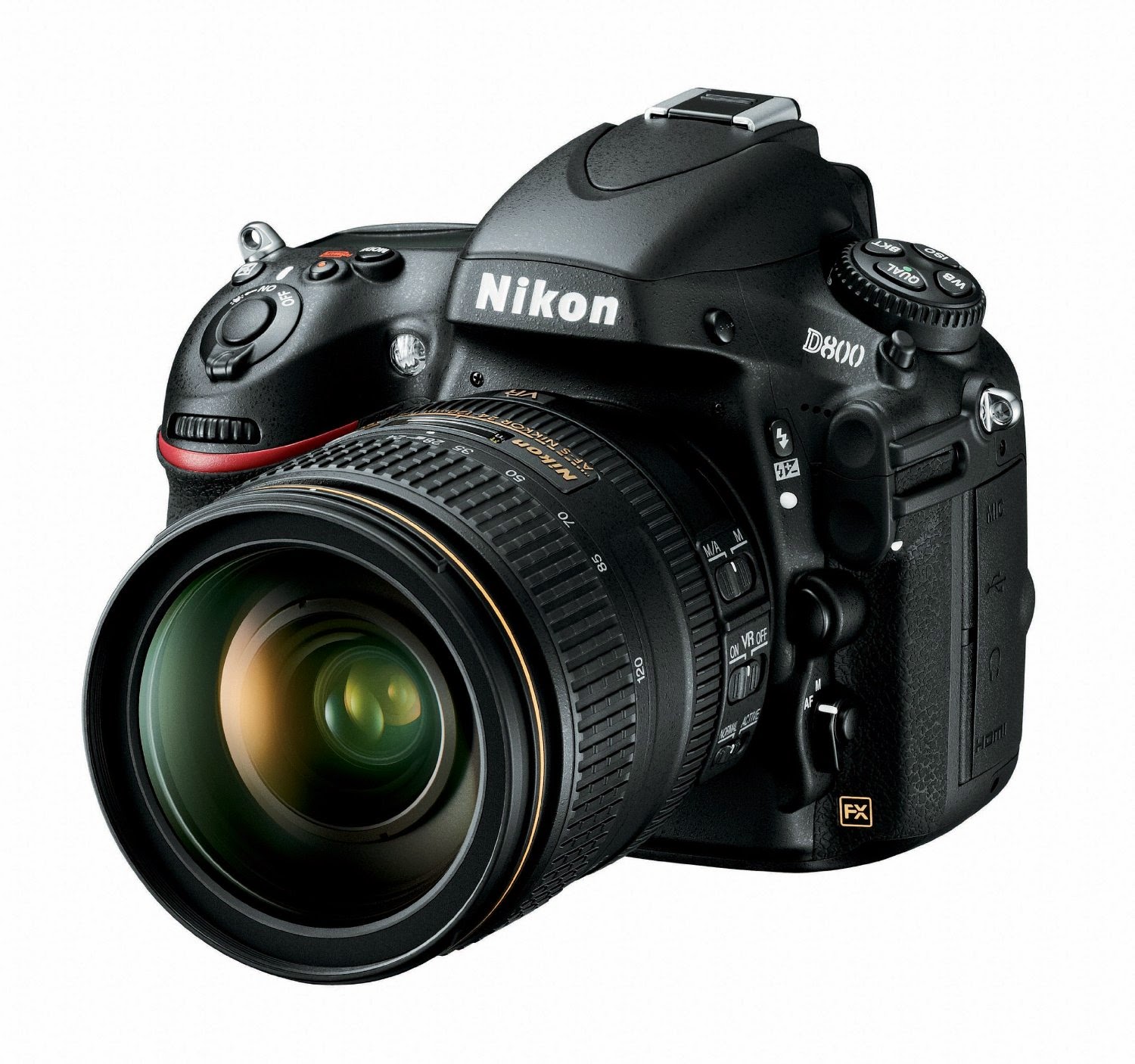
Nikon D800


There is no real limit for the upper end of photographic equipment, but for the consumer, or "prosumer" market we can limit our discussion to Digital Single Lens Reflex Cameras (DSLRs). A Nikon D800 with a nice 70-200mm zoom lens will cost you well over $5000. For that you get a 36 megapixel full frame sensor with low noise even at high ISO, 56 point precise auto focus and HD 1080p video. If you want a second battery, and you do, that will be extra.


So that's the range. How do you pick where you belong on the continuum. It really just comes down a few basic consideration; how much control you want over your images, how much you want to learn and what you want to do with your pictures.

I will not attempt a complete review of the dizzying array of choices. There are great discussions on the web covering all aspects of this difficult decision and all of them share one attribute; To the extent that they offer a detailed discussion of the current options, they will be out of date the day after they are published. So here are my random and incomplete thoughts about this process. With any luck they will be sufficiently vague to be relevant for perhaps a week or two. From the broadest perspective, I will focus my discussion on compact cameras and Digital SLRs, but I will also discuss the new guy in town, "Mirrorless" System cameras. There is a lot to cover and I will divide this topic into two articles, reserving DSLRs and Mirrorless for next week.
Check out DP Reviews for detailed and reliable reviews of all the new equipment. I used several of their camera images in this article


Compact Cameras


Canon SX50

Compact cameras are generally, well, compact, at least when compared to clunky standard DSLRs, but they vary greatly in size, portability and capability. Here is brief list of some of the important aspects to keep in mind as you consider your options. I recently bought a new "Carry Around" camera and in my blog about the process I discussed what I felt are some of most important attributes of a compact camera for my kind of shooting.


Sensor Size


Abe with my 10meg Canon G11
Compact cameras usually have smaller sensors which means that image quality will not be as good. They will have more noise especially at higher ISOs (sensor sensitivity). Compact Cameras are increasingly outfitted with high megapixel sensors, but all those pixels are good for marketing, but are not always a good thing when they are crammed on a tiny sensor. You can look for cameras equipped with larger sensors, but that usually means a bigger camera. The balance between sensor size and pocket-ability is just one of many decisions on the way to finding your perfect camera.


50X Zoom
Zoom:

Because compacts have fixed lens' you should look for a lens with a range of focal lengths to meet your imagined needs. Newer compacts are showing up with impressive zooms from 10x to my new Canon SX50, which at 50x ranges from 24mm to 1200mm. These long zoom are great for wildlife photography but, if your only goal is to take snap shots of the family, you can save money with a shorter lens and "Zoom" with your feet. Also don’t be fooled by advertising touting a camera’s “digital zoom”.  Digital zooms only crop the image in the camera to make it appear larger.  As you make a 2X digital zoom you will lose image quality, as your expensive 20meg sensor becomes a 10meg sensor.  The only that is important to look for the camera’s “optical Zoom.  


Control:
The extent to which Compacts allow control of the camera's settings varies widely. Many 


For Point and Shoots Color is All Important
are literally "point and shoots" designed for those who don't want anything to do with adjusting how the camera captures the scene. They want to be able to point the camera vaguely in the direction of the subject, and then softly intone the command, "Take a picture of that". They hope for the best, but don't expect much. As it turns out the automatic functions in even the most modest point and shoots are actually pretty sophisticated, and occasionally these casual shooter will capture a descent picture. Hopefully these few masterpieces will encourage the photographer to appreciate their high ratio of garbage to gold, and will trigger a desire to learn more and take control, and then they're hooked.


Accessible Controls on My Canon G11

I can safely assume that no one who has made it this far is of the point and shoot persuasion. For you, higher end compacts offer larger sensors with better image quality and access to the full complement of controls that you would find on a DSLR. The cost for these features is generally an increase in size, but many are still quite "compact". Many compacts now have the capability to shoot in shutter and aperture preferred modes as well as full manual. As you consider these cameras check out the ease of access to the controls. Physical dials and buttons on the camera body are much preferred over having to struggle your way through complicated multi-level menus.


Autumn Clock, Canon G11


RAW, Repeat after me, RAW!

If you plan to be serious about getting the most from your images through post-processing, then the capability to shoot in RAW is a must. A discussion of the advantages of RAW over JPG files is beyond the scope of this article, but trust me, if you care enough to get a higher end compact then you will eventually want to shoot in RAW.


Canon G11 with Hot Shoe
Flash:


Almost all compacts have built in flashes that are handy to use, and universally produce stark unflattering light. Consider getting a compact that has a hot shot to allow the addition of a much more capable external flash.


Video:
It is hard to find a compact camera that doesn't include the capability to shoot video. Better cameras can shoot high definition video at 1080p, but the sound capabilities are generally atrocious. Good sound is a necessary element of good videos and separate audio inputs would be great, but don't expect this in compacts, since many DSLRs lack this feature as well.


3 Bracketed Images HDR Canon SX50 HS
Bells and Whistles

It is an interesting fact that camera makers often debut neat new features in there compact consumer cameras long before they show up in their high end professional SLRs. Auto HDR, exposure and focus bracketing, Wi-Fi connectivity, and a bevy special shooting modes, including such challenging situations as night, sports, and fireworks are just some of the nifty features that are available. My new camera has a "Smart Shutter" that can trigger when a subject smiles or immediately following a blink (or so they claim?). Lots of fun stuff, but not the basis on which I would suggest that you make your buying decision.


A Variable Angle LCD is a Great Convenience


Compact cameras are no longer just pocket point and shoots. Many offer quite sophisticated capabilities and produce great images. The best approach is to consider which feature are most important for the kind of shooting you plan to do. Read the reviews and, if possible, get the cameras in your hands.  How a camera feels can be more important than all its glitzy bells and whistles.  In the right situations a compact can represent an excellent choice, but inevitably they impose compromises in terms of image quality and flexibility. When compact size is not an issue, it is worth considering the array of Digital Single Lens Reflex and the new Mirrorless cameras.

But that is for next week.


Part II of "What Camera Should I Buy?"

Jeff Newcomer
partridgebrookreflections.com