About Me

My photo
Spofford, New Hampshire, United States
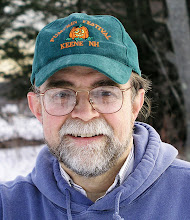
Jeff Newcomer had been a physician practicing in New Hampshire and Vermont for over 30 years. Over that time, as a member of the Conservation Commission in his home of Chesterfield New Hampshire, he has used his photography to promote the protection and appreciation of the town's wild lands. In recent years he has been transitioning his focus from medicine to photography, writing and teaching. Jeff enjoys photographing throughout New England, but has concentrated on the Monadnock Region and southern Vermont and has had a long term artistic relationship with Mount Monadnock. He is a featured artist in a number of local galleries and his work is often seen in regional print, web publications and in business installations throughout the country. For years Jeff has published a calendar celebrating the beauty of The New England country-side in all seasons. All of the proceeds from his New England Reflections Calendar have gone to support the Pulmonary Rehabilitation Program at the Cheshire Medical Center. Jeff has a strong commitment to sharing his excitement about the special beauty of our region and publishes a blog about photography in New England.
Showing posts with label galaxy. Show all posts

Sunday, May 24, 2015

Exploring Night Sky Photography


Pasture Arch, Walpole NH

Rye Beach, NH, July
I'm happy to admit that I am not an expert on astrophotography, but the improved low light capabilities of newer digital cameras have made the process of capturing the night sky so easy and the results so remarkable, that it is hard to avoid giving it a try. There are a number of great photographers who have concentrated on this special photographic niche. They have produced breath-taking star field images, and have generously published detailed descriptions of the special techniques required. I have included links to a couple of the best discussions, but I thought a more personal and less encyclopedic introduction might be helpful.


Milky Way over my Driveway
I remember how amazed I was when I looked at my first night sky photograph. It was just a random piece of unremarkable sky, but I was blown away by the ability of long exposures to see far deeper into the universe than is possible with the unaided eye. I had to do more.' I get out occasionally, but my explorations of the night sky are limited by a persistent laziness that makes it difficult to leave my warm bed for a cold and lonely pasture. I'm always happy when I come back from a night shoot, but it is just a matter of getting out of the door. I succeeded last week in capturing the Milky Way from a spot in Walpole that I had always thought would provide an interesting foreground and perhaps a description of the process from a aspiring amateur may be of value to those who are thinking of exploring this remarkable field of digital photography.


The Galactic Season


Alyson's Orchard Walpole, September
Of course when we talk about night sky photography, the major attraction is the dense band of stars in the Milky Way and for the best show, timing is crucial. Currently, we are in a great time of the year for capturing the Milky Way in the Northern Hemisphere. The Galactic Core season begins in the spring when it is located, at its highest point, in the southwest. The high point moves across until it is found in the southwest during the fall. In the spring, the Milky Way extends in an arc across the horizon, allowing the capture of dramatic panoramic views across a large portion of the sky. As we get into the summer and fall, the band of light moves into a more vertical orientation, making it difficult to capture the full Galactic disk as it arcs across the dome of the sky. Each season provides a variety of opportunities to use our Galaxy in your images, but, happily, the frigid months of winter are not the best time to look for the Milky Way.
Spofford Lake, Spring Arch


The Moon

 Star field observation starts with an understanding of the location of the moon. Each month I note on my calendar the few days around the new moon. Although a little peripheral moonlight can help illuminate foreground elements, the new moon is generally the best time to clearly capture the stars in their full glory. Around the time of the new moon, I start checking the weather for the best chances of clear sky's. It is exciting to find a crystal clear night on just the right day, but I'm embarrassed to admit that I am often equally thrilled to see clouds obscuring the sky, giving me a reasonable excuse to rush off to bed.


The Right Spot

I am always looking for good locations to capture the Milky Way. There are three basic requirements

South Facing View.

The Milky Way moves across the sky from Southeast to Southwest and a prime location must have a clear view to the horizon in that direction. I spend time scanning my favorite locations, looking for those with the proper orientation.

Avoiding Light Pollution.


Brattleboro Light Pollution

Light pollution is persistent problem. Even out in the country, it is amazing how much artificial light will show up when I am shooting with ISOs from 2500-3200 at f2.8 and 20-30 second exposures. 


Martha's Vineyard, Ocean Dark


A faint glow on the horizon,which is barely perceptible to the unaided eye, can look like a blazing sunrise when captured in a long exposure. I try to get away from major centers of civilization, but even a small village like Spofford can throw up a surprising amount of light. I envy my friends who are fortunate to live near the ocean, where views out to sea are relatively clear of artificial light. For those of us who are land-locked all we can do is get as far away from people as possible, minimize the glare in Photoshop and tell everyone that that orange patch is actually the first glow of sunrise.


Foreground

Jaffrey Silos
Finding something of interest in the foreground is key to achieving context and drama in a star field image. I'm always looking for trees, church spires, barns, or farm equipment that I can position before the great arch of stars. Of course the "sea coasters" have an endless array of lighthouses to use for drama, but we can catch the stars reflected in the calm waters of local rivers and lakes. The key to effective use of foreground elements is to get close enough.  Star fields are generally shot
Chesterfield Town Hall
atextreme wide angles. I almost always use my 16mm lens. and with that broad angle of view the foreground must be quite close to be seen to dramatic effect. The foreground elements can be striking in silhouette against the bright sky, but I often play with light painting using my trusty light LED flashlight. Light painting is all about experimentation and using a subtle touch. The foreground may also be captured in the natural light with a separate long exposure that can be blended with the star field image during post-processing.


My Walpole Apples

 For years I have been attracted to a couple of lone apple trees which sit out in the middle of a lovely pasture in Walpole New Hampshire. I have shot the trees in various seasons and conditions of light, but I have always felt that they might serve as interesting foreground subjects for a Milky Way photograph. The trees are isolated in the middle of a large pasture on the crest of a hill looking off to the south. I knew I would have freedom to move around the trees to find the best angle under the arch of the Milky Way. I had shot stars from edge of this location before, but I had never ventured out to get close enough to bring the trees into the foreground. About one week ago I finally got my chance.


The Right Day and Time

Photographer's Ephemeris, Walpole Apples

I used the Photographer's Ephemeris to find the nights in May when the Moon would not be an issue. TPE is THE essential piece of software for anyone wanting to predict the locations of the Sun and Moon from any location and on any day. My current favorite program for predicting the
PhotoPills
location of the Milky Way is Photopills. Although the program's user interface takes a bit of getting used to, it shows the position and elevation of the Milky Way throughout the night from any location. I was able to see that the Galactic Arch would be in the best position over my Walpole Apples between 1 and 3 AM on the days when the Moon would be new or below the horizon.


I knew the what, the where and the when, all that remained was the fourth "W", the weather. 


The forecast was for one clear night before a warm front was predicted to cloud the skies for several days. I took a nap in the
Dublin Lake & Too Distant Monadnock
early evening and then got out to my isolated spot at about 12:30 AM. After fumbling my way through the pasture's irregular ground I was where I wanted to be, next to my Apple tree. For once I prepared myself perfectly. I had clothing that was sufficiently warm, I used my Overshoe Boots to protect my feet from the damp and the ticks and I made sure that my flashlight had fresh batteries. I use a flashlight that is equipped with a red filter to preserve my night vision as I work the controls. Before I left home I had mounted my 16-35mm lens, set it to its max wide angle and adjusted the focus to where long experience has shown me that infinity lies. The stars are definitely at infinity but they come into sharpest focus slightly short of the lens' max position. It takes a bit of experimentation to find the right spot. An especially bright star, the lunar surface or even a distant light can be used to discover the best adjustment. Once set I used gaffer's tape to fix the adjustments in place.


In the Field
Walpole Apple, We'll Call It Sunrise

The night was lovely. With the exception of a few clouds on the southern horizon, the sky was crystal clear and peaceful, although, as always, it was a bit spooky standing alone in the inky dark with nothing but the hooting of owls and the howling of distant (hopefully) coyotes to keep me company. Fortunately I was too busy to spend much time thinking about being stalked by ravenous preditors, or shambling zombies. The Milky Way was beautiful and easily visible to the unaided eye allowing me to position the camera to capture the Apple tree nestled under the arch, but even when maximally dark adjusted my eyes could not remotely appreciate the intensity and depth revealed by the camera sensor. After a few experimental shots, I settled on ISO 2500, f2.8 and a 20
Cosmic Apple, Walpole, Light Painted
second exposure. I made sure that my camera was set for Mirror Lock-Up and Long Exposure Noise Reduction. With the extra time required for noise reduction, each exposure took close to one minute, a duration which seemed much longer when trying to stand perfectly still in the dark. I grabbed a few single shots near the tree, including experimenting a bit with light painting, and then settled into shooting several series of images across the sky for eventual reconstruction into panoramic studies. I shot 6-7 images for each panorama. Without clear references, the greatest challenge was in keeping the camera level through the series of images. It is at this time that keeping my eyes fully dark adjusted was critical to pick up on key landmarks. After expending so much effort to place myself in a special location at the perfect time, I felt reluctant to leave. I wanted to make sure that I had captured all the necessary shots, but the howling seemed to be getting closer, so I stumbled my way back to the car and headed for home and the welcoming arms of Photoshop.
Light Painted Apple, Walpole, NH


Connecticut River, Chesterfield, NH
I reached home at about 3AM and as always, instead of heading immediately to bed, I had to upload my images and apply some preliminary edits to get a sense of what rewards I had received for the my sleep deprivation. I'm still experimenting with post-processing techniques for star field images. My current approach includes preliminary adjustments in Lightroom and final localized tweaking in Photoshop, but it would be best to save that discussion for another blog. Besides, every time I come back from a night under the stars, I seem to take a different approach in the digital darkroom.

I hope this discussion provides a helpful overview of how a relative new-bee might approach star field photography. With just a little care, the technical aspects are actually quite simple. The biggest challenge is to haul yourself out of bed to get to the right place at the right time with the right weather.

And watch out for the Zombies!


Other Articles From My Blog:


Night Time Photography, Searching for the Milky Way 
April 2013


Look to the foreground in Milky Way Photography
June 2014 


Valuable References:
Night Sky Photography, Aaron Priest

Aim for the Stars, Mike Blanchette,
New England Photograhy Guild


Jeffrey Newcomer
Partridgebrookreflections.com

Sunday, September 8, 2013

Neighborhood Icons


Finding the Magic Close to Home

Travel is wonderful for expanding my photographic vision, but often my best photographic subjects are the ones I can get to when the light is perfect.  Every photographer should have there own file of treasured local Icons.

A few weeks ago Susan and I returned from a late dinner in Keene.

Galaxy at Home
As she ran into the house to ease our dog Nellie’s dissertation anxiety, I noticed the incredibly clear summer sky and the Milky Way glowing through the gap in the trees along our driveway. I quickly grabbed my tripod and took some deep sky photos against our house, but then my mind switch to full photography mode and I started considering where else I could go to provide an interesting foreground to this great stellar celebration. With the most prominent parts of the Milky Way to the South and Southwest, I immediately I thought of the classic Chesterfield Town Hall.


Town Hall Galaxy
Town Hall Spire, Chesterfield
I told Susan where I was going and quickly hit the road. When I got up to Chesterfield Center I found that I could position myself to capture the Milky Way alongside the Town Hall Spire, but the village lights tended to wash out the sky next to the hall itself. I experimented with exposures and took a few additional images stopped down to avoid blowing out the highlights in the spire itself. Back home, I was able to blend the images to get a reasonable balance of the spire and the galaxy. It was well worth the short run up to the center of the village, but it also got me thinking about my treasure trove of local iconic subjects. 


Local Icons

It is great to get away from home to photograph the many spectacularly beautiful features of the New England landscape, but live in Chesterfield New Hampshire and that is where I spend most of my time. When the light turns magical around sunset, or a brilliant rainbow suddenly appears, the chances are good that I will be at home and the chances are even better that the light will fade before I can get to the White Mountains or the Seacoast. What I need are easy to reach local points of interest and beauty that I can get to quickly before the moment is lost. Over the years, and without even realizing it, I have acquired a grab bag of nearby locations that I can use when time is short. 


Central Square, Keene, NH
My local Icons share a number of features. First they are all within
10-15 minutes of home and each is a classic representation of some
aspects of traditional New England. I have come to know when each site is best seen, which way it faces, in which directions are the best backgrounds and when it is least likely to be crowded. The light on the pastures of Roads End Farm are usually best in the morning with the sun quickly falling behind the hills in the evening. Keene's Central Square is great anytime, but I think it is best early in the morning, both because of the light and because the car and human traffic is less of a problem. 


Morning Mist, Roads End Farm
I am sure you all have your collection of local Icons. I have spoken previously about many of mine, most notably the Roads End Farm and Keene's Central Square, but a few others deserve recognition and perhaps a visit if you are passing through.


Chesterfield Town Hall
Built in 1851, The Chesterfield Town Hall is such a classic old

Peyton Place Series Icon
stone building that its facade was used as the model for the building seen in the opening credits for the 1960's television series Peyton Place. The Hall is primarily a sunset location with the front bathed in warm evening light and the eastern sky providing an uncluttered background. Behind the building is a classic old cemetery which provides other interesting foregrounds. The Town Hall is my frequent "goto" place for sunsets, storms, rainbows and stellar displays. 

Town Hall Rainbow


Route 63 Ridge
The Town Hall is located on route 63, which in this area runs along

The Blue Hour
a high north-south ridge with a lovely view to the west and the Vermont hills. Our friends John and Kathy live along the road with an amazing view across rolling pastures. Sunsets here are frequently amazing with a series of mountain ridges melting away into the crimson sky. It is become expected that at sunset I will disappear from dinner parties at John and Kathy's as I search for new angles and fresh light from their backyard.  I come back hungry, but never disappointed


Empty Chair
Layers of Vermont Mountains


Spofford Lake

Spofford Lake is a little more than six miles around and provides
Favorite Birch
excellent views on all sides, but my iconic location is a 5 minute walk from home at the channel leading to the lake's exit into Partridge Brook. During the summer this is Nellie's favorite location for frog hunting. The spot faces west making it a great sunset location and also a perfect spot to watch the thunder heads approaching, My favorite lake-side birch is across the inlet with a clutch of reeds providing nice foregrounds. 


Nellie, Frog Hunting, Spofford Lake
Always Nellie


When All Else Fails There Is Always Nellie

What can I say.  Regardless of the season, the light or the background, Nell is always the perfect subject.


Enough of my local icons. The point here is for you to identify your own local attractions. You probably already know what they are . The idea is to place them in your own mental icon folder ready to be accessed the next time the light suddenly becomes magical. You will know which location will work best with the conditions. You'll grab your bag and get there in time to catch that fleeting opportunity.


Jeffrey Newcomer
Partridgebrookreflections.com