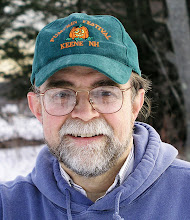
About Me

My photo
Spofford, New Hampshire, United States
Jeff Newcomer had been a physician practicing in New Hampshire and Vermont for over 30 years. Over that time, as a member of the Conservation Commission in his home of Chesterfield New Hampshire, he has used his photography to promote the protection and appreciation of the town's wild lands. In recent years he has been transitioning his focus from medicine to photography, writing and teaching. Jeff enjoys photographing throughout New England, but has concentrated on the Monadnock Region and southern Vermont and has had a long term artistic relationship with Mount Monadnock. He is a featured artist in a number of local galleries and his work is often seen in regional print, web publications and in business installations throughout the country. For years Jeff has published a calendar celebrating the beauty of The New England country-side in all seasons. All of the proceeds from his New England Reflections Calendar have gone to support the Pulmonary Rehabilitation Program at the Cheshire Medical Center. Jeff has a strong commitment to sharing his excitement about the special beauty of our region and publishes a blog about photography in New England.
Showing posts with label Connecticut River. Show all posts

Monday, August 13, 2018

Finding My Eagles, At Long Last


Broken Snag
For the last several years I have enjoyed observing the activities in “my” eagle nest on a snag across the Connecticut River from my home town of Chesterfield New Hampshire.  With what is for me uncharacteristic patience, see : 
Temptation of One Minute More. 
I have monitored, and photographed the nest building, chick hatching and nurturing, as well as the soaring of these majestic scavengers.  Each year, the nest, had been improved and more thickly woven into the scaffold of it precarious perch.  Sadly, last winter the inevitable happened and the barren snag was toppled by a winter storm and in the process, I lost my eagles.


Over the years, I have become closely attached to “my” eagles, and I felt their loss personally. All  spring and summer, I have been searching for the 
Juvenile fly-over
eagle’s new home.  I was reassured by those who told me that deposed eagles typically re-establish a nest close to their former location, but despite frequent searches along the river, I had failed to find any evidence of my birds.  On a couple of occasions, I thought I might have caught a fleeting glimpse of an eagle high in the sky, but I could never be sure, and I wasn’t able to see where they might have been settling.

I had nearly given up hope, but then recently I had seen a reference to a sighting of a nest in a birch about 100 yards in from the Connecticut River shore. The reference was maddeningly nonspecific, but early this week I decided to go for another look. 

New Nest
  I parked at spots along the River Road, and then went on foot to explore the bank opposite to the river.  Nothing, but as is so often the case, the real break came as I talked to the folks passing by on the road.  The first car stopped to politely ask me to get my car off the edge of his lawn. With our narrow back country roads, there is always a fine line between staying out of the road and keeping off the lawn. I was quick to comply with his request, but I also learned from him that the eagles had moved to a nest a bit further south.  The driver of the next truck stopped to see what I was doing, and he was able to tell me that my eagles where in a tree on his neighbor’s land. It all goes to confirm two facts about New England nature photography.


  • First, it always pays to talk to the people who you encounter in your explorations.  This is especially true of those who gaze suspiciously out of their windows at the funny looking guy with the tripod.
  • Second, the overwhelming majority of these people are friendly, welcoming and thrilled to help.  It turns out that , at least in rural New England, most landowners are proud of there small corner of natural beauty and are excited that someone would want to photograph the scene. In return, I honor any limitations they may have and often drop off a print of the results of my work.

I was excited to go to the new location, and again, found a very friendly and helpful home owner.  Peter directed me to best spot to see the nest, which was not easy to find, high up in the branches of a spruce.  As I expected, the nest was not as large as their previous home, but I suspect that it will expand over the years.  He then suggested that I explore a spot along the river which was a frequent resting area for my birds.  


Hidden Vigil
It was there that I finally found them.  I first saw a mature Eagle hidden among the leaves and caught a couple of shots as it took wing.  On this first day I captured the birds in occasional fly-overs.  I suspect they were acclimating to this intruder camped along the brook.


Vermont Shore Landing
  The next day I was able to get good shots of both a mature and a juvenile bird perched in nearby trees, and a pair of mature eagles in a tree across the river on the distant Vermont shore.

It was a great couple of days.  The pictures were not among my best eagle images, but the wonderful thing was that I finally found “my” eagles.  Peter told me that an Audubon official identified the male as being from the old nest, but he wasn’t as certain about the female. The new location presents its own set of challenges.  Looking up at the nest, it will always be strongly backlight, but having established a good viewing spot next to the river, I hope to be able to monitor more of the eagles daily activity.


Adult Bald Eagle
  
Juvenile Bald Eagle
It was great to relocate the eagles, but more importantly, I established a good relationship with the landowner, and was invited to return whenever I liked to photograph on his spectacular property.  Understandably, the owner did not want me to disclose the exact location of nesting site.  Being deep within private property, he feared a stampede of enthusiastic and persistent birders camping in his back yard. 


Jeffrey Newcomer


Monday, February 26, 2018

Fallen Eagles Gallery


Over the last four years I have been privileged to have my own pair of nesting bald eagles, returning every year to hunt and breed across the Connecticut River, from my town of Chesterfield New Hampshire.  They nested at the top of an old snag at the edge of the river, from which they could swoop down on food and eject their young for their first perilous flights.  I found a spot across the river on the New Hampshire side, from which I could watch the early season nest building and the appearance of one or two fledglings.  


This spring I was saddened to discover that the dead snag with the nest on top had fallen into the river.  As we get into the breeding season, I have been scouting up and down the river hoping that my eagles will build a new nest close to home, but, so far, I have no eagles or nests.  I will continue to patrol the river, but my loss has encouraged me to recall all the majestic beauty that I have been privileged to observe over the last four years.  I have covered this in my article for this week’s  New England Photography Blog, but here I would like to show some of the pictures of “my eagles” that didn’t fit in the NEPG article.


Photographing Bald Eagles, much like all birds, takes a great deal of patience.  Long periods of quiet nest sitting are punctuated every 40-50 minutes by the split-second excitement of a bird landing or taking off.  It is always fun to catch the eagles bringing nesting material or a morsel of food for the checks, but any excuse for them to spread their dramatic wings is exciting.


Occasionally, the interactions between the birds can be more interesting as the adults, or more mature juveniles, vie for dominance in the nest.


Enjoy the pictures in this gallery and those in my NEPG blog.  Also check out the links to other articles in my “Getting it Right in the Digital Camera Blog.  And, of course, join with me in calling my eagles home!


Jeffrey Newcomer

Monday, August 7, 2017

The Temptation of One Minute More


Roads End Pasture
It is my habit to head out shooting after I complete my Saturday morning visit to the transfer station in my hometown of Chesterfield New Hampshire.  After making the necessary drop off at the dump, I usually start with a drive through Roads End Farm.  I have been visiting this lovely horse farm for years, and I nearly always find fresh subjects to shoot.  Then, if I have the time, I look for other places to explore in my beautiful corner of New England.


My Eagles
This weekend, I visited “my Eagles” on the Connecticut River, and the stop reminded me that photography, and most importantly wildlife photography, is often about long periods of waiting punctuated by breathtaking moments of excitement.


Nest Building March 2015
In the Summer, there are just a few locations along the Connecticut River in Chesterfield that open to a clear view of the high snag, that is the yearly nesting spot for our pair of bald eagles.  This spring, I saw at least one fledgling appear in the nest, and although, this time of year, things get less exciting, it is still interesting to watch the comings and goings of the adult and immature Eagles.


Yesterday I settled in at the side of the River Road, with my 400mm lens resting on my car window, and trained on the nest, across the river.  One majestic adult Eagle was perched above the nest, calmly scanning the passing waters.  I adjusted my focus and selected an ISO of 800, that allowed a shutter speed of at least 1000th of a second.  Then I waited for some action.


Iconic Boredom
And I waited.  Wildlife photographers are experienced with this, but I usually shoot trees and mountains, and trees and mountains perform on a much more predictable schedule.  I have learned to expect some photographically interesting comings and goings at least every 30 or 40 minutes, but on this day, an hour passed without any activity.  That LAZY feathered national icon just sat there as if he thought he was posing for a marble monument.  Meanwhile, my nearly seven pounds of camera and lens were getting heavier by the minute.


I Look Away

I wanted to surrender.  I had chores to complete, or at least a nap to take, but after investing more than 60 minutes, I told myself that something must happen soon.  I knew instinctively that all sorts of exciting avian behavior would occur as soon as I packed up my gear, and that was the trap.  As always, the temptation to hang in for just one minute more, and then one minute longer was strong.   

No picture to Show Here !!

Then, something happened!  Just as I looked away to re-position the camera, a juvenile eagle swooped in and somewhat forcibly dislodged the parent from the nest.  Great action, I presume, but the switch occurred in a moment, and I missed ALL of it!  I was pissed! – Sorry, I was disconsolate.


Juvenile Defiance
Needless to say, I was annoyed to have wasted so much time, only to miss the big event.  Now I had to be satisfied with pictures of the statuesque juvenile eagle placidly surveying his domain and mocking the frustrated photographer across the river.  I was ready to leave in disgust, but then the, “one more minute” temptation kicked in.  I hung on, and the magic finally happened.


Yes!
Parental Input
With no warning, the mature Eagle came swooping back to reclaim its throne.  I only had time to trigger a burst of images, and, in a blink, it was over.  Both birds flew away, but when I got home, I found that I had captured a few of the best pictures of, what I assume to be good-natured domestic aggression between Eagle parent and progeny.  There was many a time when I wished that I had menacing claws to go after my rebellious teenagers in a similarly "good-natured" way.

A Second of Action


Checking the time stamps on the 5 key images, I found that all the action occurred over just about one second!  More than an hour of boredom for a second of excitement. 


Now I understand why wildlife photographers can show such amazing patience. Long ago, I learned in the psychology lab that I could train an Albino Rat to press a bar hundreds of times for only the rare reward of a food pellet.  I would never suggest that wildlife photographers are equivalent to rodents, but I have discovered that occasionally majestic rewards can come from nonsensical persistence.  I too am susceptible to the siren temptation of “one minute more”, and at least this time, I got my food pellet.

Parting


Jeffrey Newcomer


Sunday, March 5, 2017

The Eagles are Back


Occasionally Catching the Eagles in Flight
 

Nesting 2016
Last week I dropped by the Connecticut River and was thrilled to see that my Eagles are back.  They are working on their nest, suspended precariously at the top of a snag,  high above the Vermont shore.   With varying degrees of success, this has been their breeding site for many years.  The consistent location makes it easy to follow, and photograph, their progress.  Last year one hatchling appeared to flourish.
 

Foam and Tripod


Fly-Over
The nest can be viewed from along the River Road in West Chesterfield, but from the closest spot, it is still nearly 250 yards away.  I typically settle on the side of the road and steady my long lens on a piece of custom cut foam,  fitted to my window glass.  I'm getting better at catching the birds in flight, but more often, the action comes when an eagle takes off or lands on the nest.  On average, this happens once every 30-40 minutes.  The rest of the time is consumed by long periods of unexciting sitting, both for the eagles and myself.


More Sticks this Year


Building from 2016
So far I have only seen evidence of nest building.  The birds generally arrive  with bunches of sticks, and only occasionally with an unfortunate supper entrée.  I can only hope that all the nesting activity will eventually lead to little eagles, but we don’t have a nest cam, so I will have to wait for small heads to poke up over the edge.


Favorite Take-Off from 2016


Banking
I won’t be able to get back to my spot along the river or a couple of weeks.  Who knows what excitement might unfold in the interim.


Jeffrey Newcomer
partridgebrookreflections.com

Sunday, August 23, 2015

A NIght Out with The Photographer's Ephemeris


There is a new player in town for locating the Milky Way and it turns out to be an old friend.


My usual approach to night-time photography begins with a determination of the time of the moon's rise and set, its location and phase using the remarkable Photographer's Ephemeris (TPE). The usual hot times for night photography are around the full moon and when the new moon leaves the sky dark for deep space observations. It is great fun to move my pin around the map looking for locations that will place the rising or setting moon behind interesting foregrounds.


Photopills
Recently I have depended on a different application to find the position of the Milky Way. In addition to the moon, our galactic
disk is the other major attraction of the night sky and the Photopills App does a nice job showing the arc of the Milky Way and the position and elevation of the impressive Galactic Center. The location of the Milky Way is portrayed with a series of balls with their position representing the orientation and elevation above the horizon. As the time line is shifted the "galactic Balls" move across the sky. The balls increase in size as they approach the galactic center. It works well to predict the best time and location to shoot the Milky Way, when the galactic Center is in the best position. It is a little awkward to jump between TPE and Photopills, but the new version of the Photographer's Ephemeris brings these two functions together.
The Photographer's Ephemeris 3.4
The Photographer's Ephemeris

The Photographer's Ephemeris' latest version 3.4 is for devices running iOS 8.1 or higher. The App has a new night mode which shows the location of the Milky Way with a user interface essentially identical to Photopills. The Galactic balls are given an attractive 3 dimensional feel and the sky includes a few of the major constellations, but the overall UI seems based on the same concept. I'm happy that I don't have to learn a new system, but seriously, does TPE own Photopills or did they license the UI. Anyway, it's not my problem and I'm thrill that my favorite photo app now makes it easier to plan my night-time shoots all in one place. 


Walpole Sky


Milky Way over the Connecticut


A few days ago I used my upgraded TPE to find a viewing spot in Walpole for this month's optimal Galaxy viewing around the new moon. I found a spot on a bridge crossing the Connecticut River that had a nice view to the south. I was hoping that the trip further north would reduce the light pollution from Brattleboro Vermont and I was pleased that the horizon glow was a bit reduced. 


Don't Try This at Home
At 10:30 pm the shoulder looks smaller
TPE showed me that the Milky Way would be moving across the river between 10 and 11pm. I set up on the bridge and captured some nice views. The only major difficulty was finding 20-30 second time periods when cars and trucks were not speeding across the span with their brilliant headlights. There was precious little room on the side of the bridge and I made sure to flash all my reflective garments as the vehicle came rumbling by. You are welcome to lecture me about safety, but, if needed, I was ready to leap over the side and, since I survived, the pictures were definitely worth the risk.


Two Galaxys For the Price of One

Andromeda in the Northern Sky
The Oval is Mine-Duh
The view of the Galactic Center to the south is the most spectacular portion of the Milky Way.  It is the perspective that dominates the vast majority of published Milky Way images, but, since you're out there,  I would suggest that you grab a few shots in the opposite direction.  This time of year the "tail" of the Galactic arch sits in the Northern sky and, although not as intense as the view around the Center, it has its own attractions.  The northern vista has a softer, less angry appearance with less galactic dust to cloud the stars, but my favorite reason for capturing this view is the chance to see the Andromeda Galaxy.  Andromeda is the nearest major galaxy to the Milky Way and the only galaxy visible to the unaided eye.  Even on a dark moonless nights, it only appears as a vague smudge of soft light, but, through a telescope, Andromeda can be seen to be more the six times the size of the full moon.  With the digital camera's the high ISO and prolonged exposures, this swirling mass of over one trillion stars becomes much more apparent.  The Andromeda Galaxy is more than 2.5 million light years distant from earth, and provides our best chance to look deeply back in time with our own eyes.  The light reaching us now left Andromeda when primitive humans first
Ancient Light  -  Coming at You
walked on the earth.  In our expanding universe, Andromeda is on a collision course with the Milky Way, and is therefore one of the few blue shifted galaxies we can observe.  But you needn't duck yet, the galaxy is approaching at the relatively leisurely pace of 86 miles per second.  It won't get here for about 4 billion years and by that time the earth will have been burned to a cinder by our exploding sun.  Comforting thought!  Although it may make you feel microscopically small, it is still worth a peak to see our future companion in the endless void.   


Andromeda Galaxy - Slightly Better View - A Telescope Still Helps

 Choices
Anyway, I'm excited about the night features in TPE.   Version 3.4 of the Photographer's Ephemeris is available for free download and works for users running iOS 8.1 or greater. I reluctantly had to upgrade my iPad, but it was worth the hassle. For those unwilling to upgrade or who are running Android, Photopills is still a great option and has other features and nifty tools not available in TPE.  For me, The Photographer's Ephemeris' interface is cleaner and easier to use, but perhaps Photopills will come up with new features that will blow TPE out of the water. Don't you just love the free market system?  It's all good, and the software choices are infinitely better than those available just a couple of years ago. 

Jeffrey Newcomer
Partridgebrookreflections.com


Sunday, March 29, 2015

Controlling the Long Lens Shudder


My Eagles.  Shudder Controlled


Lessons Learned While Capturing My Eagles

Over the years I have prefaced every one of my articles which show birds with a disclaimer insisting that I am NOT a bird photographer. I've made it clear that I generally consider birds to be feathery obstructions that occasionally get in the way of my landscapes, but as I think of my photography projects in the last
Juvenile Eagle Approach
couple of years it has become obvious that I have reluctantly evolved into a landscape photographer who occasionally takes pictures of birds. On purpose! For me, the conclusive evidence came recently when I found myself sitting in my car for three and one-half hours waiting forlornly for a Bald Eagle to return to its distant nest on the Connecticut River. As I shifted my sore butt for the hundredth time, It suddenly struck me that this was some serious birding stuff! OK, I give up. Birds are amazing miracles of nature with incredibly intricate patterns of feathers and spectacular colors. I can hear all the smug laughter from all my birding friends, but I'm still not willing to crawl around in the mud to capture these little guys. I still like to keep my birding civilized.

My Eagles

Over the last few years I have developed a sense of attachment to what I consider my local Bald Eagles. We have an impressive nest high atop a dead tree on the Dummerston side of the Connecticut River across from the River Road in Chesterfield New Hampshire. For many years, the nest has been home to a pair of Bald Eagles and over the last three years I have been watching, sadly unsuccessfully, for eagle hatch lings to emerge. Still it is a great place to observe Eagle behavior and to catch these majestic birds as they fly too and from their perch. It has been through my various misadventures trying to capture these birds that I have learned a great deal about the challenges of bird photography.

I remain a landscape photographer who only occasionally, and mostly ineptly, tries to capture birds, but, with profound apologies to my many skilled birding friends, here is are a few of the things that I have learned. This discussion is primarily focused on my stumbling attempts to picture the magnificent Dummerston Bald Eagles.

Size Does Matter
The greatest challenge is distance. The nest lies across the Connecticut River nearly 250 yards away and, even with my nice 400mm lens, the birds are frustratingly small on the sensor. As I
cropped in on the images I lost most of the detail in the feathers and
Through the Vermont Trees
the digital noise, from high ISO levels, was magnified. I tried approaching the nest from the Vermont side of the river, but after a slog up the steep sandy bank of a quarry, I found that the nest was about as distant as it was from the New Hampshire side and was only partially visible through dense forest. I may try shooting from my kayak this summer, but the challenge would be to hold steady in the surging current without dunking my precious camera in the muddy water. The obvious solution was a longer lens.


Longer Glass / Tighter Wallet

Distant Nest
My choices included a Canon 800mm, f5.6 lens for over $13,000 or I could pay a little less for an off brand lens. My new found birding enthusiasm doesn't stretch to 13k, so I ended up getting a Canon 2x Tele Extender for a little over $400. The combination gave me an 800mm reach and I found the sharpness to be acceptable. The disadvantages included the inability to open the aperture beyond f11 and the loss of auto-focus. The lack of auto-focus remains a major problem when trying to capture birds in flight, but less of an issue when I can manually focus while locked in on the distant nest.

Over the last two seasons I have been aiming my 800mm on the nest from the edge of the River Road in West Chesterfield. I firmly attached the lens to my tripod and then waited for the action to begin. I have captured a few nice shots, but my results have often been disappointing. Even with the longer lens the images required considerable cropping in post and too often the images were either uniformly blurry or obscured by excessive noise. I came to understand that a number of factors were affecting my results, that they were all interrelated and often confounding. A discussion of the effects of aperture, shutter and ISO in this situation provides a nice illustration of how these factors must always be balanced to find the best results.

The Challenges


Critical Focus

Even at over 200 yards the depth of field of my 800mm lens is 
quite shallow. To reliably achieve sharp focus on the nest I needed to zoom in on Live View in my LCD screen and, even then, I could only hope that the Eagles would approach the nest within a similar plane. Sometimes I got lucky. I generally used f 11 which is the widest aperture possible with this combination of lens'.  I could have slightly broaden my depth of field by stopping down on the aperture, but smaller f stops would make it more difficult to use the fast shutter speeds needed to freeze the action :


Stopping the Action


The advantage of being able to focus on the nest was that I could catch the eagles in flight as they approached or departed. I found that I needed to use a minimum shutter speed of 1/600 - 1/800th of a second to stop the birds in flight, but, except when the birds briefly hovered before landing, this wasn't fast enough to freeze the motion of their wings. These fast shutters were only possible with increases in the ISO setting :


High ISO and Noise

Magnified Noise


The widest aperture available at 800mm was only f11 and, especially in dimmer light, this required ISO settings of 800 or higher. Rarely, on exceptionally bright days I was able to get away with an ISO of 400. These high ISOs led to difficulties with digital noise, a problem that was magnified by the need to zoom in on the images in post. It was always a delicate process, balancing noise reduction against the loss of important detail.


Photography is always about finding the best balance between competing factors and I believe I'm beginning to understand how to manage that critical balance for my eagles. I first nail the focus to the nest and then try to find the optimal compromise between the settings of shutter, aperture and ISO, but the final problem was controlling camera motion and at 800 mm that was a tougher challenged.

The Shudder

Despite paying careful attention to all of these factors, I was still

Camera Shudder Mess - Great Shot Missed
getting inconsistent results, often coming home with images that were uniformly fuzzy. The obvious explanation was camera motion. At 800mm the camera is exquisitely sensitive to even the slightest motion. I learned this by watching the zoomed-in image on the Live View screen. Even with the lens tightly attached to a sturdy tripod, I found that the slightest puff of wind would send the image jiggling. The wind along the Connecticut River was seldom calm and the fully extended lens with its large lens hood served as an excellent sail.

Solutions?

I have discussed in previous articles techniques to stabilize a camera for hand-held shooting, but with 800mm you definitely need a tripod and also some seriously careful technique. 


  • Who Needs a Tripod?
  • Steadying Your Low Light Photography


Juvenile Eagle Approach

My first approach was to set up my tripod close to the car where I could partially shield the camera with the opened car door. I switched to my heavier aluminum tripod and added extra weight by hanging my camera bag to the center post, but my results were still inconsistent. The wind seemed to be the major issue and It finally occurred to me to bring the camera and lens into the protection of the car. 


The Solution ?
I set up my tripod inside the vehicle with only the end of the lens hood protruding beyond the partially raised window. I firmly rested the lens on a foam window cradle that I had carved some years ago to use as a support for hand held window shots. I carefully set the focus with Live View and then fixed it with a piece of gaffer's tape. I use a cable release to avoid added jiggle while triggering the exposures. The cable also allowed me to remain perfectly still as the birds approached.
Nesting Materiel

I have I experimented with other measures to further increase stability and reduce shudder including using a small bungee cord to tie down the proximal portion of the lens and switching to live view to freeze the mirror as the eagles approached, but these additional measures seemed to add no significant improvement over the effect of moving the camera into my mobile blind. Of course being enclosed within the car provided the significant added advantage of making it more comfortable to endure the hours of waiting for the action to arrive. None of this could make up for the fact that the eagles remain a long freaking way away, but my results have been the best that I have been able to obtain.  Check the image at the top of the article.


In the trees, Sharp focus, No Shudder


What Better End Image?


There is nothing more frustrating than to spend hours waiting for the eagles to return only to get home to find that the images are a fuzzy mess. I now feel I have an approach which should provide me with a better chance of capturing decent images. All that is left is to keep returning in hopes that we may be witness to a successful breeding season. I've also got some solid leads on other area nests that may allow a closer approach.


My god! I sound like a freaken birder!
QUICK!  -  I need a tree to photograph!


Jeffrey Newcomer
Partridgebrookreflections.com